Ceramic coating is worth it for daily drivers when you want longer-lasting gloss, easier washes, and better protection from sun, salt, and grime. It forms a thin, durable layer on clear coat that resists contaminants and beads water. In Mississauga’s four-season climate, that means fewer deep cleans and a vehicle that stays cleaner between washes.
By sajid tarwal • Last updated: July 6, 2026
Overview
Daily drivers benefit from ceramic coating because it reduces wash time, improves gloss, and shields paint from UV, salt, and road film. Compared with wax or sealants, coatings last significantly longer and maintain hydrophobic performance, making regular maintenance faster and safer for modern clear coat finishes.
Here’s the thing: most commuters want their car to look great with less effort. This complete guide explains the real-world pros, maintenance, and myths around coatings for everyday use in Unit #3 and greater Mississauga.
- What ceramic coating actually is and how it bonds
- Coating vs wax vs sealant vs PPF — where each fits
- Winter salt, UV, and grime: protection that matters in the GTA
- Maintenance routines that take 20–30 minutes, not hours
- How Prime Auto Wash applies coatings in-shop or mobile
What Is Ceramic Coating for Daily Drivers?
Ceramic coating is a liquid, silica-based protective layer that hardens on your clear coat to boost gloss, repel water, and resist contamination. For daily drivers, it extends the time between deep cleans and preserves paint clarity despite constant UV, rain, and road grime exposure.
Ceramic coatings are liquid polymers that bond to your vehicle’s clear coat and cure into a semi-permanent film. They enhance shine, add slickness, and improve resistance to chemical and environmental fallout.
Why this matters when you drive every day
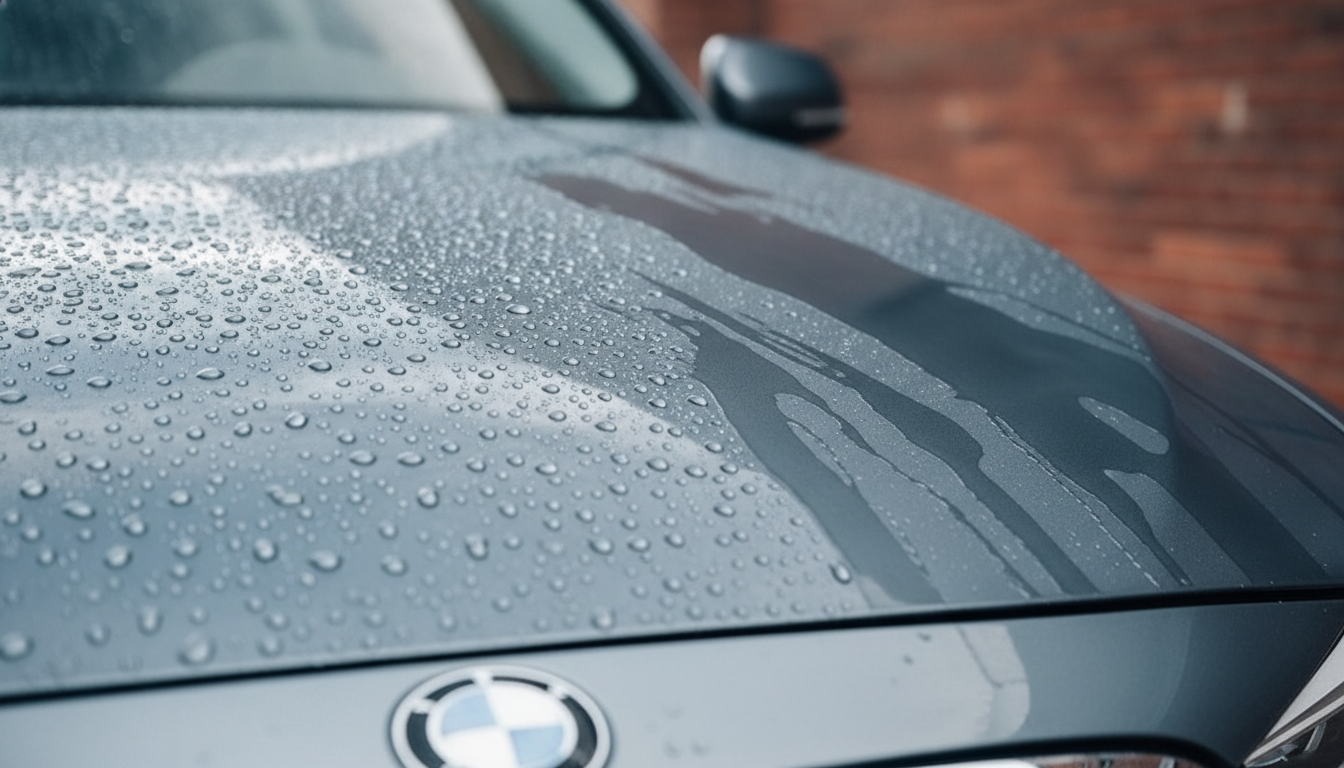
- Hydrophobic behavior: Water beads and runs off panels, so dirt carries away during rinses and touchless pre-washes.
- Easier washes: A slick surface cuts scrubbing passes. Many owners finish maintenance washes in about 20–30 minutes.
- Longer protection: Quality coatings maintain performance far longer than typical waxes or sealants.
- Gloss retention: Coatings preserve that just-polished look even after frequent commuting.
Where coatings sit among protection options
- Wax: Great gloss and warmth, but shorter life and weaker chemical resistance.
- Sealant: Synthetic protection with better longevity than wax, moderate slickness.
- Ceramic coating: Strongest balance of gloss, chemical resistance, and longevity for daily use.
- PPF (paint protection film): Physical barrier for chips and abrasion, often paired with coating.
At Prime Auto Wash, coatings are offered alongside professional ceramic coating service and optional paint correction to remove swirls before sealing in the finish.
Is Ceramic Coating Worth It for Daily Drivers?
Yes—ceramic coating is worth it for daily drivers who want faster maintenance, durable shine, and year-round protection. It reduces wash effort, preserves clarity after thousands of miles, and shields against UV and salt, making it a practical upgrade for commuters and family vehicles.
Worth is about outcomes over months and years, not a single wash. In our experience working across Mississauga and the GTA, daily-driven cars stay cleaner between washes and show fewer etched water marks when protected by a coating.
Real-world results we see locally
- Fewer stubborn water spots: Hydrophobic panels dry faster, lowering the chance of mineral etching after rain.
- Less bonded grime: Road film, bug residue, and winter sludge release with less agitation.
- Gloss that lasts: Vehicles continue to look “just detailed” after routine maintenance washes.
When a coating is a smart move
- You park outdoors at work or home and want UV and fallout defense.
- You wash regularly and value saving 15–30 minutes per wash over time.
- You drive through winter and want salt to rinse away more easily.
Pairing ceramic with strategic services like ceramic coating in Brampton and routine upkeep delivers the biggest long-term payback for daily drivers.
How Ceramic Coating Works (Without the Hype)
Ceramic coatings crosslink to your clear coat and cure into a thin, dense layer with high surface tension. This makes water bead, enhances gloss, and adds chemical resistance. Proper prep—deep clean, decontamination, and correction—ensures the coating bonds uniformly and performs as intended.
The science is straightforward: a liquid coating with reactive groups bonds to your clear coat. After cure, the film’s tight structure raises surface tension and slickness.
Prep stages that decide performance
- Wash and decon: Remove traffic film with a pH-balanced shampoo and decontaminate with clay and iron removers.
- Correct the paint: Polish away swirls so the coating locks in clarity rather than defects. See our paint correction guide.
- Alcohol wipe: Displace oils for a clean surface that promotes bonding.
Application quality matters
- Thin, even layers: Over-application makes removal difficult and can cause high spots.
- Controlled environment: Stable temperature and lighting help spot residue and ensure full cure.
- Post-cure care: Keep the vehicle dry for the initial curing window to prevent spotting.
We apply coatings in-shop for maximum control or via our self-contained mobile unit when convenience is essential. Either way, we bring the right lighting, pads, and towels to deliver consistent results.
Ceramic Coating vs Wax vs Sealant (and Where PPF Fits)
Ceramic coatings last longer and resist chemicals better than waxes or sealants, making them ideal for daily drivers. Wax gives warm gloss but needs frequent reapplication; sealants last longer but lack ceramic’s hardness. PPF prevents chips; many owners top film with a coating for easier cleaning.
Each protection type solves a different problem. Matching the solution to how you use your car prevents disappointment and wasted effort.
Quick comparison
| Attribute | Ceramic Coating | Sealant | Wax | PPF |
|---|---|---|---|---|
| Primary benefit | Longevity + chemical resistance | Balanced longevity | Warm gloss | Rock-chip + abrasion defense |
| Hydrophobicity | High | Moderate | Moderate | Low (unless ceramic topped) |
| Reapplication frequency | Infrequent | Occasional | Frequent | N/A (long-term film) |
| Physical impact resistance | Minimal | Minimal | Minimal | High |
| Ideal use | Daily drivers wanting low-maintenance shine | Balanced all-around users | Show and weekend cars | Highway commuters, new cars |
Many drivers pair PPF on strike zones (front bumper, hood edges, mirrors) with a coating over paint and film. For more on compatibility, see this explanation on coating over PPF and a primer on PPF advantages.
Why Ceramic Coating Matters in Mississauga and the GTA
In the GTA’s four-season conditions, ceramic coatings help fight UV fade, winter salt, and frequent rain. Daily drivers see fewer bonded contaminants and shorter wash times, especially when parking outdoors or commuting on busy routes where road film builds up quickly.
Mississauga commuters face abrupt weather shifts, salt-heavy winters, and plenty of construction dust. Coatings help by making surfaces less sticky to grime and easier to rinse clean.
Common local pain points a coating improves
- Winter salt residue: Hydrophobic surfaces release slush and brine more easily.
- Sun exposure: UV resistance helps preserve clarity on outdoor-parked vehicles.
- Frequent rain: Faster drying reduces spotting if you can’t towel dry immediately.
Local considerations for Unit #3
- Plan maintenance washes near Mississauga Chinese Centre corridors when traffic is light; fewer airborne particulates mean cleaner, safer drying.
- Schedule a decon and topper just before freeze–thaw cycles; winter slush around Westacres Park trails can load lower panels fast.
- Mobile service is ideal if your condo wash bay is busy; our self-contained unit needs no building hookups.
When working with clients near Unit #3, we often combine decon, correction, and coating in one visit so the paint is clean, defect-free, and sealed before the next weather swing.
Daily-Driver Maintenance Best Practices
Keep coated cars performing by using pH-balanced soaps, quality mitts, and safe drying. A simple 20–30 minute routine—rinse, contact wash, and gentle drying—preserves slickness and gloss while avoiding scratches and water spots.
Maintenance is where coatings shine. You’ll spend less time scrubbing and more time enjoying a consistently glossy finish.
Routine wash playbook (fast and safe)
- Pre-rinse: Knock off dust and film with a pressure rinse.
- Two-bucket contact wash: pH-balanced shampoo, separate rinse bucket, soft mitt.
- Wheels and tires: Dedicated brushes and mitts to avoid cross-contamination.
- Rinse and sheet: Low-pressure flow to sheet water off large panels.
- Dry: Blower plus plush towels to minimize touching; mist a drying aid if needed.
Do’s and don’ts that extend performance
- Do use high-quality microfiber towels and replace worn ones.
- Do decontaminate with clay or iron removers a few times a year as needed.
- Don’t use harsh degreasers on paint; they strip toppers and can dull finishes.
- Don’t wash under direct sun if you can avoid it; water spots are more likely.
For busy weeks, our mobile detailing service brings water, power, and pro tools to your driveway or office so upkeep never slips.
Professional Application vs DIY
Professional application controls lighting, temperature, and panel prep for uniform bonding and fewer high spots. DIY can work, but pros reduce risk by correcting paint first and verifying coverage. For daily drivers, expert prep and installation deliver the most consistent, durable results.
We’re often asked if DIY is “good enough.” It can be—if you have time, tools, and a controlled space. But professional application reduces risk and speeds the process.
When to choose a pro install
- Swirled or hazy paint: Correction first, then coat, prevents locking in defects.
- Busy schedule: Outsourcing saves several hours and avoids redo time from high spots.
- Harsh storage: Outdoor parking benefits most from a well-prepped, fully cured coating.
For perspective on pro workflows versus do-it-yourself in other finishing trades, see this overview of professional vs DIY refinishing. The quality gap often comes from prep quality and environmental control—exactly what coatings require.
Pairing Ceramic Coating with PPF
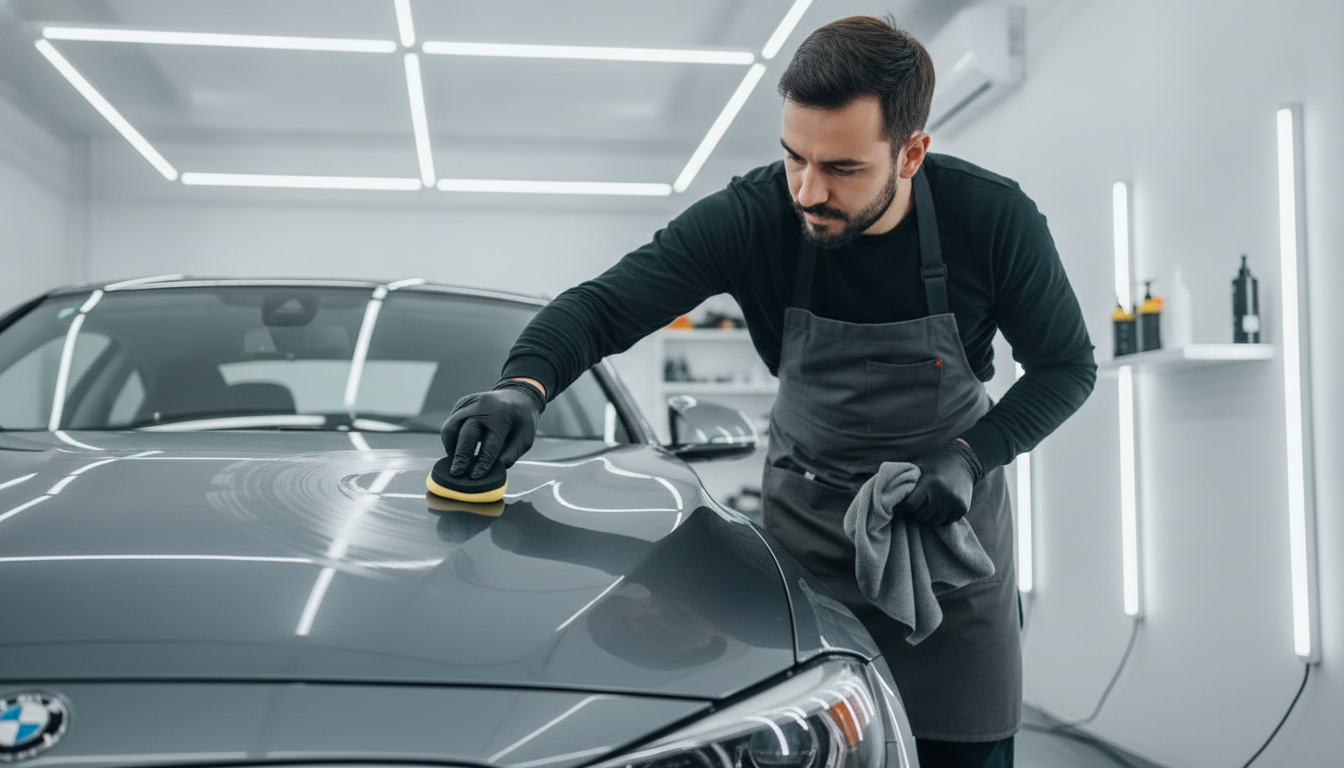
PPF stops rock chips and abrasion; ceramic coating adds slickness and chemical resistance. Together, they deliver robust daily-driver protection: film on high-impact panels, coating over paint and film for easier cleaning and consistent gloss.
Highway commuting or new-vehicle ownership often justifies film on leading edges, then coating across all painted and filmed panels for ease of care.
Strategic combinations we install
- Front-end PPF + full-body coating: Best for long highway runs and winter salt.
- Partial PPF on rockers + coating: Ideal for city driving with occasional trips.
- Wheel faces coated: Cuts brake-dust adhesion and speeds wheel cleaning.
If you’re planning PPF first, it’s perfectly normal to add a coating on top of film for hydrophobic behavior. We handle both in-shop so surfaces are corrected, filmed, and coated in a single project window.
Tools and Resources We Rely On
Solid results come from repeatable process and pro-grade tools: pH-balanced soaps, quality mitts and towels, safe decon chemicals, polishers, and lighting. These reduce marring, ensure even bonding, and keep coated daily drivers looking their best with minimal effort.
In our mobile unit and shop, we standardize the kit so every detail meets the same bar.
- Contact wash: pH-balanced shampoo, two buckets, grit guards, soft mitts.
- Decon: Fine clay media and iron removers for smooth paint.
- Correction: Dual-action polishers, foam and microfiber pads matched to paint type.
- Inspection: Bright LEDs to spot micro-marring and residue.
- Protection: Industry-grade coatings and safe toppers.
If your engine bay also needs attention, our step-by-step engine detailing process keeps plastics and painted surfaces looking fresh without harsh overspray on newly coated panels.
Local Case Studies and Scenarios
Daily drivers in Mississauga see tangible time savings and cleaner finishes with ceramic coating. From outdoor-parked commuters to rideshare operators, coatings reduce stuck-on grime and speed washes, especially through winter salt and spring pollen cycles.
Outdoor-parked commuter (Unit #3): We corrected light swirls, applied coating, and trained the owner on a 25-minute maintenance routine. After weeks of mixed weather, the car still dried spot-free with minimal towel work.
Rideshare operator: Interior cleaning plus a coating on high-touch exterior areas made weekly washes quicker. The driver reported faster prep between shifts and better first-impression shine.
New SUV owner: We installed PPF on the bumper and hood edges, then coated paint and film. Brake-dust removal on coated wheels went from a multi-brush task to a quick mitt pass.
These outcomes repeat across customers who stick to the maintenance basics and avoid harsh chemicals.
Pricing and Value Factors (No Dollar Figures)
Evaluate value by considering prep level, product quality, installer skill, and aftercare. Coatings paired with proper correction, clean environments, and clear maintenance guidance deliver the most durable, time-saving protection for daily drivers.
While we never discuss specific pricing in articles, we can explain the value levers that matter.
- Paint condition: Heavier correction increases labor but transforms the final look.
- Environment: In-shop application maximizes control; mobile is ideal for convenience.
- Coverage: Whole-vehicle coating versus targeted panels and wheels.
- Aftercare: Access to maintenance washes and annual inspections sustains performance.
Curious what a coating package includes? Explore our ceramic coating service page or ask how coating integrates with routine detailing frequency.
Common Mistakes Daily Drivers Make
The biggest mistakes are skipping paint prep, using harsh cleaners, and neglecting safe wash technique. These shorten coating life and can lock in defects. Correct the paint, apply thin and evenly, and maintain with gentle products for the best results.
- Coating over swirls: Don’t trap defects—polish first.
- Harsh detergents: Strong cleaners strip toppers and mute gloss.
- Dirty towels: Reintroduce marring; rotate and replace often.
- Ignoring wheels: Coating wheels cuts cleaning time dramatically—don’t skip them.
We review these pitfalls during handoff and provide a simple checklist so owners keep that fresh, high-gloss look.
Thinking About Coating Your Daily Driver?
If you want faster washes, deeper gloss, and year-round protection, a professionally applied ceramic coating is a smart choice. We correct, coat, and coach you on upkeep—mobile or in-shop—so your daily driver stays cleaner with less effort.
Book an assessment and we’ll map the right approach: correction level, coating coverage, and optional PPF on high-impact zones. We offer both controlled in-shop installs and a self-contained mobile service that brings water, power, and lighting to you.
Frequently Asked Questions
Get quick, direct answers to the most common ceramic coating questions daily drivers ask in Mississauga. Each response is concise and action-focused so you know exactly what to do next.
Will ceramic coating stop rock chips?
No. Coatings add chemical resistance and slickness but do not absorb impacts. For chip protection, use paint protection film on high-impact panels, then top with a ceramic coating for easier cleaning.
How long does ceramic coating last on a daily driver?
Longevity depends on prep quality, environment, and maintenance. With proper washes and periodic decontamination, coatings retain hydrophobics far longer than wax or sealants, making them ideal for everyday commuting.
Can I apply ceramic coating over PPF?
Yes. Many owners coat both painted panels and PPF. The film handles impacts; the coating adds slickness and chemical resistance. Verify product compatibility and follow the film’s cure recommendations before coating.
Do I still need to wash a coated car?
Absolutely. Coatings reduce adhesion and speed cleaning, but dirt still accumulates. Regular pH-balanced washes and gentle drying keep the surface slick, glossy, and spot-free.
Is wax pointless after ceramic coating?
Wax isn’t necessary for protection, but some owners like the look. If you choose to top a coating, use a compatible spray topper rather than heavy paste waxes that can mute slickness.
Key Takeaways
Ceramic coatings make daily-driver maintenance faster and more consistent than wax or sealant alone. Pair with good wash habits—and PPF on impact zones—for the best long-term results in Mississauga’s mixed weather.
- Ceramic coatings save time on every wash and keep gloss longer.
- They don’t stop chips; that’s PPF’s job. Many owners combine both.
- Prep quality and safe maintenance are the biggest performance drivers.
- Mobile or in-shop installs are available for Unit #3 and nearby areas.
Conclusion
For daily drivers, ceramic coating is a practical upgrade: fewer hours cleaning, more time enjoying a deep, consistent shine. With proper prep and maintenance, it outperforms waxes and sealants, especially through the GTA’s winter salt and summer sun.
Here’s what most people don’t realize: the coating is only as good as the prep and your maintenance routine. If you want a paint finish that resists grime and stays glossy with minimal effort, schedule an evaluation. We’ll align correction, coating, and optional PPF to how you really drive.