Ceramic coating for new cars is a semi-permanent, liquid-applied shield that bonds to your clear coat to boost gloss, repel water, and resist UV, salt, and stains. For Unit #3, Mississauga drivers, it keeps factory paint cleaner longer, reduces wash time, and preserves that showroom look with far less upkeep.
By Prime Auto Wash • Last updated: 2026-07-05
Overview and Table of Contents
This complete guide explains what ceramic coating is, why it benefits new cars, how professional application works, and how to maintain results. Use the table of contents to jump to coating types, a PPF comparison, pro tips, local considerations for Unit #3, and actionable next steps.
Here’s what you’ll learn at a glance:
- What ceramic coating is and how it bonds to clear coat
- Why ceramic coating benefits for new cars are strongest in the first 90 days
- Prime Auto Wash’s pro process (mobile or in‑shop) from decon to cure
- Types: single vs multi-layer, SiO2 vs graphene-infused, coating over PPF
- Best practices, maintenance schedule, and realistic longevity
- Comparison: ceramic coating vs paint protection film (PPF)
- Local considerations for Unit #3, Mississauga (salt, seasons, parking)
- Mini case studies and a practical checklist to decide your next step
- What Is Ceramic Coating?
- Why Ceramic Coating Matters for New Cars
- How Ceramic Coating Works (Step-by-Step)
- Types, Methods, and Approaches
- Best Practices for Application on New Cars
- Tools and Resources We Use
- Case Studies and Examples
- Ceramic Coating vs. PPF: Practical Comparison
- Maintenance and Longevity
- Frequently Asked Questions
- Conclusion and Next Steps
What Is Ceramic Coating?
Ceramic coating is a liquid polymer (often SiO2-based) that chemically bonds with your vehicle’s clear coat to add a durable, glossy, and hydrophobic surface. The cured layer resists UV, chemicals, light abrasion, and staining, helping new paint maintain color depth and clarity under real-world driving conditions.
Ceramic coatings form a cross-linked, inorganic network on top of clear coat. Many professional-grade formulas cure to a pencil hardness often cited as “9H,” which helps resist micro-marring from washing. Typical dry film thickness ranges around 0.5–1.0 microns—ultra-thin yet extremely functional.
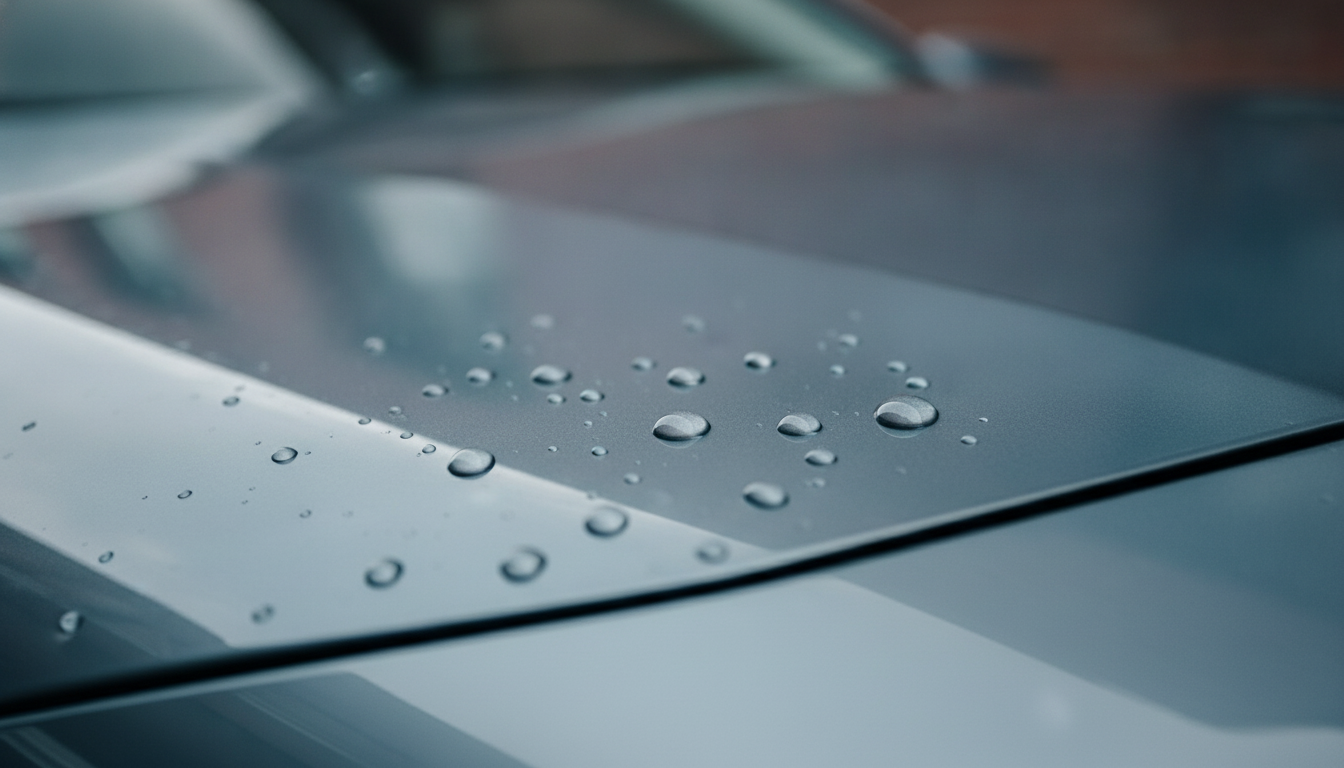
- Hydrophobic behavior: Contact angles commonly exceed 100°, so water beads and sheets off quickly.
- UV and chemical resistance: The matrix helps reduce oxidation and clear coat etching from bird droppings or bug residue when removed promptly.
- Optical clarity: Coatings enhance perceived gloss and color depth by smoothing surface irregularities at a microscopic level.
In our experience detailing across the GTA, new vehicles see the most dramatic “wow” factor because factory paint is typically free of deep defects. That’s the ideal baseline to lock in with protection on day one.
Explore the service details on our ceramic coating overview for a deeper look at what we apply and where it fits in your car care plan.
Ceramic Coating Benefits for New Cars: Why It Matters
New cars benefit most from ceramic coating because the clear coat is fresh, defect-minimal, and ready to lock in. The coating adds hydrophobic, UV, and chemical resistance, preserves gloss, and makes cleaning easier—ideal for Mississauga’s sun, rain, and winter salt cycles.
Here’s the thing: a “new” car’s surface often isn’t perfect. Transport film, dealership washes, and handling can leave light swirls or bonded contaminants. We regularly find residue even on delivery-day vehicles. A professional decontamination and light polish remove this before coating, so you’re sealing in the best possible finish.
- Preserve factory paint: Lock in clarity and depth before swirls multiply from routine washing.
- Salt defense: Winter roads deposit chlorides that cling to paint and trim; a hydrophobic coating helps reduce adhesion and speeds rinsing.
- UV stability: Coatings reduce the rate of clear coat oxidation, slowing fade and yellowing on exposed panels.
- Faster washes: A slick surface encourages dirt release; owners report noticeably shorter wash times once coated.
- Lower chemical load: Routine care can rely on pH-neutral soap and gentle techniques, reducing harsh cleaners.
For Unit #3 drivers who park outdoors or commute on the QEW/403 corridors, the protection gap between a coated and uncoated finish becomes obvious by the first winter. After repeated freeze–thaw cycles, we see coated vehicles hold gloss and shed grime more readily during hand washes.
You can review options tailored to new vehicles on our ceramic coating service page, including how we prepare paint prior to sealing.
How Ceramic Coating Works (Step-by-Step)
A pro application follows a defined workflow: wash, decontaminate, polish, panel wipe, apply coating, level, and cure. Each stage builds surface purity and bond strength. The result is a thin, uniform protective layer that delivers gloss, water beading, and easier maintenance.
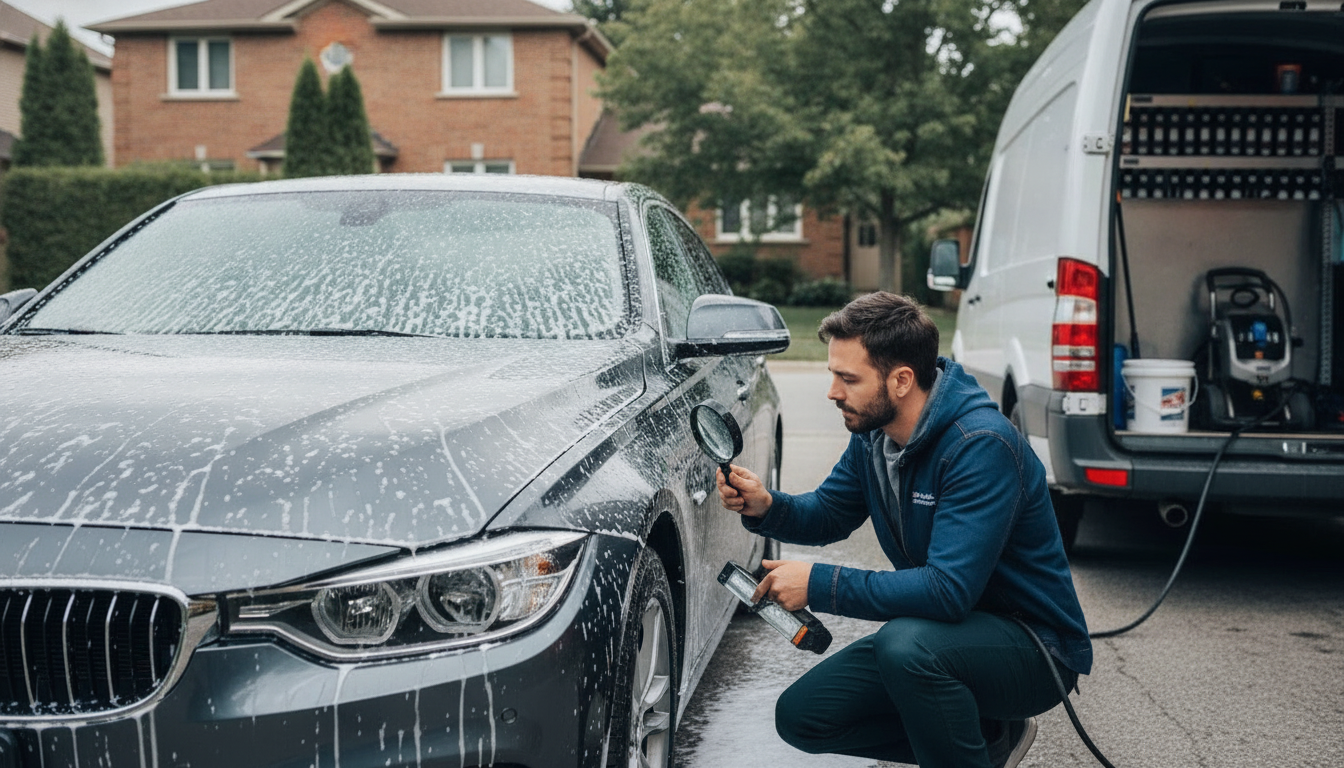
Our Prime Auto Wash process is engineered for repeatable results—on your driveway or in our controlled Mississauga shop. The same certified team and tools travel in our self-contained mobile unit, bringing power, water, and pro-grade equipment.
- Pre-rinse and foam wash: We reduce loose grit, then use a two-bucket contact wash with clean mitts.
- Decontamination: Iron fallout remover followed by a clay bar treatment removes bonded particles that soap can’t touch.
- Paint inspection and polish: Even new cars get a refining pass to remove haze or light swirls and to raise gloss.
- Panel wipe: An alcohol-based prep solvent strips polishing oils for a clean, high-energy surface.
- Coating application: We apply thin, even sections with dedicated applicators, watching flash times by temperature and humidity.
- Leveling and buff: High spots are leveled to ensure clarity and uniform protection.
- Initial cure: Avoid water exposure for 12–24 hours; full cross-linking often continues for 5–7 days.
Quantitatively, coatings behave like a sacrificial, nano-thin shell that’s both hydrophobic and chemically resistant. The surface energy shift is visible in tight, round water beads and rapid sheeting during rinses.
See our GTA-wide availability for at-home service in mobile car detailing at home or office if you prefer on-site convenience.
Types, Methods, and Approaches
Ceramic coatings vary by chemistry (SiO2, SiC, graphene-infused), solids content, and layer strategy. Professional, high-solids formulas with careful prep typically outlast DIY versions. You can also top PPF with a coating for easier cleaning and enhanced gloss.
Choosing the right approach depends on paint condition and goals. We help new-car owners decide between:
- Professional single-layer: High-solids SiO2 coating designed for daily drivers; excellent gloss and hydrophobics.
- Professional multi-layer: A base for durability, a top coat for slickness; stacked for enhanced longevity when maintenance is dialed.
- Graphene-infused: Often marketed for anti-static behavior; results vary by brand and preparation quality.
- DIY consumer coatings: Lower solids and easier handling; expect shorter service life compared to pro installation.
- Coating over PPF: Adds easy-clean and gloss to film-protected impact zones.
When film is present, many owners add a coating to unify gloss across panels. For compatibility details, see this discussion on applying ceramic over film from Sunkool.
We also provide paint protection film for areas that take rock chips—then layer a coating on surrounding paint for uniform care.
Best Practices for Application on New Cars
The best results come from meticulous prep, controlled application, and a conservative first wash window. Even brand-new cars benefit from decon and a light polish before coating to prevent sealing in haze, rail dust, or micro-swirls.
Preparation and technique
- Decontaminate first: Use iron fallout remover, then clay to purge bonded grit that creates drag and micro-marring.
- Refine the finish: A finishing polish raises gloss and removes light dealer-induced swirls—critical before sealing.
- Panel-by-panel focus: Work small sections so flash times stay consistent; temperature and humidity change behavior.
- Dedicated towels: Use new, high-GSM microfibers to level and catch high spots without imparting lint.
- Edge awareness: Emblems, trim, and PPF edges need gentle cross-strokes to avoid buildup.
Early ownership timeline
- Days 0–7: Avoid water if possible during initial cure; skip tunnels and keep under cover.
- Days 7–14: Gentle hand wash only with pH-neutral soap; no abrasive drying aids.
- Day 30 and beyond: Establish a maintenance rhythm and consider a silica spray topper every 1–3 months.
Local considerations for Unit #3
- Plan application around winter storms; fresh coatings shed salt better after a full cure. Pro tip: book just before peak snow forecasts.
- Parking near the Mississauga Chinese Centre? Tree-lined spots can drop sap. A cured coating makes safe removal faster.
- Weekend washes after a drive through Westacres Park trails? Rinse off dust and pollen promptly to maintain hydrophobics.
Need help? Our certified team can perform everything on-site with our self-contained unit or in our controlled shop. Explore ceramic coating service details and availability.
Curious if your brand-new vehicle needs paint correction first? Book a quick assessment. We’ll measure paint, inspect under proper lighting, and recommend a coating plan tailored to how and where you drive in Unit #3.
Tools and Resources We Use
Professional outcomes require purpose-built tools: foam cannons, calibrated polishers, paint gauges, lighting, and controlled-wash chemistry. Prime Auto Wash’s mobile unit carries power, water, steam, extractors, and compressors to deliver shop-level quality on your driveway.
Detailing hardware
- Power and water onboard: Self-contained supply ensures consistent results without tapping your utilities.
- Dual-action polishers: Finishing passes refine gloss while minimizing heat and risk on fresh clear coat.
- Paint depth gauge: Confirms safe correction margins, especially on thin factory panels.
- Color-accurate lighting: High-CRI inspection lights reveal haze and high spots before cure.
Chemistry and accessories
- pH-neutral shampoos (6–8): Clean without stripping toppers or dulling the finish.
- Lubricated clay and fallout removers: Purge bonded particles to reduce marring during contact stages.
- Panel prep solvents: Remove polishing oils so the coating can bond uniformly.
- Microfiber system: Wash, level, and buff with dedicated towels to avoid cross-contamination.
If you prefer the convenience of home service, check our mobile detailing guide for what to expect and how we protect your property during setup.
Case Studies and Examples
Real vehicles, real conditions: these brief case notes show how coatings perform for Unit #3 drivers. You’ll see how prep quality, driving environment, and maintenance habits affect results across seasons.
- New compact daily driver, outdoor parking: We refined light dealer swirls, applied a single-layer pro coating, and scheduled quarterly topper visits. After the first winter, the owner reported faster rinses and fewer stubborn salt streaks on lower doors.
- Luxury SUV, mixed indoor/outdoor: Multi-layer package with meticulous edge work around trim and roof rails. Six months later, water contact angles remained tight and glossy despite frequent highway splatter.
- Rideshare sedan in heavy rotation: Coating plus interior sanitization during the same visit. We paired gentle bi-weekly washes and quarterly decon. Even with high mileage, the paint retained strong gloss metrics under inspection lights.
- PPF + coating hybrid on a new performance car: We installed PPF on impact areas (bumper, hood, mirrors), then coated remaining panels and wheels. Cleaning time dropped, and bug residue released with a gentle pre-rinse on road trips.
These patterns match what we’ve found across Mississauga and the GTA: consistent technique and a simple maintenance plan are the multipliers that keep a new car looking, well, new.
Ceramic Coating vs. PPF: Practical Comparison
Ceramic coatings excel at gloss, hydrophobics, and chemical resistance; PPF excels at impact and chip resistance. Many owners combine them—PPF on high-strike zones and coating on the rest—for comprehensive protection and easier cleaning.
Paint protection film (PPF) is a thicker urethane membrane designed to absorb impacts from gravel and road debris. Typical films measure roughly 150–200 microns versus a coating’s 0.5–1.0 micron layer, so they serve different jobs. As a result, pairing them is common for new cars.
| Attribute | Ceramic Coating | Paint Protection Film (PPF) |
|---|---|---|
| Primary strength | Gloss, hydrophobics, chemical resistance | Impact and chip resistance |
| Typical thickness | ~0.5–1.0 microns | ~150–200 microns |
| Self-healing | No | Often yes (heat-activated) |
| Hydrophobic behavior | Strong beading/sheeting | Good, improves with coating topper |
| Rock chip defense | Low | High |
| Typical placement | All painted panels | Bumper, hood, fenders, mirrors, sills |
You can coat film for easier cleaning and added gloss. See this overview of film benefits from Sunkool’s PPF advantages and their general PPF guide for context. For installation details, visit our PPF service page.
Maintenance and Longevity
A coated new car stays cleaner longer with simple habits: gentle hand washes, pH-neutral soap, soft drying, and periodic decon. Expect strong behavior when you avoid harsh chemicals and keep a consistent wash rhythm through Mississauga’s seasons.
Simple maintenance rhythm
- Hand wash every 2–3 weeks: Use a pH-neutral shampoo, plush mitt, and fresh drying towels.
- Decon every 3–6 months: Remove iron and light deposits to keep the surface slick and the beading tight.
- Topper sprays (1–3 months): Silica-based sealants refresh slickness and improve self-cleaning.
- Avoid harsh tunnels: Rotary brushes and high-pH chemicals shorten coating life and mar paint.
Seasonal adjustments for Unit #3
- Winter: Quick rinses after snow melts reduce chloride dwell time on rockers and wheel arches.
- Spring: Decon to purge rail dust and pollen; reapply a topper to prepare for summer sun.
- Fall: Leaf tannins can stain; address promptly with a gentle, pH-safe wash.
If you want help building a calendar, our team can align washes and decon visits with your driving patterns. We also address issues like summer sun exposure and suggest add-ons like wheel and glass coatings for complete coverage.
Frequently Asked Questions
These quick answers address common new-car questions about coatings, prep, maintenance, and how ceramic compares to PPF. Each response is concise for fast decision-making.
Do brand-new cars still need paint correction before coating?
Often yes. Transport and dealer prep can leave light swirls or residue. A refining polish boosts gloss and removes haze so you’re not sealing in defects. We inspect paint under high-CRI lighting to confirm the right approach for your vehicle.
How long should I wait before the first wash after coating?
Avoid water contact for 12–24 hours and skip soaps for about a week while cross-linking continues. After the first week, a gentle hand wash with pH-neutral shampoo is safe. We’ll provide care instructions tailored to the product used.
Is ceramic coating better than wax or sealant?
For durability and chemical resistance, yes. Coatings bond to clear coat and last far longer than wax or traditional sealants. You still wash regularly, but the surface stays slicker and resists contaminants more effectively.
Can I apply ceramic coating over PPF?
Yes. Coating over film adds gloss and easier cleaning. Film handles impacts; the coating enhances hydrophobics. We prep the film first and apply compatible layers for a seamless look across painted and filmed panels.
Will a coating stop rock chips?
No. Coatings are thin and don’t absorb impacts. If rock chips are a concern, we recommend PPF on high-strike zones and ceramic on remaining panels. Many new-car owners choose both for complete protection.
Conclusion and Next Steps
For new cars, ceramic coating locks in a clean, glossy baseline and makes routine care faster year-round. Pair it with PPF on impact zones for comprehensive defense, then follow a simple wash cadence to keep the finish looking new.
Key takeaways
- Ceramic coating benefits for new cars are strongest when applied early.
- Prep quality drives results; even new paint needs decon and refinement.
- Coating = gloss and easy cleaning; PPF = impact resistance. Combine for the win.
- Simple, pH-neutral maintenance sustains hydrophobics and gloss.
Action steps
- Book a paint inspection to confirm if correction is needed.
- Decide zones for PPF vs coating based on driving routes and parking.
- Set a basic wash and decon calendar aligned with Mississauga seasons.
Ready to protect your new car in Unit #3? Explore ceramic packages or chat with us about PPF placement. We’ll come to you—or host your vehicle in our controlled shop—for a flawless, durable finish.