
Winter salt stains are the white, crusty mineral rings left after de-icer and melted snow dry on car upholstery. If you’re searching how to remove winter salt stains from seats, the short answer is: dissolve the salts, extract fully, and dry fast to stop rings from returning—then protect the surface.
By Prime Auto Wash • Last updated: July 9, 2026
Unit #3 winter quick tip (Mississauga)
GTA roads are pre-wet with brine during storms, so splashback hits seats and pant cuffs fast. After errands near the Mississauga Chinese Centre or a wet run by Westacres Park, run cabin heat on fresh air for 5–10 minutes. Early airflow dries crystals before they set into a hard ring.
Summary: What You’ll Learn
You’ll get pro-approved steps for fabric and leather, exact dwell times, tool choices, and fixes for reappearing rings and odors. We also show clear signals to stop DIY and book Prime Auto Wash for Full Interior Detailing or Mobile Car Detailing across the GTA.
We clear hundreds of winter stains every season. If you can feel a gritty ridge when you run a fingernail across the white line, the salts are still in the fibers—not just on top. The method below removes the minerals, not just the visible haze.
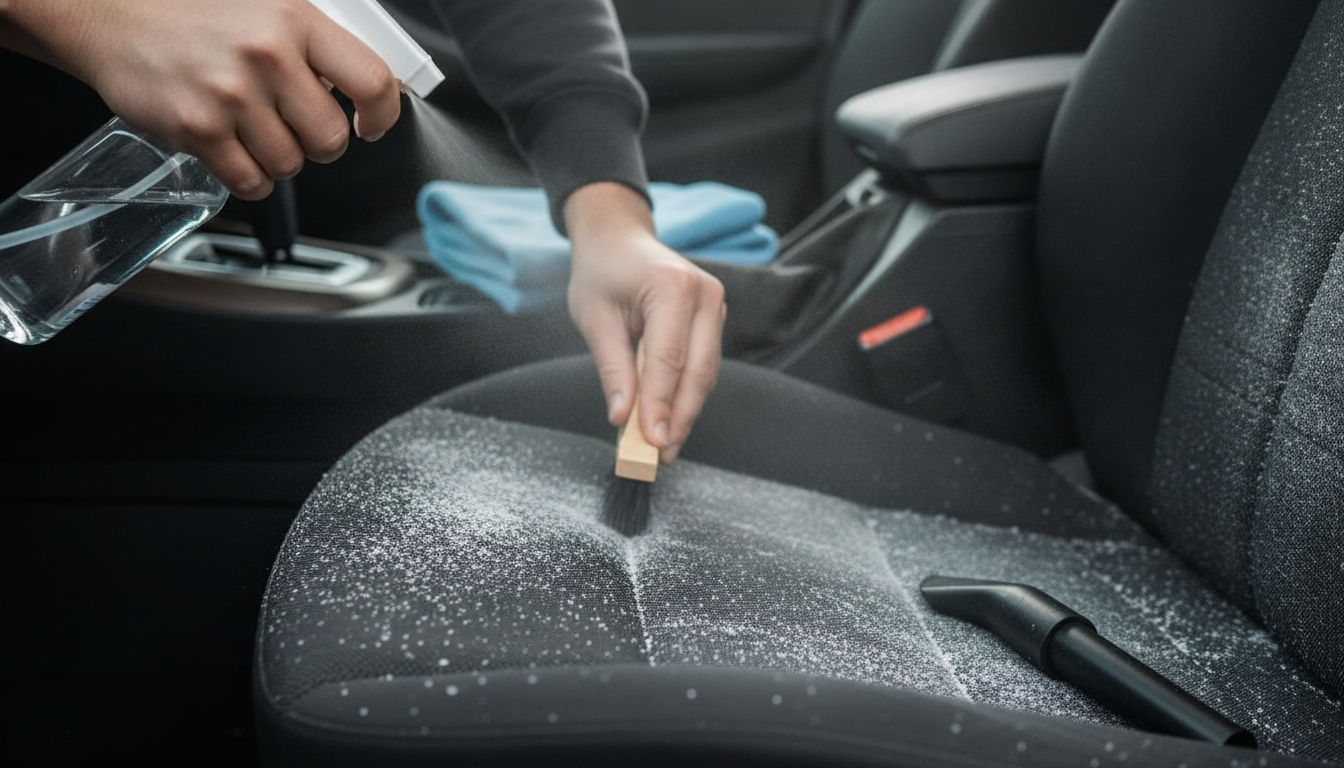
What You Need Before You Start (Prerequisites)
Use the right chemistry and control moisture. Prepare vinegar + distilled water for fabric, a pH-neutral cleaner and conditioner for leather, soft brushes, microfiber towels, and a wet/dry vac or extractor. Pre-vacuum and test in a hidden spot. Aim for warm airflow to speed drying.
Supplies and tools
- Fabric seats: White vinegar + distilled water (1:1), soft nylon upholstery brush (0.2–0.3 mm bristles), microfiber towels (5–8), wet/dry vacuum or extractor.
- Leather seats: pH-balanced leather cleaner (pH 6–7), water-based leather conditioner with UV inhibitors, soft applicator pad, clean microfiber towels.
- Drying: Cabin heat + fan; target touch-dry in ~20 minutes per treated area.
Why these matter
- Distilled water prevents new mineral spots; tap water can re-crystallize.
- pH-correct products keep dyes stable and avoid drying out leather.
- Extraction pulls salts out of the foam so rings don’t “ghost” back.
If you prefer a done-for-you reset, our in-shop Interior Detailing and elevated Interior Detailing Pro combine steam and hot-water extraction for deep mineral removal, and our Mobile Car Detailing at home or office brings the same gear to your driveway.
| Seat Material | Safe Pre-Treatment | Recommended Motion | Avoid |
|---|---|---|---|
| Cloth/Fabric | Light mist 1:1 vinegar:distilled water | Edge-to-center circles, light pressure | Soaking, harsh degreasers, colored towels |
| Leather | pH-neutral leather cleaner on applicator | Short strokes along grain seams | Vinegar on leather, magic erasers, ammonia |
How to Remove Salt Stains from Cloth Car Seats (Step-by-Step)
Mist, dwell 60–90 seconds, agitate 20–30 seconds with a soft brush, then blot and extract. Use 2–4 light passes instead of one heavy soak. Finish with a quick distilled-water rinse and airflow until touch-dry in about 20 minutes.
- Vacuum thoroughly (2–3 minutes). Lift grit so it won’t scratch. Use a crevice tool at seams.
- Pre-dampen (lightly). A quick distilled-water mist reduces wicking beyond the stain.
- Apply vinegar solution. 1:1 white vinegar:distilled water. Let it dwell 60–90 seconds—no puddles.
- Agitate gently. Soft nylon brush, 20–30 seconds, edge toward center to corral minerals.
- Blot, then extract. Microfiber first, then wet/dry vac or extractor. With extractors, warm water at 120–140°F speeds release.
- Rinse pass. Light mist of distilled water; extract again until your pickup looks clear.
- Dry and protect. Heat on fresh air. After fully dry, apply a fluoropolymer fabric guard (not silicone) in two light coats, 10 minutes apart.
Sensory check: rub the area with the back of your hand. If it feels crunchy or you can scratch a gritty ridge with a fingernail, salts remain—repeat the rinse/extract pass and expand your work zone by 2–3 inches.
How to Remove Salt Stains from Leather Car Seats (Step-by-Step)
Skip vinegar on leather. Use a pH 6–7 leather cleaner on an applicator pad, let sit 30–45 seconds, wipe gently, then buff dry. Recondition with a water-based product to restore suppleness and protection. Avoid soaking seams and perforations.
- Dry wipe. Use a clean microfiber to lift loose crystals—no pressure.
- Apply cleaner to pad. 2–3 mL per palm-sized panel. Dwell 30–45 seconds.
- Light agitation. Short overlapping strokes along the grain; avoid scrubbing.
- Buff dry. Fresh microfiber until streak-free; inspect seams and perforations.
- Condition. Thin, even layer of water-based, non-greasy conditioner with UV inhibitors; allow 10–15 minutes to absorb.
- Reassess. If faint edges remain, repeat a light cleaner pass before a second, thinner condition.
For ongoing leather health, see our leather seat care guide. Salt dries leather quickly; conditioning right after cleaning prevents squeaky, chalky feel and premature wear on bolsters.
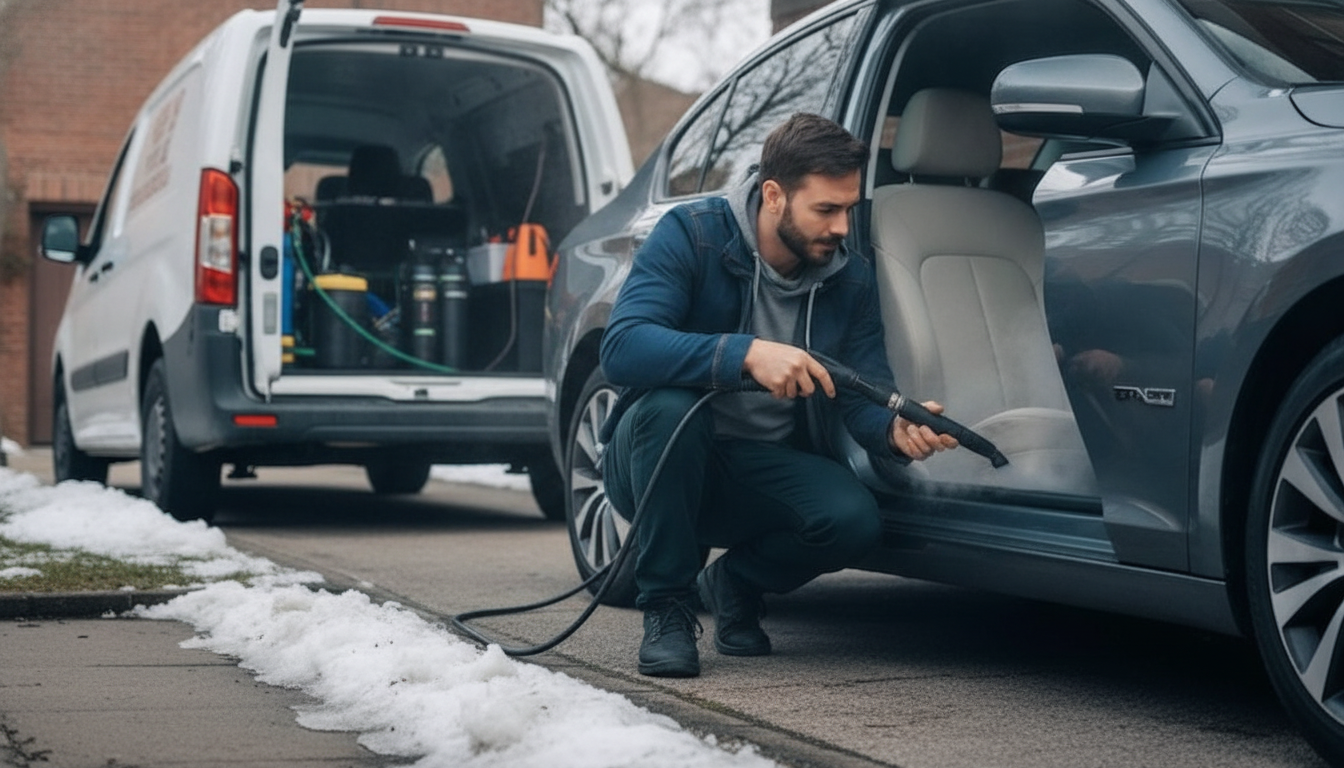
Troubleshooting: When the Stain Won’t Budge
Reappearing white edges mean salt wicked into foam. Expand the treated zone 2–3 inches, re-mist with distilled water, then extract slowly. If a musty smell lingers after 24 hours, you trapped moisture—add heat/airflow or schedule professional hot-water extraction.
- Ghost rings: Treat a larger halo and slow your extractor pass to ~1 inch/second.
- Crunchy texture: Residue remains. Add a brief distilled-water rinse and re-extract.
- Musty odor: Fabric stayed wet too long. Run heat, crack windows, and place a small fan.
- Leather turned dull: Rebalance with a second, thin conditioner coat after 12–24 hours.
General stain-control principles—quick action, controlled moisture, thorough drying—reduce rings and fabric distortion (see stain removal basics). Seasonal home-care reminders reinforce the same logic for winter damp (winter tips overview). For longevity habits, simple fabric-care routines help (cleaning longevity tips).
When to Call a Professional Detailer Instead of DIYing
Stop DIY and call a pro when rings keep returning, stains cover large seat areas, foam is saturated, leather shows color change, or odors persist. Prime Auto Wash uses steam and hot-water extraction to reset interiors quickly—mobile or in-shop.
- Recurring halos even after careful extraction—minerals are deep in foam.
- Large wet zones from melted snow or a door-left-open event.
- Leather discoloration or squeaky dryness after cleaning.
- Time-sensitive rideshare/commercial vehicles that can’t afford repeat attempts.
Choose the right help based on need:
- Interior Detailing: Hot-water extraction on fabrics, targeted plastics and vents, and seatbelt touchpoints.
- Interior Detailing Pro: Deeper steam work, more agitation time on heavy mineral buildup, and added protectants.
- Mobile Car Detailing: Same equipment in your driveway—no hookups required.
Local considerations for Unit #3
- Midday thaw creates slush puddles that soak cuffs and seats. Keep two microfiber towels in the console.
- November–April is peak salt. Book a mid-season and post-season interior refresh to purge buildup.
- Near major stops, quick mobile visits mean less downtime for drivers working the area.
How to Prevent Salt Stains from Setting This Winter
Trap slush at mats, blot fast, and protect surfaces before storms. Apply a fluoropolymer fabric guard to cloth and condition leather. Keep a distilled-water spritzer and two microfibers in the car, and schedule a mid-winter interior reset to purge buildup.
- Rubber mats with lips—empty daily to keep puddles off seats.
- Microfiber + spritzer—one towel to blot, one to dry; use distilled water for quick edge control.
- Pre-season protection—two thin coats of fabric guard, 10 minutes apart; condition leather monthly in heavy salt periods.
- Routine resets—a mid-winter Interior Detailing stops deep migration.
If haze lingers on plastics or door cards after DIY, our deep interior checklist shows how we finish cabins, and our exterior detailing steps help you keep salt off paint and trim.
FAQ
These are the questions Unit #3 and Mississauga drivers ask most. Answers are direct and safe for modern interiors. If your case is tricky, send us photos and we’ll advise the fastest safe route.
Will vinegar damage my car seats?
On cloth, a 1:1 white vinegar and distilled water mix is safe when applied lightly, allowed to dwell ~60 seconds, and extracted well. Avoid vinegar on leather. Use a pH-balanced leather cleaner instead, then condition to restore suppleness.
Can I use steam to remove salt stains?
Yes—light steam softens crystals so they release. Keep passes brief and follow with hot-water extraction or thorough blotting and airflow. Over-wetting causes wicking and rings, so multiple light passes beat one heavy soak.
How long does full removal usually take?
Plan 20–40 minutes per front seat including drying with cabin heat or a small fan. Heavy buildup or foam saturation takes longer and may need professional hot-water extraction to fully clear salts and odor.
What about suede or Alcantara?
Avoid vinegar and heavy scrubbing. Use a dedicated Alcantara cleaner sparingly, blot, and brush fibers in one direction. If rings persist, a professional low-moisture extraction is the safer route to prevent matting.
Key takeaways
- How to remove winter salt stains from seats: dissolve, extract, dry, protect.
- Use fluoropolymer fabric guard on cloth; water-based conditioner on leather.
- Reappearing rings mean deeper salts—expand the work zone and re-extract.
- Pros save time on heavy buildup with steam and hot-water extraction.
Additional Resources
Bookmark these to stay ahead of slush season: our interior services, deep-clean frameworks, and practical winter-care reminders from related fields to reinforce drying and prevention habits.
Start with Interior Detailing or step up to Interior Detailing Pro. Use our deep-clean checklist and exterior steps to maintain momentum. For principles that carry over, see these stain removal basics, a winter tips overview, and cleaning longevity tips.
Conclusion
Salt stains lift cleanly with measured chemistry, short dwell times, gentle agitation, and thorough extraction. Protect early, work in light passes, and dry fast. If halos linger or leather looks stressed, book Prime Auto Wash for a one-visit reset—mobile or in-shop.
- Act quickly with distilled water to halt new rings.
- Match chemistry to material—vinegar for fabric, pH-balanced cleaner for leather.
- Extract slowly and dry to touch within ~20 minutes.
- Schedule professional help when stains keep returning or foam feels wet.
Next step: Book a quick assessment in Unit #3. Our team reaches Mississauga, Brampton, and Toronto fast with mobile or in-shop options.