Ceramic coating maintenance guide for GTA drivers
If you invested in a professional ceramic coating, this maintenance plan tells you exactly what to do and when. Follow the ordered schedule below to preserve gloss, hydrophobic performance, and the coating’s useful life. The plan is tailored for everyday drivers in Mississauga, Brampton, Toronto, and the Greater Toronto Area with local notes for winter salt and hard water.
What a ceramic coating does and what it does not do
How a coating bonds and what that means
Professional ceramic coatings are SiO2-based layers that bond chemically to your vehicle’s clear coat and create a hard, hydrophobic surface. That bond reduces how strongly dirt and contaminants cling, and it improves water beading and ease of cleaning. However, a coating is a protectant, not a substitute for proper maintenance or physical protection from stone chips or deep scratches. For context on how coatings behave and why maintenance matters, see industry guidance about preserving SiO2 bonds and hydrophobic properties from reputable detailing sources.
Common myths to stop believing
- Ceramic coatings do not make your car maintenance-free. Regular washing and periodic maintenance are required to keep the coating working as intended.
- Coatings reduce staining and make cleaning easier, but they are not scratch or chip proof.
- Using aggressive cleaners or the wrong wash technique can degrade a coating faster than normal driving wear.
How maintenance affects coating life
Proper maintenance preserves the hydrophobic layer and delays the need for reapplication. Detailers commonly recommend scheduled washing and periodic boosters or professional refreshes to prevent contamination from becoming chemically bonded or embedded in the clear coat.
Maintenance schedule at a glance: weekly, monthly, and 6-12 months
Use this checklist as your working schedule. Adjust frequency upward if you drive high-mileage routes, operate a rideshare vehicle, or face heavy winter salt exposure.
- Weekly or every 1-2 weeks: Hand wash with pH-neutral, wax-free shampoo using the two-bucket method to remove road film and fresh contamination. Industry guidance recommends this frequency to avoid buildup that shortens coating life (Bryan Car Care).
- Every 3-6 months (or more often for high exposure): Apply a quick SiO2 topper or maintenance spray to refresh hydrophobicity and gloss. Some detailers advise even tighter cycles for high-exposure cars (Redline Garage).
- Every 6-12 months: Full decontamination, including iron fallout removal and clay or clay-alternative treatment, plus inspection and correction if necessary. A professional decon prevents embedded contamination from dulling the coating (Bryan Car Care).
These intervals are industry-accepted starting points. A monthly decision check is wise: if water no longer beads or contaminants resist rinsing, accelerate maintenance.
Step-by-step safe wash technique
Tools and products you need
- Two-bucket kit and grit guards
- pH-neutral, wax-free car shampoo formulated for coated vehicles
- Microfiber wash mitts and microfiber drying towels
- Pressure rinse or hose with good flow, or a mobile unit with onboard pressure (Prime Auto Wash offers self-contained mobile capability for on-site service)
- Optional blower for water removal in crevices
Ordered wash process with stop points
- Pre-rinse: Rinse the vehicle to remove loose grit and salt. Stop if heavy salt or visible grit remains and consider a second rinse.
- Two-bucket wash: Fill one bucket with shampoo solution and a second with clean rinse water and grit guard. Work top to bottom using a clean mitt and frequent dunk-and-rinse. If heavy embedded contamination appears, stop and schedule a decon instead of scrubbing harder.
- Rinse thoroughly: Remove all suds and trapped grit. Do not allow shampoo to dry on the surface.
- Dry: Use a blower or plush microfiber towels to dry. Inspect panels for hard-water spotting while drying and stop to treat spots before they etch.
- Optional topper: If water beads well and the surface is clean, apply a maintenance spray or SiO2 quick detailer per product instructions.
Avoid automatic brush washes and dish soap because abrasives and unbalanced pH levels can dull or strip the coating. Local detailing advice for Canada also warns against automatic abrasive brushes and recommends pH-neutral products and the two-bucket method (Calgary PPF Pros).
Between-wash boosters and SiO2 toppers
When to use a topper
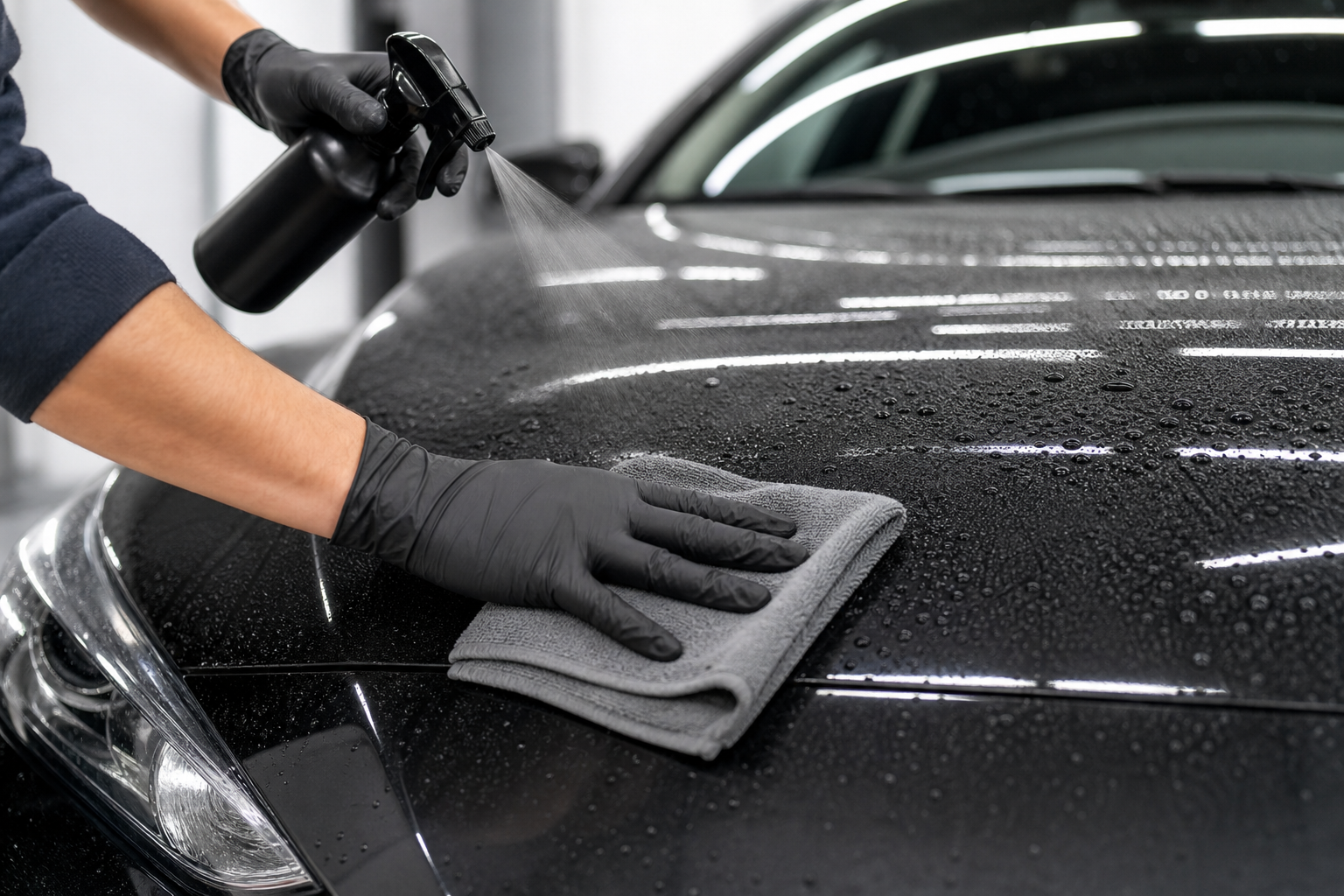
Use a SiO2 topper or maintenance spray between washes when you notice reduced water beading, increased road film, or after heavy exposure days. These products replenish a thin sacrificial SiO2 layer and improve water behavior without removing the primary coating.
How often to apply
Recommendations vary by product and exposure. Many pros suggest a boost every 3-6 months for typical use and every 6-12 weeks for very high exposure cars such as rideshare vehicles. See professional maintenance schedules for typical cycles (Redline Garage, Chemical Guys).
Product categories to choose
- SiO2 quick detailers for hydrophobic refresh
- pH-neutral spray sealants designed for coated cars
- Avoid waxes that can layer unpredictably over SiO2 coatings unless the product is specifically formulated for use over coatings
Decontamination, clay bar, and the professional 6-12 month visit
What a professional decon includes
- Iron fallout remover to dissolve brake dust and embedded ferrous particles
- Clay or clay-alternative to remove bonded surface contaminants
- Polish or light paint correction if marring or swirls are present
- Reapplication of a SiO2 topper or professional refresher if required
Full decontamination is recommended every 6 to 12 months to remove contamination that routine washing cannot, and neglecting it can reduce coating life and gloss (Bryan Car Care, Eagle Star Detail).
When DIY decon is appropriate
Light decontamination can be done at home with a clay lubricant and clay bar if you are comfortable with the technique and stop before aggressive rubbing is needed. If iron fallout or embedded contamination resists clay or if polish is required, book a professional visit.
Winter salt and hard-water care for GTA drivers
After-winter rinse checklist
- Rinse underbody and wheel wells first to remove salt
- Hand wash the painted surfaces using a pH-neutral shampoo and rinse thoroughly
- Consider a professional decon after winter if you notice staining, brake dust embedment, or reduced hydrophobicity
Detailing guides emphasize regular rinsing and avoidance of abrasive brushes in winter conditions. A touchless rinse can help where temperatures or brine concentrations make hand washing impractical, but a full decontamination visit after winter is a reliable way to catch embedded salt and mineral deposits (Calgary PPF Pros).
Troubleshooting common problems and when to call a pro
Bird droppings and tree sap immediate fixes
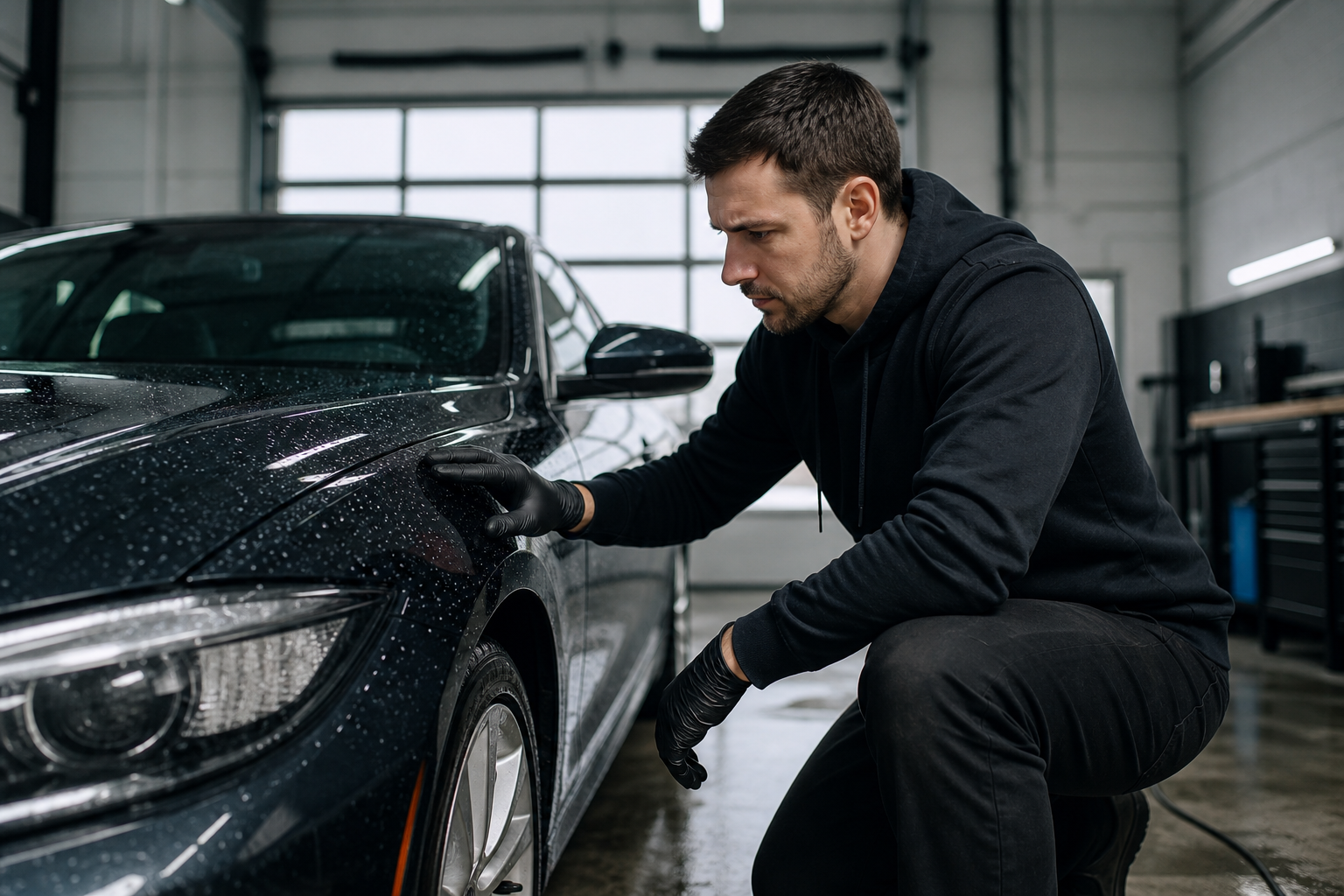
Remove fresh bird droppings or tree sap as soon as possible. Soak with a safe detailer spray or wrap a damp microfiber over the spot to soften it, then lift gently with a microfiber towel. If the contaminant has dried and resists softening, stop and arrange professional attention to avoid aggressive rubbing that could damage the coating (FrogChem).
Removing water spots safely
Test a small area first. Light mineral marks may respond to a distilled-water rinse and gentle polishing with a dedicated non-abrasive product. Deep etching requires professional assessment because aggressive abrasives can remove coating and clear coat layers.
When scratches need professional correction
If you see visible paint penetration or deep scratches, call a professional. Attempting machine polishing or compound use without experience can remove the coating unevenly and create visible differences in finish.
When to book Prime Auto Wash and what to expect
Prime Auto Wash offers both mobile on-site maintenance with a fully self-contained unit and in-shop decontamination at its Mississauga facility. If you prefer a pro visit instead of DIY, consider booking when any of the following apply:
- Visible reduction in water beading after a wash
- Heavy winter salt exposure or visible embedment
- Bird droppings or tree sap that will not lift with safe at-home methods
- Preparing a vehicle for resale or a seasonal refresh
- Rideshare or commercial vehicles that need frequent, reliable upkeep
On a maintenance visit, expect inspection, iron fallout removal, clay or clay-alternative decontamination, and a recommended topper or refresh. To learn more about protection benefits and what professional refreshes accomplish, see Prime Auto Wash’s ceramic coat guide.
Prime Auto Wash highlights certified detailers, eco-friendly products, and same-day mobile availability across the GTA, making mobile maintenance practical when time is limited (Prime Auto Wash).
Quick reference triage: DIY now versus call a pro
- DIY now: Routine wash, minor spots, reapply quick topper, weekly care
- DIY with caution: Light clay work, light water-spot treatment. Stop if resistance appears or if significant surface marring exists
- Call a pro now: Heavy iron fallout, deep water etching, stubborn sap, visible clear coat damage, or if you need a certified maintenance refresh
Frequently asked questions
How often should I hand wash a car with ceramic coating in the GTA
Hand wash every 1 to 2 weeks as a baseline. Industry guidance recommends that interval to prevent film buildup that reduces coating performance (Bryan Car Care).
Can I use an automatic car wash on a ceramic coating
Avoid automatic brush-style car washes because abrasive brushes can introduce swirl marks. Touchless automatic washes are acceptable for occasional rinsing, but they do not replace proper hand washing and periodic professional decontamination (Calgary PPF Pros).
What is a SiO2 topper and how often should I apply it
A SiO2 topper is a maintenance spray that deposits a thin sacrificial layer of SiO2 to refresh hydrophobic properties. Apply every 3-6 months for general use, and more often for vehicles with high exposure (Redline Garage, Chemical Guys).
How do I safely remove bird droppings or tree sap without damaging the coating
Soak the area with a pH-safe detailer or wrap a damp microfiber to soften the contaminant, then gently lift it. Stop and call a professional if the deposit will not soften or if aggressive rubbing is required (FrogChem).
When should I book a professional decontamination and inspection
Book a professional decontamination every 6 to 12 months, or sooner after heavy winter exposure, reduced water beading, or stubborn embedded contamination. A pro visit restores the coating’s performance and identifies any paint issues early (Bryan Car Care).
Ready to schedule maintenance or ask about a professional refresh? Visit Prime Auto Wash to book mobile or in-shop service and see available ceramic protection options.