Car wash engine cleaning guide: what it is and when to hire a pro
This car wash engine cleaning guide explains what engine detailing is, why owners choose it, and how to decide whether to clean the engine bay yourself or hire a professional. If you drive in the GTA, winter salt, urban grime, and time pressure affect the choice, so this article focuses on safety, realistic results, and local options.
What car engine cleaning or engine detailing means
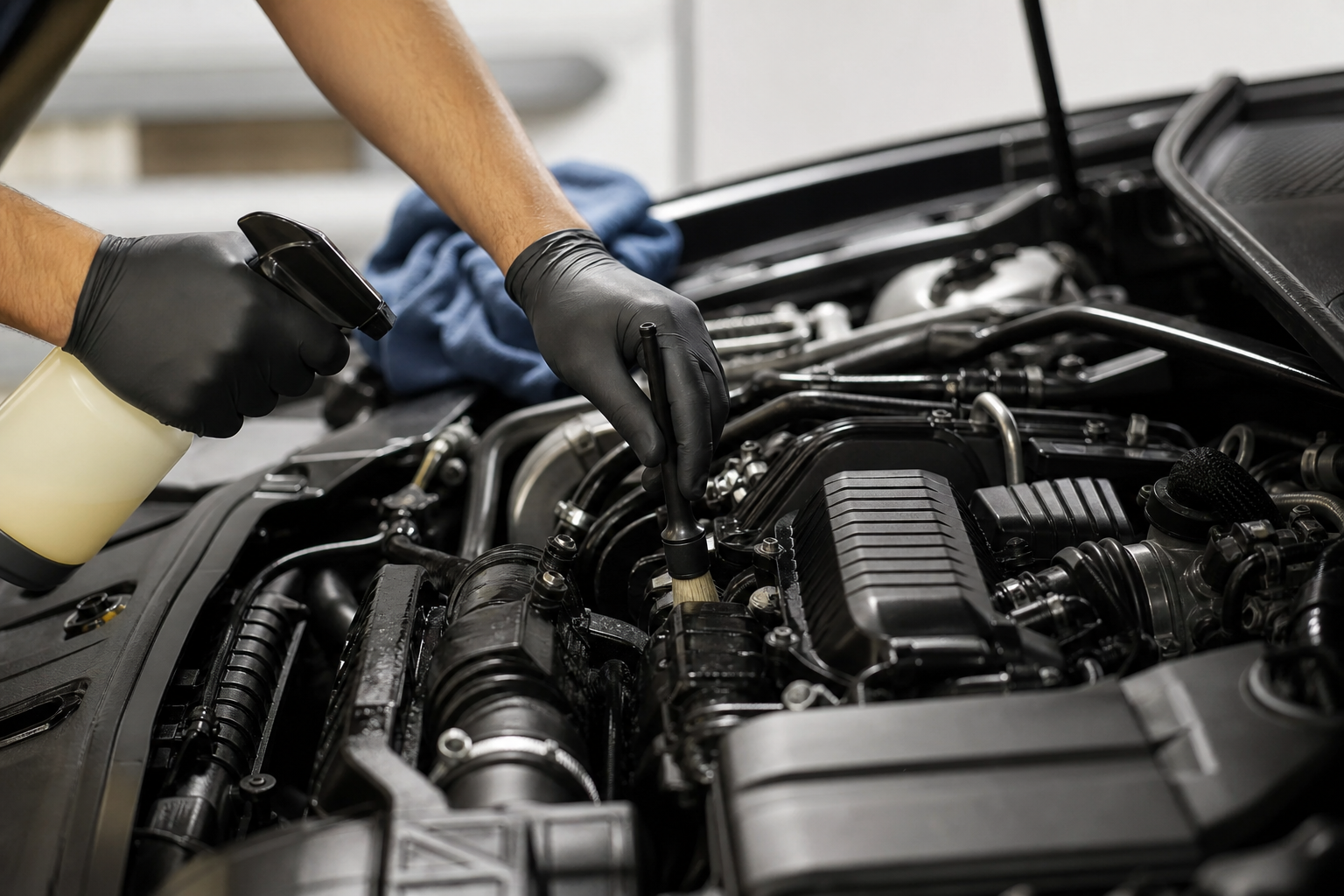
Engine detailing describes the controlled cleaning and light cosmetic restoration of the visible engine bay components. Typical tasks include degreasing and removing oil and road grime, cleaning plastic and metal surfaces, dressing hoses and trim for a neat finish, and rinsing or steam cleaning residues. Engine detailing does not include internal mechanical work such as walnut blasting, fuel system cleaning, or repairs to sensors and ignition components.
Professional detailers often package the engine work with exterior and interior services. If you want a clear walkthrough of the professional step sequence, see the company process summary at Engine Detailing Steps: Get Pro Results.
Why engine cleaning matters and what it will not do
People request engine cleaning for three practical reasons: appearance, easier inspection, and contaminant removal. A tidy engine bay makes it easier to spot leaks or failing hoses, and removing road salt and grease helps reduce corrosion risk on exposed metal parts. Cleaning also improves the perceived value of a vehicle when selling or presenting it.
Engine cleaning will not fix mechanical problems or guarantee longer engine life by itself. Cosmetic cleaning does not replace scheduled maintenance, nor does it substitute for diagnostic work when a leak or electrical fault exists. Trade and DIY authorities recommend treating engine cleaning as a maintenance and cosmetic service, not a mechanical repair solution. For practical stepwise guidance see Car and Driver and Family Handyman.
Safety, sensors, and warranty concerns
The main safety issues are water or pressure entering electrical connectors, damaging sensors, or wetting components that must remain dry. Manufacturers and industry sources advise protecting ignition components, exposed wiring, and sensor plugs, and avoiding direct high-pressure water on sensitive areas. For specific procedures and cautions, see NAPA Know How on washing engines and Coast 2 Coast Car Wash & Detailing’s engine-washing overview.
Whether cleaning affects a vehicle warranty depends on what you do and whether a cleaning causes damage. If a cleaning method damages a part, the owner may face an argument with a dealer or warranty provider. For that reason professionals use isolation and low-risk methods, and they document preexisting conditions before starting work.
DIY or hire a pro: how to decide
Use the following criteria to choose DIY versus professional engine detailing:
- Engine bay condition: Surface dust and light grime are reasonable for DIY. Heavy oil, baked-on grease, or evidence of leaks are reasons to hire a pro or a mechanic.
- Vehicle type and age: Modern cars have many electrical systems and sensors. Older, simpler engines may tolerate cautious DIY cleaning better. If your vehicle has direct-injection carbon issues, those require mechanical services not cosmetic cleaning; consult a qualified technician or the manufacturer first. Consumer Reports provides context on intake cleaning methods.
- Tools and environment: Professionals use steam, controlled low-pressure rinse, and extraction tools plus waste capture. If you lack suitable equipment and a safe, well-drained workspace, hire a pro.
- Local exposure: In the GTA, winter salt and frequent road grime increase the benefit of professional cleaning and winter-focused treatments.
- Time and convenience: If you prefer no downtime or same-day mobile service, a certified mobile detailer in the GTA can complete the job at your home or workplace.
If you are unsure, a short inspection by a professional will identify hidden issues and reduce the risk of accidental damage.
If you try a DIY clean: a short safety checklist
If you choose to clean the engine bay yourself, follow these core safety steps drawn from professional and trade sources:
- Work on a cool engine. Hot components can react with cleaners and steam.
- Disconnect or cover the battery terminals and ignition coils where possible, or at least shield electrical connectors with plastic bags and tape.
- Use a purpose-formulated engine degreaser, and apply it sparingly to greasy areas. Follow label instructions.
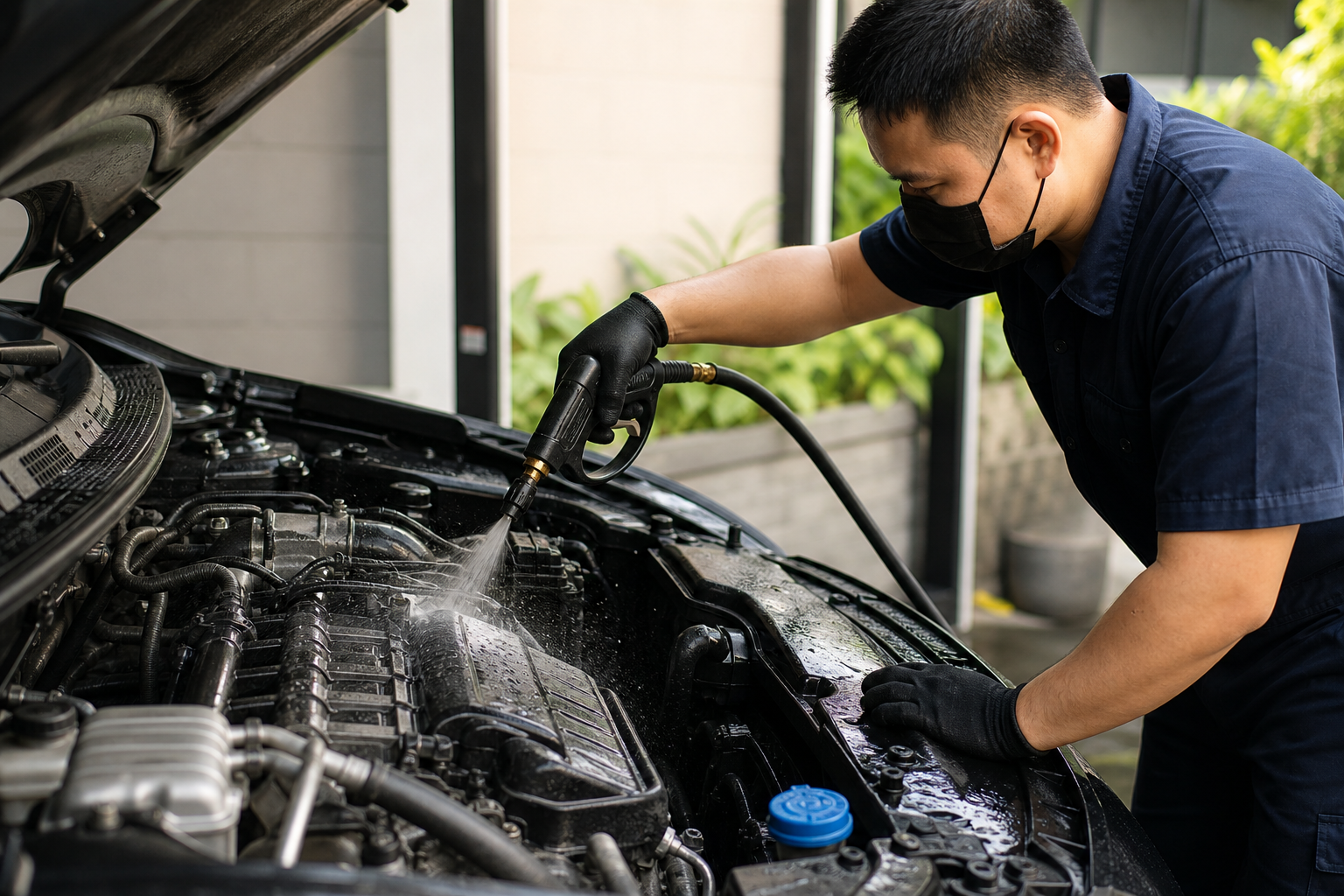
- Avoid using a high-pressure washer directly on sensors, exposed connectors, or the fuse box. Use a gentle rinse or steam cleaner instead; accepted how-to sources emphasize protecting sensors and wiring during rinsing.
- Dry the bay thoroughly with compressed air, air movers, or allow extended air drying before starting the engine.
- Contain runoff, and avoid sending soiled water into storm drains. Environmental guidance from the U.S. EPA warns that vehicle washing and maintenance can release pollutants into waterways if not contained.
These steps reduce risk, but they do not eliminate the chance of electrical or sensor damage. If your engine bay has heavy contamination, leaks, or you depend on the vehicle for work, prefer a professional service.
How professional engine detailing differs from DIY
Professional engine detailers follow a safety-first workflow and use specialized equipment that most DIYers do not have. Key differences include the use of steam cleaners and low-pressure rinsing, carefully applied degreasers, electrical isolation, and waste capture to prevent pollutant discharge. Professionals also document preexisting damage and have insurance to cover accidental damage during service.
Prime Auto Wash operates a fully self-contained mobile unit that brings its own power and water and uses professional steam cleaners, pressure washing at controlled settings, vacuuming, and carpet extraction. Their mobile model allows same-day service in the GTA and keeps sensitive procedures in a controlled environment. For a detailed look at professional engine procedures, consult the Engine Detailing Steps: Get Pro Results page.
Businesses that offer engine cleaning also often apply environmental controls. Municipal and federal guidance recommend preventing runoff and disposing of wash water properly because vehicle maintenance can release hydrocarbons and heavy metals; professionals follow local best practices to limit that discharge.
Local considerations for Mississauga, Brampton, Toronto and the GTA
Two local factors matter most in the GTA. First, winter road salt builds up in places the average driver cannot see and accelerates corrosion. Regular professional attention during or after winter can remove trapped salt and slow visible corrosion on exposed metal. Second, where you park affects whether a mobile unit can service your vehicle on-site. A driveway or private parking area gives mobile detailers easier access than a congested street.
If you plan mobile service, confirm parking access, power and water requirements, and same-day availability. Prime Auto Wash lists mobile service across the GTA and a Mississauga in-shop option for tighter access or more intensive work.
How to prepare your car for mobile or in-shop engine detailing
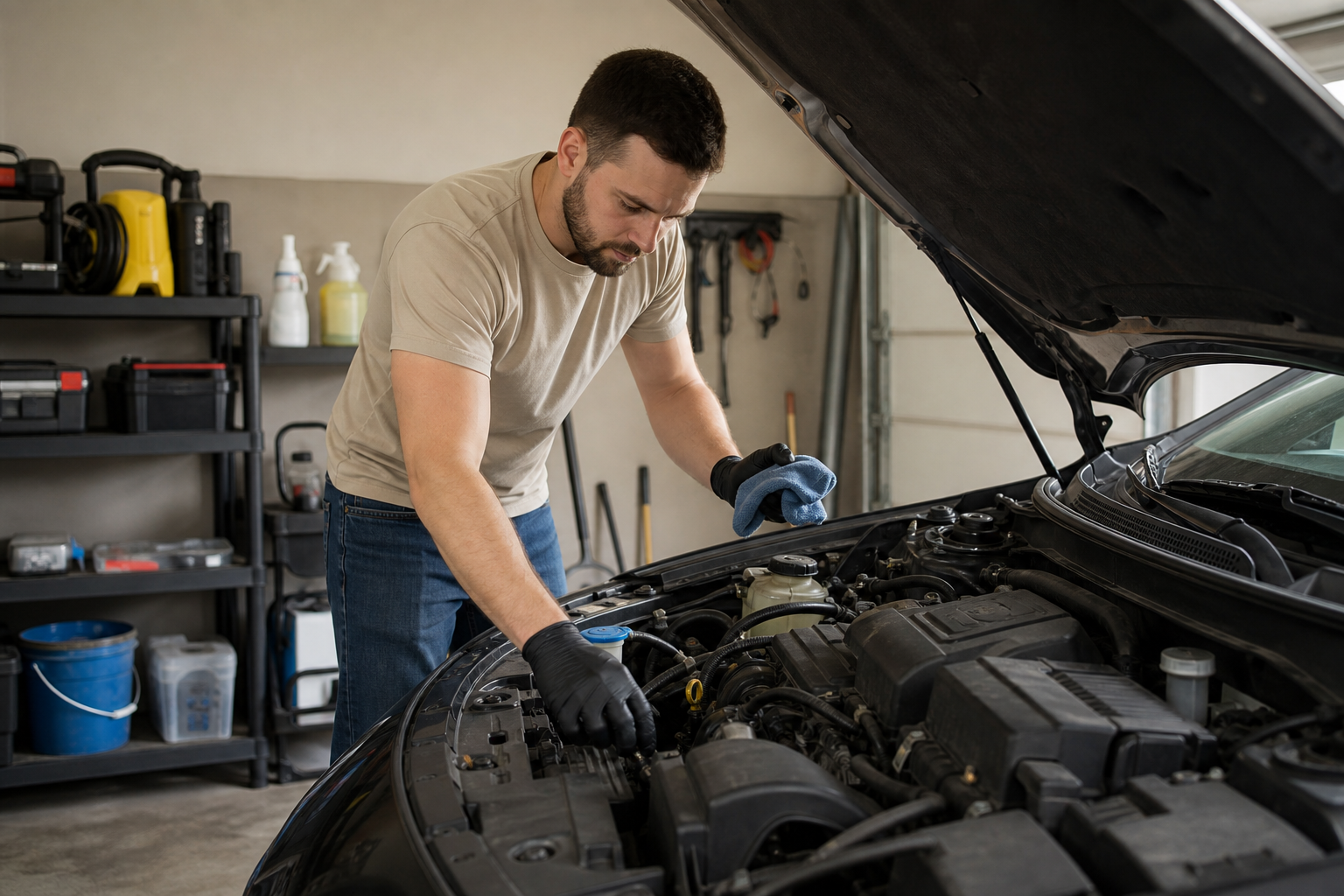
Preparing your vehicle makes the appointment faster and safer. Follow these simple steps:
- Note visible leaks, odd smells, or warning lights and tell the detailer when booking. If the vehicle shows a mechanical issue, see a mechanic first.
- Remove personal items from the engine bay area and inside the vehicle.
- Leave clear access to the hood, battery, and parking space. If booking mobile service, make sure the mobile unit can park close enough to reach your vehicle safely.
- Confirm any add-ons or special requests with the detailer when you book. If you want documentation or before and after photos, ask ahead of time.
Following these steps speeds the job and reduces the chance of missed details.
Common objections and straightforward answers
- Cost: Professional engine detailing costs more than DIY but reduces the risk of accidental sensor or electrical damage and includes waste handling and documentation. For heavy contamination or commercial vehicles, professionals deliver greater value.
- Risk of damage: Proper isolation and low-pressure methods are the standard of care; DIY approaches that ignore these precautions create most failures. Industry how-to guides warn against high-pressure sprays on sensors.
- Time out of service: Most cosmetic engine details are completed in a few hours, and mobile services can eliminate driving time to a shop. If mechanical diagnosis is required, expect additional time for inspection or repairs.
- Environmental concerns: Professionals capture and manage wash water to limit pollutant discharge, which helps you comply with local runoff rules and reduces environmental impact.
Quick checklist and how to book a professional engine detail in the GTA
Ready to hire a pro? Use this three-item checklist when you book:
- Tell the detailer about any leaks, warning lights, or heavy oil spots up front.
- Confirm whether the service will be mobile or in-shop, and that the team will isolate electrical components and handle wash water.
- Ask for before and after photos and documentation of preexisting conditions.
When booking, ask about insurance coverage for accidental damage, the exact cleaning method they will use, and any mobile convenience fees. For service specifics and to review professional steps, see the Engine Detailing Steps: Get Pro Results page. When you are ready to schedule, visit Prime Auto Wash.
Frequently asked questions
Does cleaning the engine bay void my vehicle warranty?
Cleaning the engine bay itself is not inherently a warranty issue. However, if a cleaning causes damage to sensors or electrical systems and that damage is claimed under warranty, the manufacturer or dealer may investigate whether improper cleaning contributed. Professionals document the vehicle condition before work to reduce disputes.
Can I pressure wash my engine safely?
Avoid using high-pressure washers directly on sensors, exposed connectors, or electrical packs. Industry guidance recommends protecting electrical components and using low-pressure rinses or steam for safety. See NAPA Know How and Coast 2 Coast Car Wash & Detailing for practical cautions.
How long does professional engine detailing usually take?
Timing varies with contamination level. Light cosmetic cleaning often takes a few hours. Heavily soiled or mechanically suspicious bays may require inspection or extended drying time. Ask the detailer for an estimated window when you book.
Will engine cleaning remove oil leaks or mechanical problems?
Cleaning can reveal leaks by removing grime that hides their source, but it will not repair mechanical faults. If you suspect a leak, have a mechanic diagnose the issue rather than relying on cosmetic cleaning alone.
Can a mobile detailer handle winter salt removal from the engine bay?
Yes, trained mobile detailers use targeted cleaning and rinsing to remove salt deposits. Ask whether the mobile unit includes the equipment for low-pressure rinsing, steam cleaning, and proper runoff capture; many professional mobile units are self-contained and bring power and water to the site.
Ready to book or learn more? Contact Prime Auto Wash for engine detailing and mobile service across the GTA, or review professional procedures on the Engine Detailing Steps: Get Pro Results page.
Sources and further reading: Car and Driver, Family Handyman, Coast 2 Coast Car Wash & Detailing, NAPA Know How, and the U.S. EPA vehicle maintenance guidance.