Flood restoration for car interiors is the systematic removal of water, contaminants, and odors from a soaked cabin, followed by thorough drying and sanitizing. Within 24–48 hours, moisture can trigger mold, corrosion, and electrical issues. For drivers in the Unit #3 area of Mississauga, fast action and proper methods prevent long-term damage and protect health.
By Prime Auto Wash • Last updated: July 1, 2026
Overview and Quick Summary
If your vehicle’s interior floods, act within the first hour: disconnect the battery, remove standing water, and start controlled drying. Professional flood restoration combines extraction, steam sanitation, dehumidification, and odor removal. In Mississauga’s humid swings, finishing with antimicrobial and ventilation steps helps prevent mold and lingering odors.
Here’s what you’ll learn in this complete guide tailored to our Mississauga and GTA climate and roads:
- What “flood restoration for car interiors” means and why speed matters
- Step-by-step process professionals use (and what you can safely do first)
- Methods based on water type (clean, gray, black) and materials
- Best practices, tools, and when DIY becomes risky
- Real case studies from local weather and road conditions
What Is Flood Restoration for Car Interiors?
Flood restoration for car interiors is a specialized detailing and remediation process that removes water, contaminants, and odors from the cabin, then dries, disinfects, and verifies the results. It addresses carpet, padding, seats, wiring, and HVAC to restore safety, comfort, and value while minimizing mold and corrosion risks.
Unlike a routine interior clean, this service treats water as a bio/chemical hazard. Runoff can carry dirt, oils, road salt, and microbes. Even “clean” rainwater turns problematic after soaking carpet foam and underlayment. The goal is not just a tidy cabin—it’s a safe, dry, and verified environment.
- Scope: Water extraction, material triage (salvage vs. replace), steam sanitation, drying, odor neutralization, and inspection.
- Systems touched: Carpet/padding, seat foam and rails, wiring connectors, under-seat modules, vents, and cabin filters.
- Outcome: Dry-to-core interior, neutral odor profile, and minimized risk of mold, mildew, and corrosion.
At Prime Auto Wash, we integrate flood restoration with our interior and exterior detailing in Mississauga, so your cabin and surfaces return to pre-incident appearance while meeting hygiene expectations.
Why Fast Action Matters After a Car Flood
Moisture trapped in carpet foam and seat cushions can foster mold within 24–48 hours and accelerate corrosion of connectors and modules. Rapid water removal and dehumidified airflow limit biological growth, prevent odors from setting, and reduce chances of intermittent electrical problems.
Time is your most important variable. The sooner you control moisture and airflow, the better your odds of full recovery. Delays let water wick deeper into padding and wires, and odors “bind” into porous materials.
- Mold window: Common interiors support growth in as little as two days when warm.
- Electronics: Intermittent issues often appear weeks later as hidden corrosion advances.
- Resale value: Persistent odor or water lines on carpet lower buyer confidence.
In our experience restoring vehicles across Mississauga and the GTA, humidity swings after storms make rushed, fan-only drying unreliable. Controlled extraction and closed-loop dehumidification are more predictable.
Local considerations for Unit #3
- Near Mississauga Chinese Centre, parking lots can pond during downpours. If water enters your cabin, pull mats immediately and start airflow while you arrange restoration.
- Fall storms and spring thaws push humidity higher around Westacres Park. Expect longer dry times—plan for extended dehumidifier sessions.
- For rideshare work, schedule sanitizing and ventilation early so your vehicle returns to hygienic service faster without lingering odors.
How Professional Flood Restoration Works (Step by Step)
Professionals stabilize power, extract standing water, lift seats and carpets, steam-sanitize contact surfaces, and run high-CFM air movers plus dehumidifiers. Moisture meters verify progress before reassembly. Final steps neutralize odor and inspect HVAC and connectors to catch hidden moisture pockets.
Here’s the structured process our certified team follows on mobile calls or at our Mississauga shop:
- Safety and stabilization — Disconnect the battery if water reached electronics. Avoid powering modules until verified dry.
- Standing water extraction — Wet/dry extraction removes pooled water from footwells and trunk wells.
- Interior disassembly — Seats loosened/lifted, sill plates and trim carefully removed, carpet lifted to expose padding and floorpan.
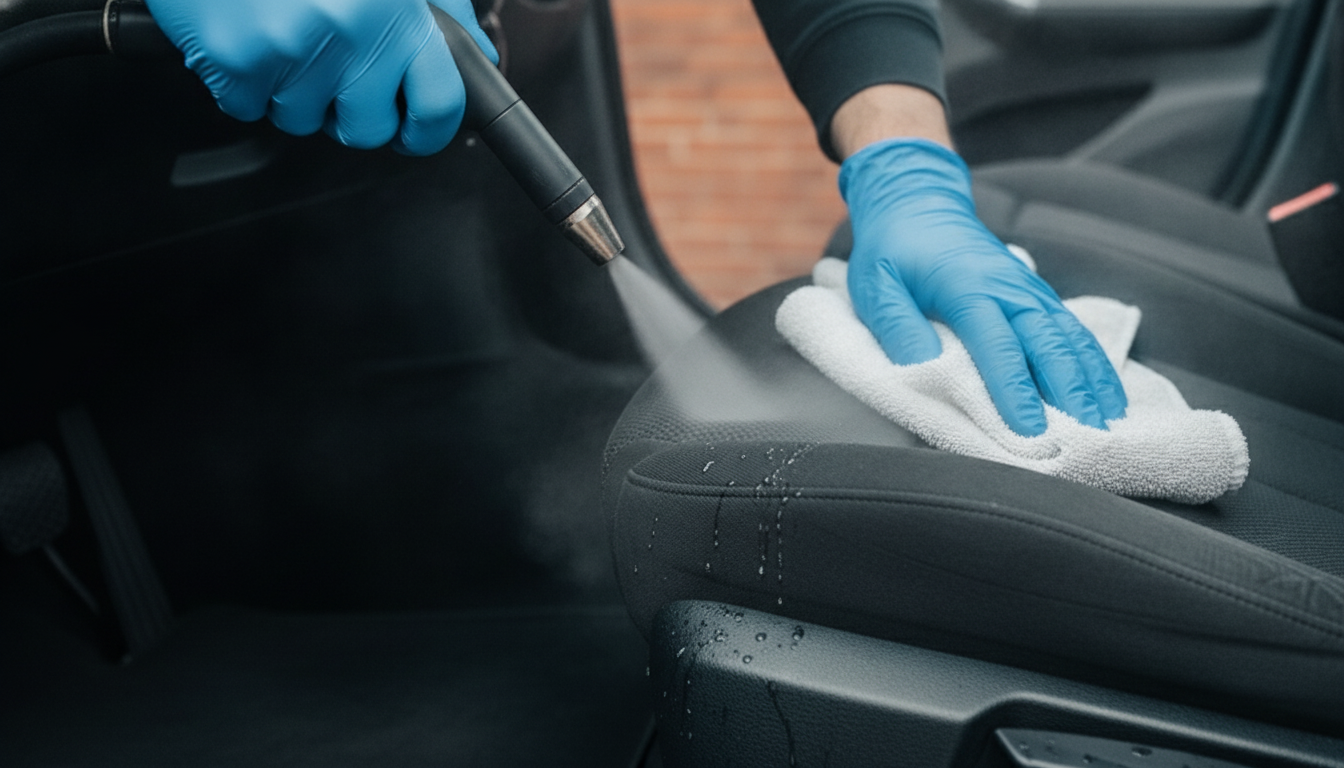
- Targeted steam sanitation — Steam treats contact surfaces (carpet face, seat fabrics, hard plastics) for hygienic reset.
- Deep drying — Air movers create crossflow; desiccant or refrigerant dehumidifiers lower RH to 35–45% for efficient evaporation.
- Moisture verification — Meters check padding, seat foam, and under-carpet areas until readings return to baseline.
- Odor neutralization — Source removal first; then oxidative or enzymatic neutralizers, and HVAC intake treatment.
- Reassembly and final QA — Components reinstalled with connector checks, then a road test to confirm no new alerts.
| Phase | Primary Action | Typical Tools | Checkpoint |
|---|---|---|---|
| Stabilize | Battery off, inspect | Hand tools, PPE | No power to wet modules |
| Extract | Remove standing water | Wet vac, pump | Zero visible pooling |
| Open | Lift seats/carpets | Socket set, trim tools | Padding fully exposed |
| Sanitize | Steam clean surfaces | Steam cleaner | Contact areas hygienic |
| Dry | Airflow + dehumidify | Air movers, dehumidifier | RH under 45% |
| Verify | Moisture meter checks | Pin/pinless meter | Baseline readings |
| Deodorize | Neutralize sources | Enzyme/oxidizer | Odor neutral profile |
For a complete reset, we often pair restoration with our fabric-care content like how to clean car seats and post-storm exterior care such as removing water spots.
Methods and Approaches by Water Type
Restoration methods depend on water type: clean (rain), gray (runoff), or black (sewage). Clean water allows more salvage. Gray requires disinfecting and more material triage. Black water often forces replacement of carpet foam and affected trim to protect health.
Not all “floods” are equal. Classify the intrusion to choose safe methods:
- Clean water (rain/condensation): Highest salvage rate. Focus on fast extraction, ventilation, and drying to stop mildew.
- Gray water (road runoff): Contains soils and microbes. Prioritize steam sanitation and contact-time disinfectants; padding may need replacement if saturated.
- Black water (sewage/river overflow): Treat as hazardous. Replace porous materials (padding, some seat foams) and intensify HVAC decontamination.
We complement sanitation with odor remediation. After true source removal, advanced oxidizing treatments or an ozone generator treatment may be considered in controlled conditions. For persistent smells and nicotine, our guidance in how to get smoke smell out of a car applies to flood-odor layering too.
Best Practices You Can Do in the First Hour
Safety first: avoid starting the engine, disconnect the battery if water reached electronics, and remove standing water and soaked mats. Start airflow and call a professional for moisture verification and sanitation. Early action can cut drying time and reduce odor risk.
- Kill ignition; don’t start the car. Powering electronics while wet can deepen damage.
- Disconnect the battery if water pooled under seats or into consoles.
- Remove rubber mats and loose items. They trap water against carpet.
- Extract visible water with a wet/dry vac; blot fabrics with microfiber, not paper towels.
- Open doors and windows under cover to create cross-ventilation without more rain intrusion.
- Position a fan to move air across footwells; avoid direct heat on plastics or leather.
- Document moisture with photos. It helps during inspections later.
If your phone also took a soak, the basics of not powering wet electronics apply across devices. General rescue guidelines for wet devices (avoid powering on, remove power sources) echo in non-automotive contexts such as phone-in-water rescue steps.
Tools and Resources Prime Auto Wash Uses
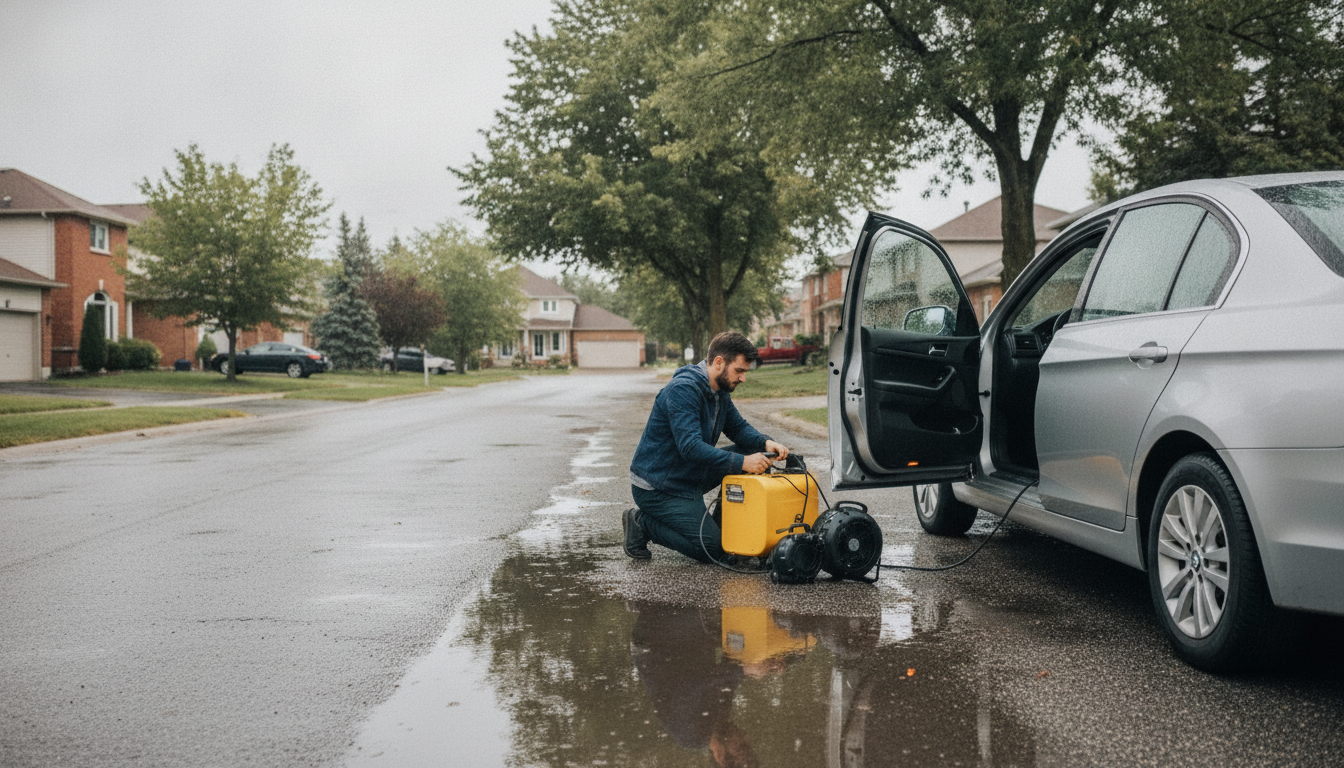
Our self-contained mobile unit brings power, water, steam, extraction, air movers, and dehumidification to your driveway. In-shop, we add controlled-environment drying, moisture metering, and odor technologies. Both options deliver dealership-level results without delaying urgent drying.
- Self-contained mobile rig: Onboard power and water keep restoration moving at your home or office.
- Steam cleaners and hot water extractors: Sanitize contact surfaces and remove embedded moisture efficiently.
- High-CFM air movers + dehumidifiers: Create fast evaporation and safe humidity levels.
- Moisture meters and borescopes: Verify dryness in padding, seams, and under-seat areas.
- Odor neutralization systems: Enzyme, encapsulant, and, when appropriate, oxidizers post-source removal.
When you need convenience without compromise, see what to expect from mobile car detailing at home or office. For stubborn residues on exterior plastics after road flooding, our exterior plastic restoration guide explains recovery options.
Case Studies and Local Examples
Real-world results show the difference between fan-only drying and structured restoration. By extracting, opening, sanitizing, dehumidifying, and verifying with meters, we cut dry times and prevented odor or mold from returning weeks later.
- Summer cloudburst, Unit #3 area: Hatch leak soaked rear padding. We opened trim, extracted, steamed, and dehumidified. Moisture dropped to baseline in 18 hours; no return odor.
- Ride-share sedan, floorpan pooling: Under-seat wiring flagged at intake. We stabilized power, lifted seats, treated connectors, and verified modules before reassembly.
- Family SUV after road runoff: Gray water intrusion required deeper sanitation and new carpet padding. Child seats and HVAC intake were cleaned and reset.
- Convertible after overnight storm: Clean rainwater allowed full salvage. Focused drying, then fabric guard and a cabin filter swap.
For broader water-damage preparedness at home, general flood triage principles seen in property contexts like flooded basements translate: stop ingress, remove standing water, and prioritize drying windows.
DIY vs. Professional Flood Restoration
DIY works for minor, clean-water dampness caught early. Professional restoration is best for pooling water, gray/black water, soaked padding, or any electrical exposure. Pros bring extraction, dehumidification, and moisture verification to prevent hidden damage and recurring odors.
| Factor | DIY (Minor Dampness) | Professional (Moderate–Severe) |
|---|---|---|
| Water type | Clean rainwater only | Gray/black water or unknown |
| Water level | Surface damp, no pooling | Pooling in footwells/trunk |
| Materials | Top of carpet only | Padding/foam saturated |
| Electronics | Not contacted | Under-seat modules/connectors wet |
| Verification | Visual/odor only | Moisture-meter confirmed |
| Odor risk | Low if fast ventilation | High without sanitation |
- Good DIY candidates: Brief window leaks, damp mats caught within hours, no seat foam involvement.
- Call pros immediately: Water line above carpet base, visible pooling, or any signs of silt/odor.
If you’re sorting minor interior stains left behind after drying, this how-to on getting car seat stains out can help finish the job safely.
Frequently Asked Questions
These quick answers address the most common questions we get about flood restoration for car interiors—timelines, mold risks, electronics, and when to choose mobile versus in-shop service.
How fast can mold start after a car interior flood?
In warm, humid conditions, mold can begin within 24–48 hours. That’s why we extract water quickly, open carpet and padding, and run controlled dehumidification until moisture readings return to baseline.
Can I just run the heater to dry the interior?
Cabin heat helps, but it’s not enough for soaked padding. Without air movers, dehumidifiers, and moisture verification, trapped moisture can remain and cause odors or corrosion later.
Is flood restoration for car interiors a mobile service?
Yes. Our self-contained mobile unit brings power, water, extraction, and steam to your driveway. For complex cases needing controlled conditions, we also offer in-shop restoration at our Mississauga facility.
What should I do first after discovering water inside my car?
Don’t start the engine. Remove standing water, pull mats, ventilate, and call a professional. If water reached electronics, disconnect the battery and avoid powering modules until they’re verified dry.
Key Takeaways and Next Steps
Act quickly, dry thoroughly, and verify with meters. For anything beyond minor clean-water dampness, professional flood restoration for car interiors prevents hidden moisture, mold, and corrosion—saving time and protecting your vehicle’s value.
- Early action shortens dry time and reduces odor risk.
- Gray/black water needs sanitation and often material replacement.
- Moisture meters and HVAC treatment close the loop on hidden dampness.
- Mobile or in-shop options get you back on the road safely and faster.
Need help now? Our certified team in Mississauga can deploy mobile extraction, steam sanitation, and dehumidification the same day in many cases. Book a quick assessment and we’ll guide your next best step.
When storms pass, we can also reset appearance with our interior/exterior detailing service, then help prevent future issues with trim care and water-spot guidance.
Ready for expert help? Contact Prime Auto Wash to schedule mobile or in-shop flood restoration for car interiors in the Unit #3 area and across Mississauga.