Fine scratch removal options for cars span gentle hand polishes, measured machine correction, and long-term protection like ceramic coating or PPF. Use the fingernail test first to judge depth. Around Mississauga’s Unit #3 and across the GTA, stop DIY if your nail catches or gloss dulls—book professional paint correction to preserve clear coat.
By Prime Auto Wash • Last updated: 2026-07-13
| Service area | Mississauga, Brampton, Toronto (GTA) |
|---|---|
| Mobile capability | Self-contained unit with onboard power and water |
| In-shop option | Mississauga facility (Unit #3 area) |
| Same-day availability | Often available for mobile appointments |
| Scratch-related services | Paint correction, ceramic coating, PPF |
| Hours | Mon–Sat 8:30–6:00, Sun 10:00–5:00 |
| Google rating | 5.0 average across recent reviews |
Overview
Confirm the scratch is in clear coat, remove it with the mildest method that works, then protect the finish. If your nail catches or DIY results flatten out, book professional paint correction. Finish with ceramic coating or PPF so you’re not re‑polishing the same paint next season.
We see the same scene every week: a driver spots spider‑web swirls under a gas‑station light and worries they need repaint. Most times, it’s wash‑induced haze that corrects quickly. Our job is to match the fix—DIY, pro correction, or protection—to the real severity so you save paint and time.
How to Tell If Your Scratch Is Actually ‘Fine’ (The Fingernail Test Explained)
A fine scratch lives in clear coat and usually won’t catch your nail. Lightly drag a clean nail across the mark. No catch? Try gentle polish. A catch means depth—stop DIY and choose professional correction before you thin the clear further.
- No catch, glossy panel: Classic swirls or towel trails. Hand polish with a fine finishing polish and a microfiber applicator is often enough.
- Faint catch, still shiny: Borderline. One or two light machine passes with a white polishing pad can work—monitor heat and clarity.
- Firm catch, dull base or color showing: Beyond “fine.” Book paint correction; if color or primer is exposed, we’ll recommend a body shop refinish.
Local reality in Mississauga: winter salt and gritty slush turn wash mitts into sandpaper. Tight parking stalls leave rubber and plastic transfer that mimics scratches. We confirm what you’re seeing under high‑CRI lights before we cut a single micron.
Fine Scratch Removal Options at a Glance
Start least‑aggressive. Hand polish for non‑tactile haze, a dual‑action (DA) polisher for clear‑coat lines, and professional correction for anything you can feel. Lock in results with ceramic coating or PPF to reduce new marring from winter wash cycles and tight parking.
| Option | Best for | Key details | Expected result |
|---|---|---|---|
| Hand polish + microfiber | Swirls, towel trails | Finishing polish; straight-line motion; light pressure | Removes light haze; restores crisp reflections |
| DA polish (white pad) | Non‑tactile lines | Low‑cut combo; speed 3–4; short working sets | Noticeable clarity bump; 60–90% haze reduction |
| DA + mild cut (orange or microfiber) | Borderline, faint‑catch marks | One to two passes; panel temp checks | Levels stubborn lines while preserving clear coat |
| Professional paint correction | Tactile grooves; repaints | Paint‑depth readings; edge masking; staged combos | Safe, high‑end finish with controlled removal |
| Ceramic coating | Post‑correction care | Hydrophobic; reduces wash marring | Easier washing; longer gloss retention |
| Paint protection film (PPF) | Impact zones | Self‑healing film; door‑edge and front‑clip focus | Blocks chips and new scratches |
Independent testing backs this sequence. Reviews from Car and Driver and Road & Track show consumer scratch removers brighten paint and reduce ultra‑fine haze, but deeper lines require more than a bottled polish. An explainer by Synchrony clarifies scratch types so you pick the right lane.
DIY Scratch Removers vs Professional Paint Correction — When Each Makes Sense
Use DIY only for non‑tactile haze. If your nail catches, the panel was repainted, or progress stalls after a test spot, choose professional correction. Pros control heat, measure paint, and finish with protection so the problem doesn’t return.
DIY that actually works
- Fresh towel trails after a drive‑through wash on solid OEM paint.
- Light micro‑marring on soft black clear that your nail can’t feel.
- A quick gloss bump before selling a vehicle—hand polish, wipe, inspect.
Green‑light for a pro
- The scratch is tactile, near edges/body lines, or sits on thin repainted panels.
- Your test spot hazes, warms up, or shows little change after two passes.
- You want correction plus a plan to prevent repeat damage (coating or PPF).
In our experience, repeated hand rubbing chases a “nearly gone” line for hours and removes more clear than a measured DA pass. If you’re already booked for Full Interior Detailing or our Express Service, ask for a paint inspection—we’ll scan one panel while we clean your cabin. Mobile appointment scheduled? Our self‑contained unit brings power, water, and pro lighting to your driveway.
Step-by-Step: What a Professional Fine Scratch Removal Looks Like at Prime Auto Wash
We isolate the defect, start with the mildest pad and polish that move the mark, and escalate only if needed. We measure paint, mask edges, correct under bright lights, then protect the finish so you don’t redo this work in six months.
- Safe prep: Contactless rinse, pH‑balanced wash, iron remover, clay bar, and panel wipe. This clears bonded grit that could create fresh trails.
- Measure and plan: Paint‑depth readings guide our ceiling. We tape edges, badges, and tight curves to avoid over‑work.
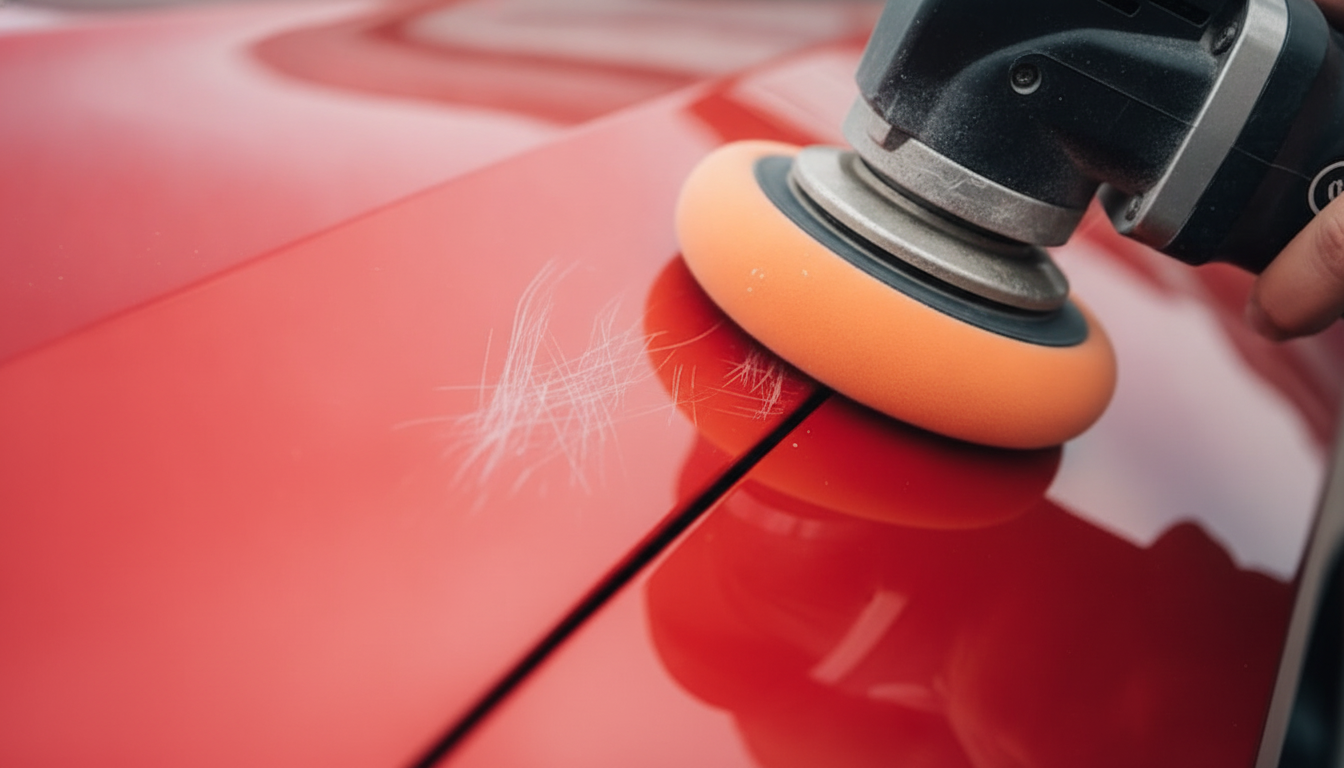
- Test set: We’ll start with a fine polish (e.g., Sonax Perfect Finish or Meguiar’s M205) on a white polishing pad at speed 3–4 in a 2×2 section. If the line holds, we step to an orange polishing pad or a mild microfiber pad with a finishing compound.
- Correction pass: Controlled arm speed, light pressure, and a cross‑hatch pattern. We wipe down between sets to read the paint—not just fill with oils.
- Refinement: We jewel the clear with a finishing polish for high clarity and tight, mirror‑like reflections under high‑CRI lights.
- Protection: We recommend ceramic coating for whole‑car slickness or PPF on bumpers, hood edges, mirror caps, and door edges.
Mini case: the black sedan at dusk
Driver arrives saying, “My door looks keyed under the plaza light.” Under our lights, it’s stacked towel trails around the handle—not a cut to basecoat. We ran a fine polish on a white pad, two passes at speed 4, then a quick refinement. The webbing vanished; reflections snapped back. We finished with a ceramic coating so winter washes don’t recreate the issue. Relief on the handover was instant—no repaint, no drama.
If you’re booked for Exterior Detailing Pro or Exterior Detailing, we’ll include this inspection flow. Pair it with New Car Package or Showroom Detailing tiers if you want a bumper‑to‑bumper reset before protection.
After the Scratch Is Gone: Ceramic Coating vs Paint Protection Film to Prevent Recurrence
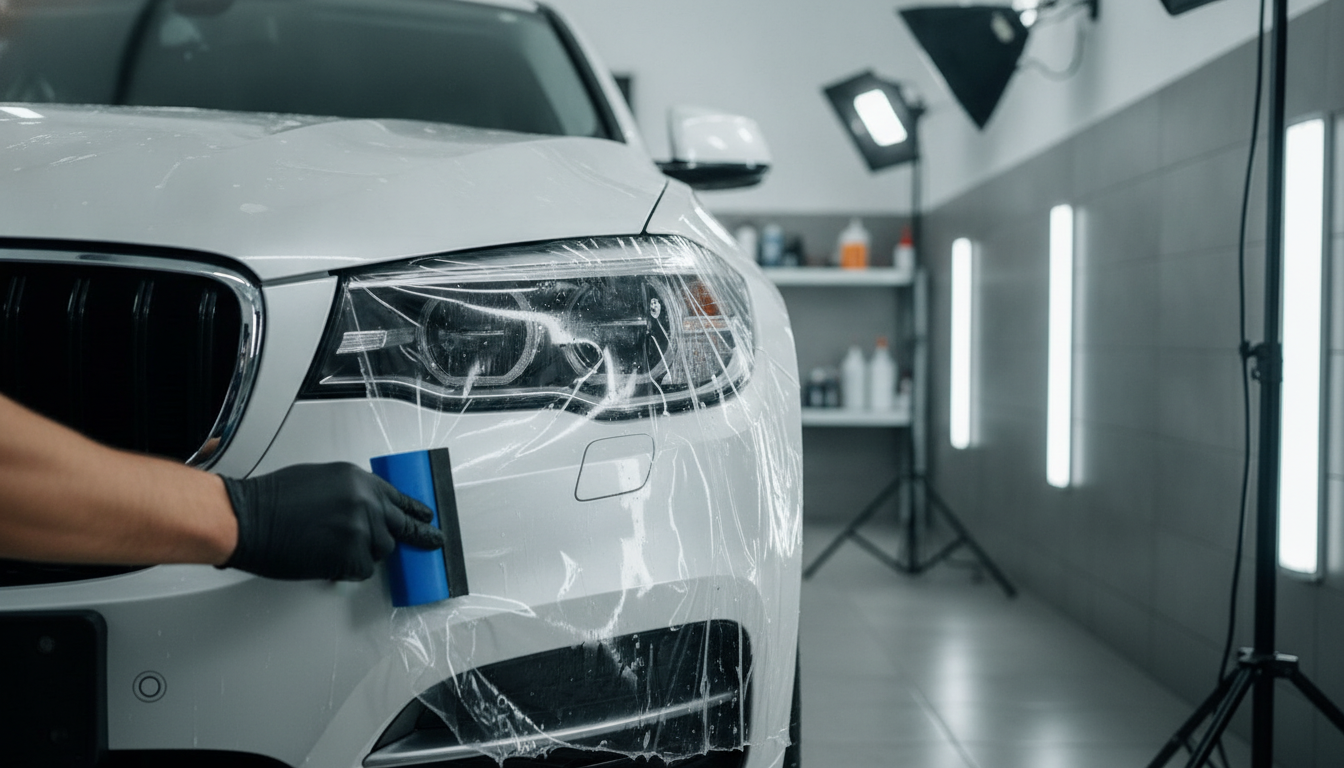
Ceramic coating hardens on clear coat to resist wash marring and speed up cleanup. PPF is a thicker, self‑healing layer that stops chips and fresh scratches. Many GTA drivers choose PPF on the front and coating on the rest for balanced defense.
- Ceramic coating: Hydrophobic slickness helps salt and grime rinse off. Great on dark paint that shows swirls.
- PPF: Put it where abuse happens—front bumper, hood edge, rocker panels, door edges, and mirror caps.
- Hybrid plan: Front clip in PPF; the rest coated. You’ll wash faster and see fewer new lines between appointments.
Curious which route fits your use? Our detailed comparison—PPF vs ceramic coating—breaks down durability, maintenance, and where each wins for daily drivers in the GTA. For a deeper look at coatings, see our ceramic guide for daily drivers and practical benefits for new cars.
Top Local and Online Options Compared
For fine scratch fixes in the GTA, choose Prime Auto Wash for measured correction and a prevention plan. DIY roundups help with haze; local shops address deeper marks. Use this table, then read the notes below to pick the right path fast.
| Option | Type | Best for | Why choose | How to get it |
|---|---|---|---|---|
| Prime Auto Wash (Top Pick) | Professional service | Tactile scratches; safe correction + protection | Mobile or in‑shop; paint measurements; coating/PPF planning | Book via website or phone |
| Wash Me Now | Professional service | General detailing work | Established GTA operator | Book direct |
| Auto Detailing Pro | Professional service | Detail packages and gift bundles | Multiple package formats | Book direct |
| Detailing Knights | Professional service | Mobile‑focused convenience | On‑site work | Book direct |
| In N Out Car Wash & Detailing | Professional service | Wash + detailing center | One‑stop convenience | Visit center |
| Car and Driver scratch picks | DIY roundup | Light swirls and haze | Editorial product testing | Read review; buy online |
| Road & Track tested list | DIY roundup | Consumer product options | Expert evaluation | Read review; buy online |
| Amazon scratch removers | Marketplace | Budget DIY attempts | Fast shipping | Order online |
| Local body shop | Refinish | Through‑paint damage | Repaint when needed | Request estimate |
Notes and picks:
- Prime Auto Wash: We combine measured correction with a prevention plan. If polishing isn’t the answer, we say so and help you prioritize PPF or a refinish referral.
- Wash Me Now: Solid GTA presence for general detailing; confirm correction depth and protection options when booking.
- Auto Detailing Pro: Package variety and gift bundles; ask how they stage correction and what protection they recommend.
- Detailing Knights: Mobile convenience is the draw; discuss paint readings and edge safety.
- In N Out: One‑stop wash and detailing; plan for inspection lighting if you’re chasing fine lines.
- Car and Driver / Road & Track: Great for DIY context and expectations on product limits.
- Amazon: Quick to try a gentler polish before a pro visit—avoid aggressive “one‑wipe” gimmicks.
- Body shop: The right path if primer or metal is visible; polishing won’t replace missing paint.
Mississauga driving beats up paint—plan protection early
Road salt and small gravel around Unit #3 scuff clear coats fast. We see more bumper rash near the Mississauga Chinese Centre lots and door‑edge marks after weekends at Westacres Park. Correct once, then add PPF on those zones.
Local Tip for Unit #3 Car Owners
Winter salt, plaza parking, and highway grit make micro‑scratches inevitable here. Correct once with a measured approach, then protect high‑wear panels so your next wash is quicker and you avoid re‑polishing the same spots.
Local considerations for Unit #3
- Busy plazas near Mississauga Chinese Centre mean tight parking—PPF on mirror caps and door edges saves you touch‑ups.
- Book ceramic coating before first snowfall; salty slush wipes off easier and adds fewer new swirls.
- Our mobile unit reaches most GTA driveways; we bring power, water, and lights, so condo or office lots are fine.
FAQ
These quick answers cover testing scratch depth, when DIY is safe, and how ceramic or PPF prevents repeat damage in GTA conditions.
How do I know if DIY scratch remover will work?
If your fingernail doesn’t catch and gloss remains, a gentle finishing polish on a microfiber applicator can remove the mark. Stop if heat builds, haze appears, or progress stalls after a couple of passes—then book professional correction for a measured, repeatable result.
Will ceramic coating remove existing scratches?
No. Coatings don’t level defects; they protect after correction. We refine the paint first, then apply ceramic so washing adds fewer new swirls and winter cleanup is faster.
Is PPF overkill for city driving?
On bumpers, hood edges, rocker panels, and door edges, PPF prevents chips and fresh scratches from grit and tight parking. Many Mississauga drivers choose PPF up front and ceramic on the rest for balanced, easy maintenance.
Which Prime Auto Wash services pair best with scratch fixes?
Our Exterior Detailing packages prep paint for safe correction. If you’re already in for Full Interior Detailing or an Express Service, ask for a quick paint inspection. After correction, most daily drivers add ceramic coating; high‑impact areas get PPF.
Key Takeaways
Test depth, fix with the mildest effective combo, and protect so the issue doesn’t return. If your nail catches or DIY stalls, choose professional correction and add ceramic or PPF for GTA driving.
- Use the fingernail test before touching polish.
- DIY is for non‑tactile haze; anything you can feel needs a pro.
- Measured DA work removes less clear than repeated hand rubbing.
- Coating reduces wash marring; PPF stops fresh scratches where they start.
- Explore more detail in our paint correction guide.