Boat detailing before and after season is the systematic cleaning, decontamination, restoration, and protection performed at spring launch and fall haul‑out. In Unit #3, Mississauga, this seasonal process fights oxidation, mildew, and waterline film, safeguards gelcoat and vinyl, and keeps cruising cleaner, safer, and more enjoyable throughout the year.
Above‑the‑fold summary and table of contents
This complete guide shows exactly what to do before launch and after haul‑out to protect gelcoat, vinyl, metal, and canvas—plus when to call a certified mobile detailer. Use the step‑by‑step checklists, product tips, and local pointers for Unit #3, Mississauga to start the season bright and store with confidence.
Here’s what you’ll learn in this complete, practical guide:
- What seasonal boat detailing actually includes and why it matters
- Step‑by‑step spring commissioning and fall decommissioning checklists
- Pro methods for washing, decontamination, oxidation removal, polishing, and protection
- Interior sanitization, bilge cleaning, and odor control that lasts
- Tools and supplies we use on mobile jobs across Mississauga and the GTA
- Before/after comparisons and quick case snapshots from local owners
- FAQs you can use to decide what to DIY and when to bring in a pro
What is seasonal boat detailing?
Seasonal boat detailing is a planned deep‑clean, restoration, and protection cycle at spring launch and fall haul‑out. It removes oxidation and grime, sanitizes cabins, and locks in UV and moisture protection so gelcoat, vinyl, and hardware resist wear during both active use and storage.
Think of it as “reset and preserve.” In spring, you reverse storage effects—dust, mildew spores, and chalky gelcoat. In fall, you remove summer’s salt and UV film, then seal and dry the boat for months of inactivity. Done together, these bookends slow deterioration and keep the boat looking showroom‑bright.
- Pre‑season (spring): Decontaminate, correct oxidation, and protect so you start glossy and slick.
- Post‑season (fall): Strip grime, neutralize minerals, deep‑dry, and seal for storage.
- Works for most hulls: Fiberglass/gelcoat, painted aluminum, RIBs, and personal watercraft.
In our experience detailing boats in Unit #3, Mississauga, a thorough pre‑season reset often cuts mid‑season wash time by 25–40% because protected surfaces shed grime and water faster. Likewise, a post‑season seal makes spring cleanup easier by preventing “baked‑on” contaminants.
Why boat detailing before and after season matters
Detailing at both ends of the season slows gelcoat oxidation, prevents mildew odors, and preserves vinyl and stitching. Clean, protected surfaces shed water, reduce waterline film, and boost pride of ownership—while also supporting safety via clearer visibility and better non‑skid traction.
Here’s the thing: UV, moisture cycles, and airborne fallout never stop. Oxidation dulls gelcoat, iron fallout tints the waterline, and mildew thrives where air is stagnant. A methodical boat detailing before and after season routine interrupts that cycle. Even small wins matter—clean non‑skid grips better; clear eisenglass improves sightlines.
- Longevity: Protected gelcoat can go seasons longer before heavy compounding is needed.
- Health: Sanitized cabins reduce allergens and mustiness after storage.
- Efficiency: A smooth, decontaminated hull rinses easier and carries less film.
- Resale: Dated photos and logs of care reassure future buyers.
On mobile jobs across the GTA, we routinely see cabins regain “like‑new” freshness after steam, extraction, and proper drying. Vinyl feels supple again with UV dressings, and clear coat depth returns once chalk is corrected and sealed.
How seasonal boat detailing works (step‑by‑step)
The pro workflow is rinse, foam, contact wash, decontaminate, correct oxidation, polish, protect, and dress. Inside, vacuum, extract, steam‑sanitize, and UV‑protect. In spring you restore gloss for use; in fall you strip film, deep‑dry, and seal for storage.
Pre‑season: launch‑ready workflow
- Rinse and foam pre‑wash (5–8 minutes): Remove loose grit to lower swirls. Use cool panels.
- Two‑bucket contact wash (15–25 minutes): Top‑down with soft mitts; refresh buckets often.
- Chemical decontamination (5–7 minutes dwell): Marine iron remover for rust tint; rinse thoroughly.
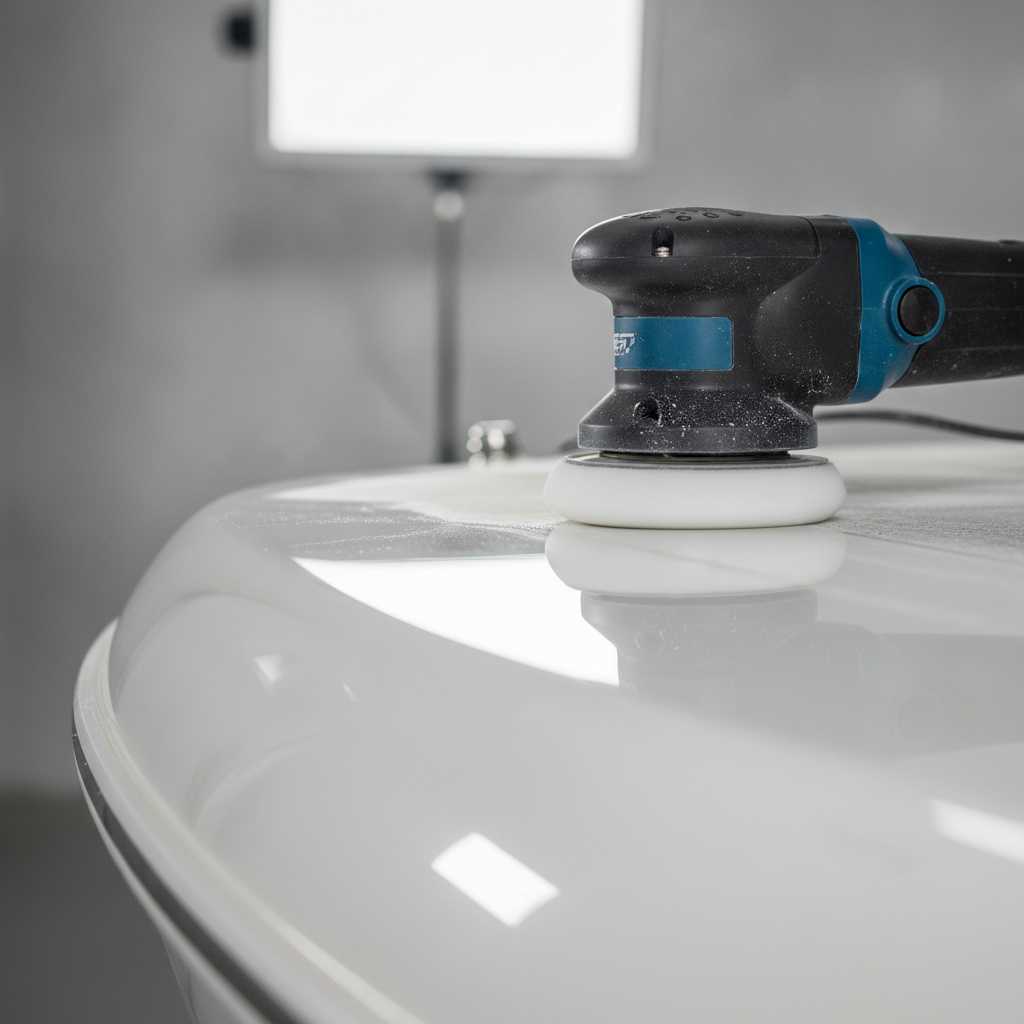
- Mechanical decon (20–40 minutes): Clay bar on lubricated gelcoat to remove bonded grit.
- Oxidation test (1 minute): If a microfiber wipes off chalk, plan a compound and polish.
- Correction (varies by hull size): Compound with wool or microfiber pad; refine with foam polish.
- Protection (30–60 minutes apply time): Apply marine sealant or ceramic coating onto cured, clean gelcoat; respect cure windows (sealants typically 12–24 hours; ceramics can require longer initial cure).
- Brightwork and vinyl (15–30 minutes): Clean, then protect stainless and vinyl with UV‑safe products.
- Glass/eisenglass (10–20 minutes): Polish hazing; add hydrophobic protection to improve wet‑weather visibility.
- Interior sanitization (30–90 minutes): HEPA vacuum, extract carpets, and steam‑treat high‑touch areas.
- Bilge and compartments (20–40 minutes): Degrease, rinse, dry; place moisture absorbers before launch.
Pro tip: Keep pads and towels sorted by task (wash, decon, compound, polish, interior). Cross‑contamination can re‑introduce grit and create micro‑marring on otherwise corrected panels.
Post‑season: storage‑ready workflow
- Flood rinse with freshwater (5–8 minutes): Flush off salt and minerals before soap touches the hull.
- pH‑balanced wash (15–25 minutes): Remove sunscreen, soot, and organic film without stripping protection too aggressively.
- Scale and rust tint (3–5 minutes dwell): Spot‑treat waterline; agitate gently; neutralize and rinse.
- Interior deep dry (as needed): Extract, run fans, and treat mildew‑prone cubbies.
- Protection (30–60 minutes): Apply a durable sealant on gelcoat and a UV protectant on vinyl before covering.
- Metal care (10–20 minutes): Polish stainless and aluminum; add a corrosion inhibitor film.
- Cover and absorb (5 minutes): Use breathable covers; place moisture absorbers in cabins and lockers.
We’ve found that a final fresh‑water rinse, followed by compressed air to blow out seams and fittings, reduces springtime streaking. A breathable cover plus desiccant tubs in the cabin goes a long way toward preventing mildew.
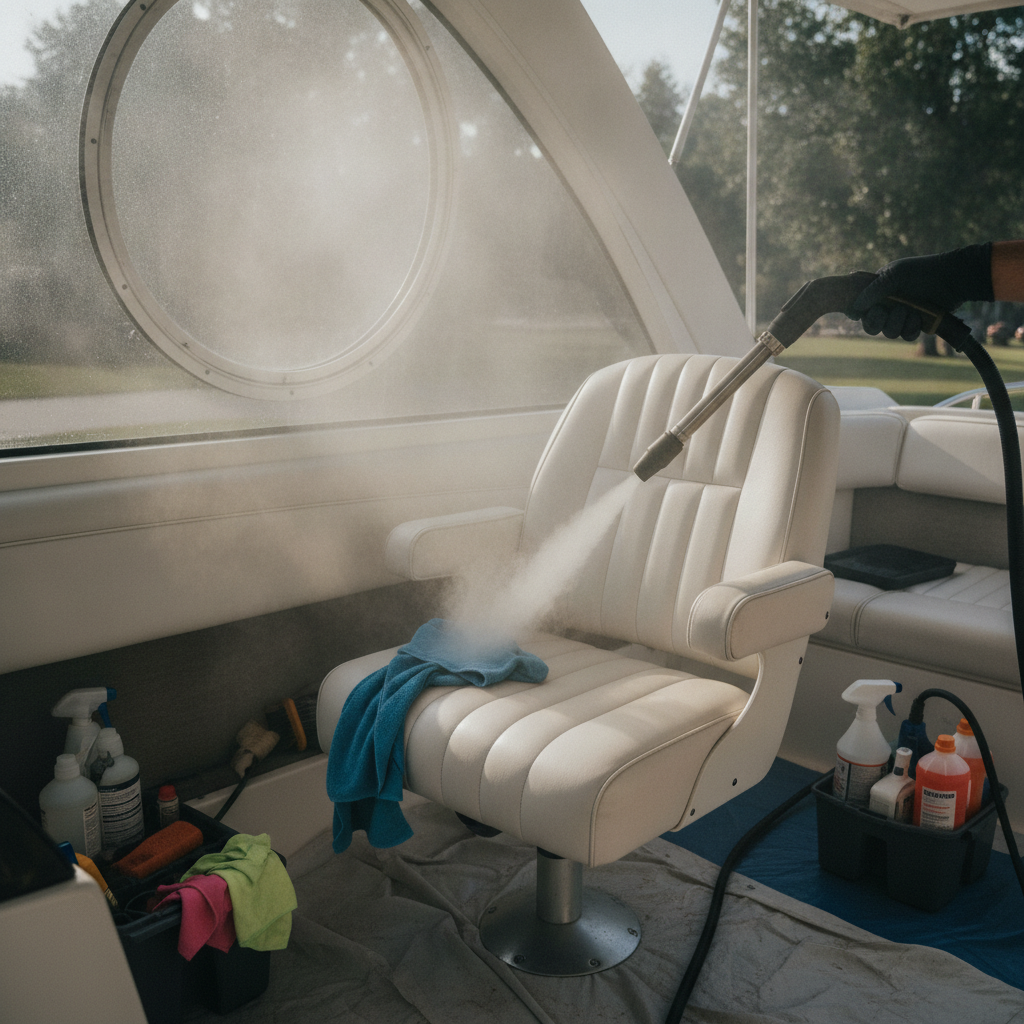
Soft CTA: Prefer a done‑for‑you approach? Our self‑contained mobile unit brings power, water, steam, and extraction to your driveway in Unit #3. We handle wash, decontamination, oxidation correction, sealant or ceramic application, interior extraction and steam, and odor control—start to finish.
Methods, products, and approaches that work
- Shade and cool panels: Prevents soap and acids from flashing and staining.
- Tool discipline: Color‑code towels and pads by task to avoid cross‑contamination.
- Moisture control: Desiccant tubs in cabins and lockers reduce mildew risk during storage.
- Non‑skid safety: Use non‑silicone protectants that won’t make decks slippery.
- Glass clarity: Polish eisenglass gently; add hydrophobics for wet‑weather visibility.
- Labeling wins: Mark bottles with dilution ratios and date‑opened; keep a laminated product sheet.
- Prep mindset: Clean first, then coat—surface preparation drives protection longevity. A general surface‑prep checklist illustrates how prep impacts finish quality.
Maintenance cadence matters. A light wash after each outing (10–15 minutes) keeps film from building. A monthly decon of trouble spots—like the waterline and transom—prevents staining that later demands harsher chemistry.
Tools and resources checklist
A self‑contained mobile detailing setup—pressure washer, foam cannon, dual‑action polisher, steam cleaner, extractor, and eco‑friendly products—delivers dealership‑level results on‑site. Keep PPE, spill pads, and a product sheet with dilution ratios for speed and safety.
- Exterior tools: Pressure washer, foam cannon, microfiber mitts, drying towels, ladders, and safe scaffolding.
- Correction tools: Dual‑action polisher, wool/microfiber/foam pads, masking tape, inspection light.
- Interior tools: HEPA vacuum, hot‑water extractor, steam cleaner, ozone generator (optional).
- Chemicals: pH‑balanced soap, iron remover, waterline descaler, APC, enzyme cleaner, vinyl UV protectant, metal polish.
- Protection: Marine sealant or ceramic coating, trim protectant safe for non‑skid.
- Safety & environment: Nitrile gloves, eye protection, absorbent pads, runoff management plan.
Prime Auto Wash’s mobile unit is fully self‑contained—power, water, steam, vacuum, compressor, and extractor onboard—so we deliver consistent results in your driveway or marina slip across the GTA. See how we work in our overview of mobile car detailing at home or office; the same disciplined process applies to boats.
Before‑season vs after‑season: what changes?
Spring focuses on restoration and slick protection for active use; fall focuses on decontamination, deep drying, and storage protection. Products may overlap, but dwell times, pad choices, and drying protocols shift to match the season’s goals.
| Focus | Pre‑Season (Spring) | Post‑Season (Fall) |
|---|---|---|
| Goal | Restore gloss and slickness for use | Strip grime and seal for storage |
| Decon | Iron remover + clay for bonded grit | Waterline descaler + rust‑tint removal |
| Correction | Compound + polish if chalky | Light polish or none if sealing only |
| Protection | Sealant or ceramic coating | High‑durability sealant before cover |
| Interior | Steam, extract, UV protectants | Deep dry, odor control, moisture absorbers |
Want a deeper dive on durable protection? Our pro team also installs boat detailing finishes, and on vehicles, we apply interior protections and pro‑grade coatings that mirror marine workflows.
Mini case studies from Unit #3, Mississauga
These quick scenarios show how seasonal detailing solves real problems—oxidation on a lake boat, mildew after storage, and sticky waterline film. Each example uses mobile, self‑contained equipment so work happens right in your driveway.
- Oxidation comeback: A 22‑foot bowrider showed chalky gelcoat in spring. We compounded with a wool pad, refined with foam polish, then applied a marine sealant. Depth returned, and water beaded evenly along the hull.
- Mildew recovery: After a leaky cover, cabin fabrics smelled musty. We extracted carpets, steamed vinyl, sanitized lockers, and ran a controlled ozone cycle. Moisture absorbers plus airflow stops recurrence.
- Waterline rescue: Stubborn yellowing at the scum line lifted after targeted descaler dwell, light agitation, and a neutralizing rinse. A slick sealant kept the line easier to clean all summer.
- Non‑skid reset: A slippery deck coated in silicone dressing was stripped and re‑protected with a non‑slip‑safe product. Traction improved noticeably during wet boardings.
- Eisenglass clarity: Hazy panels were polished by hand and protected with a plastic‑safe hydrophobic, restoring clearer visibility for docking.
For a look at our protective mindset on vehicles, review our perspective on exterior plastic restoration and our guidance on how often you should detail. The same principles—prep, protect, and maintain—translate seamlessly to boats.
Local considerations for Unit #3
- Plan mobile appointments around weekend traffic near Mississauga Chinese Centre so our truck and trailer can stage efficiently.
- Time spring launch detailing before long sunny stretches; UV sets protection better on dry, warm panels in late April through May.
- When wrapping up fall service near Westacres Park, choose breathable covers and leave vents cracked for airflow during storage.
Frequently Asked Questions
Here are concise answers to common seasonal detailing questions—timing, oxidation fixes, interior odor, and coatings on gelcoat. Use these to decide when DIY is enough and when a certified pro makes sense.
How early should I book pre‑season detailing?
Aim for 2–4 weeks before launch so protection cures and you have a buffer for weather. If oxidation testing shows chalk, allow extra time for compounding and polishing before sealing.
What removes yellow waterline stains safely?
Use a marine waterline descaler on a cool surface. Apply carefully, respect dwell times, agitate lightly, and neutralize thoroughly. Follow with protection so future cleanup takes less effort.
Can ceramic coatings be applied to boat gelcoat?
Yes. After proper decontamination and polishing, ceramic coatings increase gloss and make rinsing easier. They still require washing, but they slow oxidation and help resist stains from water and fallout.
How do I prevent mildew during storage?
Dry thoroughly, run fans, and use moisture absorbers in cabins and lockers. Clean fabrics and vinyl before storage, and choose a breathable cover that allows airflow to reduce condensation.
Key takeaways
Detail both before and after the season: restore in spring, then decontaminate and seal in fall. Prep thoroughly, control moisture, and protect UV‑sensitive surfaces. Document your work, and lean on certified mobile pros when oxidation or odors go beyond DIY.
- Bookend the year—restore for launch, seal for storage.
- Decontaminate first, then correct and protect.
- Sanitize interiors and control moisture for odor prevention.
- Keep logs and photos to prove care and support resale.
Work with Prime Auto Wash
We bring power, water, steam, extraction, and pro‑grade polishers to you—so your boat gets dealership‑level care right in Unit #3, Mississauga. From oxidation removal to interior steam sanitization, our certified team makes seasonal care simple and reliable.
Prime Auto Wash serves Mississauga, Brampton, Toronto, and the GTA with mobile and in‑shop detailing. Beyond boats, we also care for RVs, commercial fleets, and specialty vehicles—using eco‑friendly products and insured, certified technicians. Explore our marine services on our boat detailing page or review our detailing frequency guidance to build a maintenance rhythm that works for you.