
Winter salt removal from car: GTA timing and checklist
What this checklist covers and who should use it
This short, prioritized checklist is written for drivers in the Greater Toronto Area who want clear, practical guidance on winter salt removal from car surfaces, wheels and undercarriage. You will get timing advice backed by Consumer Reports, step-by-step DIY actions you can do today, clear signs that require professional attention, and a quick comparison of mobile versus in-shop service offered locally by Prime Auto Wash (mobile unit and Mississauga facility available) so you can decide and book confidently. For interior salt marks on seats see the targeted interior advice linked below.
When to remove winter salt from your car: timing and frequency
Regular removal matters because salt accelerates corrosion on metal parts and can trap contaminants against paint. Consumer Reports recommends washing road salt off at least monthly during snow season, and more often after heavy salt exposure or prolonged driving in sprayed conditions, because targeted cleaning can help clear salt from critical areas such as brakes and wheel wells Consumer Reports. Local winter conditions in Ontario make salt exposure a recurring issue, so plan for repeated treatments rather than a single wash.
Prioritized DIY checklist: safe steps you can do today
Use the checklist below in the order shown. Skip or stop any step that feels risky, and contact a professional if you see heavy crusting, rust, or build-up under the vehicle.
-
Quick rinse after salty drives
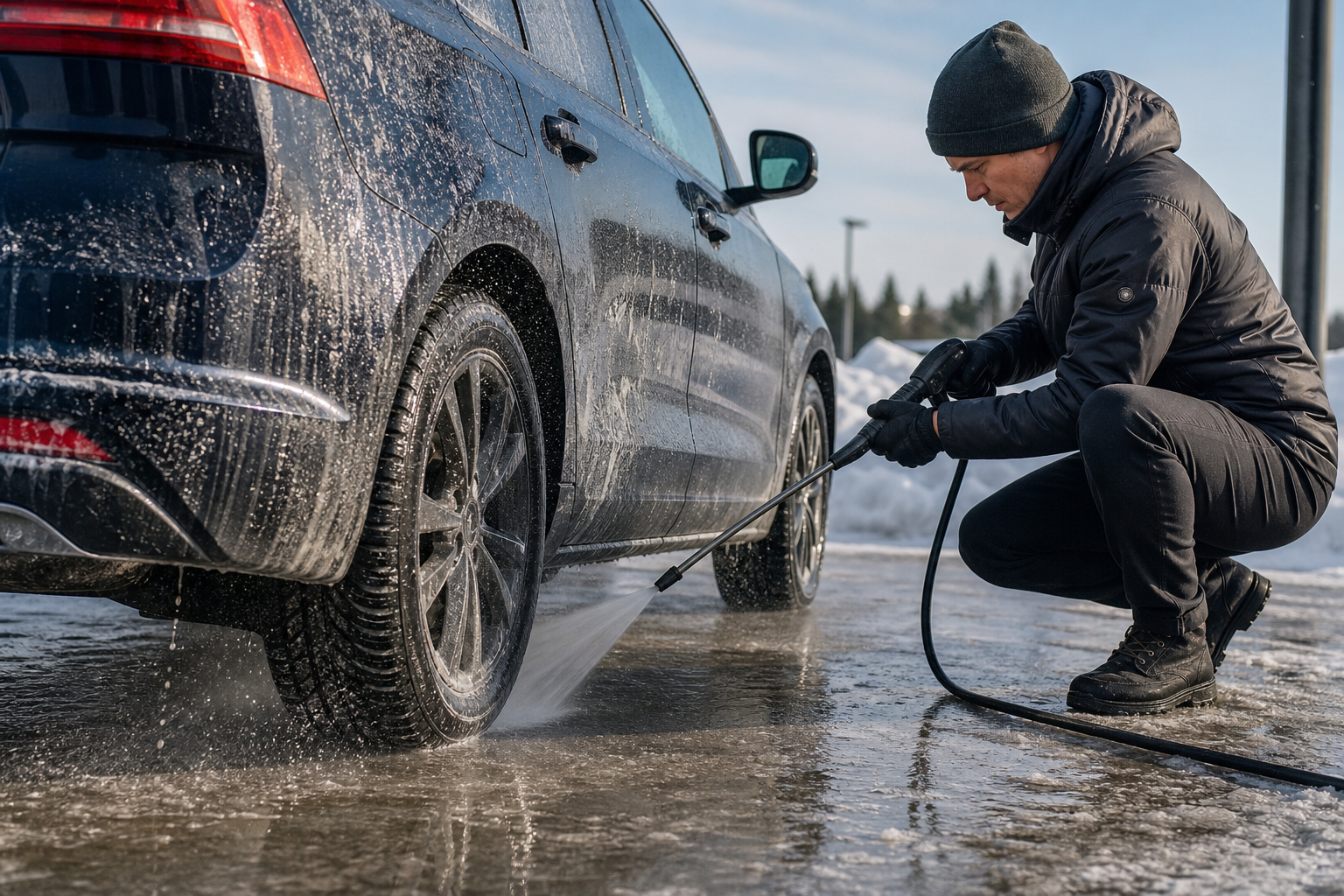
Rinse lower panels, wheel wells, wheels and door sills with a strong stream of water to remove loose salt and grit. Concentrate on the lower 30 cm of the car where salt collects. A self-service bay or a home pressure rinse works for this step provided you keep the nozzle moving to avoid concentrated pressure on a single spot.
-
Full-body wash when visibly coated
Use a pH-balanced car shampoo and the two-bucket method where possible, starting from the roof and working down. This removes salt residue without stripping wax or coatings. If you have a ceramic coating, avoid aggressive abrasive cleaners and follow coating-specific guidance below.
-
Target wheel wells and liners
Use a brush and rinse to dislodge salt from wheel wells and the suspension area you can reach safely. Salt trapped here is the main source of early underbody corrosion when left untreated.
-
Tackling visible white salt stains on fabrics
Brush away dry salt first, then treat stains with a damp cloth and a mild upholstery cleaner. For concentrated seat or carpet salt residue, follow the interior salt stain procedure at the Prime Auto Wash resource “How to Remove Winter Salt Stains: Stop White Marks Fast” for step-by-step tips How to Remove Winter Salt Stains.
-
Gentle drying
Dry the car with a soft microfiber towel or let it air-dry in a heated garage. Removing moisture reduces the chance of water spotting and trapped salt crystals re-embedding in crevices.
Tools and supplies to keep on hand
- pH-balanced car shampoo
- Two-bucket wash system and soft wash mitt
- Wheel brush and wheel cleaner safe for your wheel finish
- Soft microfiber towels for drying
- Upholstery cleaner for interior salt marks
Protecting paint, PPF and ceramic coatings when removing salt
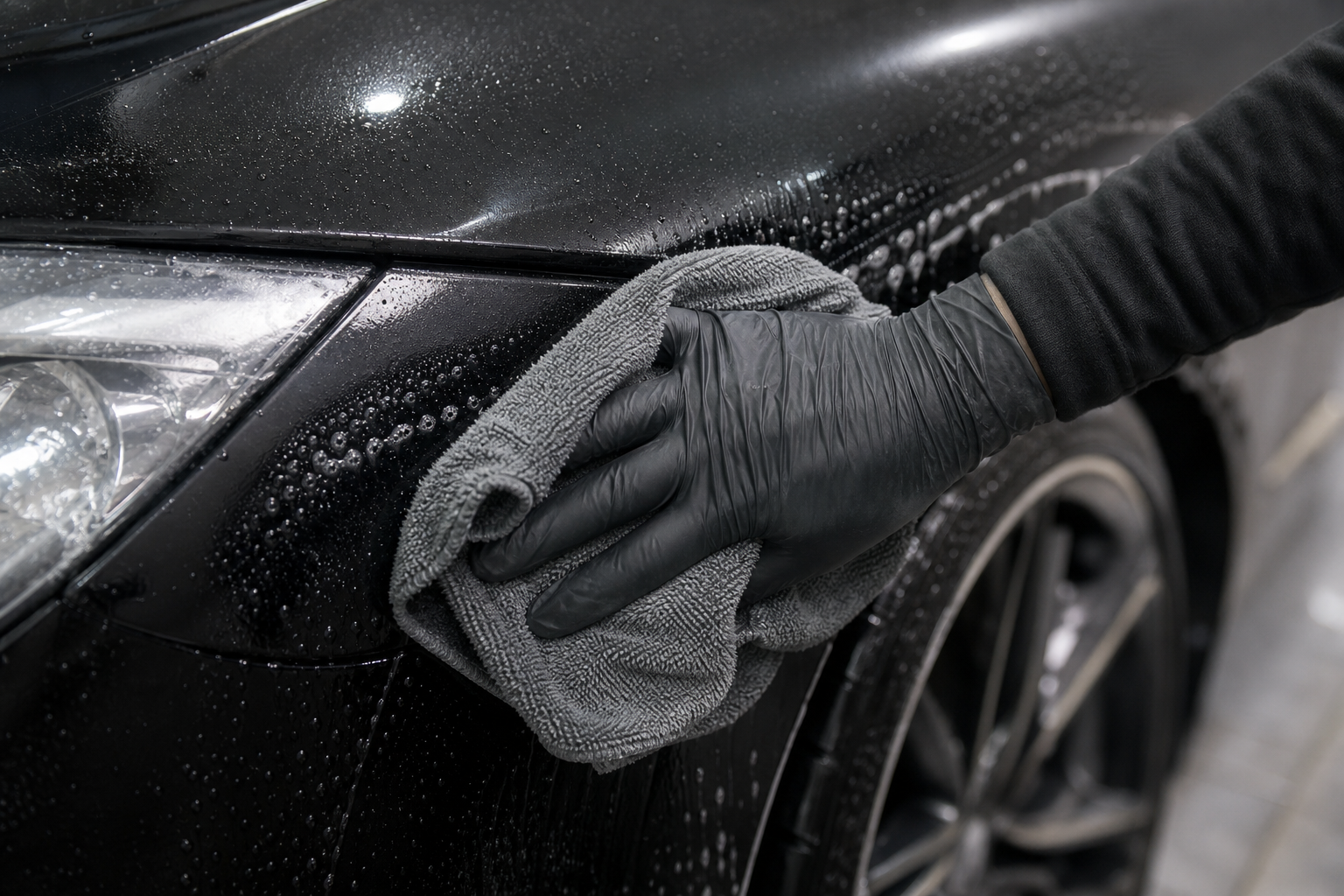
If your vehicle has factory paint protection film or a ceramic coating, use only maintenance products that the coating manufacturer or installer recommends. Improper cleaners or aggressive mechanical abrasion can reduce coating performance. Prime Auto Wash notes its use of high-grade, eco-friendly products and certified detailers who work to preserve coatings during salt removal Prime Auto Wash. When in doubt, avoid aggressive clay bar or heavy polishing at home and consult a pro instead.
How to tell if a coating needs professional attention
- Beading or sheeting stops and water pools on the surface instead.
- There are visible white etch marks where salt has sat on paint for an extended period.
- Fine scratches or swirl marks appear after basic washing steps.
Any of these signs means a professional detailer should inspect the coating before further treatments to avoid worsening the finish.
Undercarriage, brake and corrosion risks: what needs a professional flush
Salt in the undercarriage and on brake components is a safety issue and a corrosion risk. Consumer Reports highlights that targeted cleaning can help clear salt away from brakes and critical components, which is why undercarriage attention is part of a winter maintenance plan Consumer Reports. The Ontario government also recognises de-icing chemicals as a necessary winter operation and documents their widespread use in local road maintenance, which increases the probability of repeated salt exposure in the GTA Ontario guidelines.
Signs you should schedule a professional undercarriage flush and inspection
- Heavy, crusted salt visible on suspension components or the frame.
- Rust forming on fasteners, brake parts, or around welds.
- Brake noise, roughness, or a change in pedal feel after salty conditions.
- Salt repeatedly tracked into wheel wells despite DIY rinses.
These conditions usually require a lift, targeted pressure-flush, and inspection by a trained technician rather than a simple backyard rinse.
Mobile vs in-shop salt removal in the GTA: what each option can do
Compare capabilities so you choose the right service for your situation:
- Mobile detailing: Convenient for exterior rinses, wheel wells, and most stain removal tasks at your home or workplace. Prime Auto Wash operates a fully self-contained mobile unit with onboard power and water that enables on-site work across the GTA and offers same-day mobile service when available Prime Auto Wash.
- In-shop service: Better for full undercarriage access, heated drying, and paint-correction work. Shops with lifts and controlled bays can perform thorough underbody flushing and heavy decontamination that are difficult to do safely outdoors.
Use mobile service for routine washes or when time is limited. Choose in-shop service for heavy undercarriage salt, rust concerns, or when paint correction is needed.
Decision checklist: when to DIY and when to call a professional
Use this short flow to decide quickly:
- If the car has light, recent salt residue and you have access to a wash bay, follow the DIY checklist above.
- If you have a newer or high-value vehicle with PPF or ceramic coating, avoid abrasive DIY corrections and consult a certified detailer to protect the coating.
- If there is heavy crusting under the car, visible rust, brake issues, or salt tracked into wheel housings repeatedly, book a professional undercarriage flush and inspection.
- If you operate a rideshare or commercial vehicle with frequent winter driving, consider scheduled professional maintenance to reduce downtime and preserve vehicle condition.
What to expect when you book professional winter salt removal
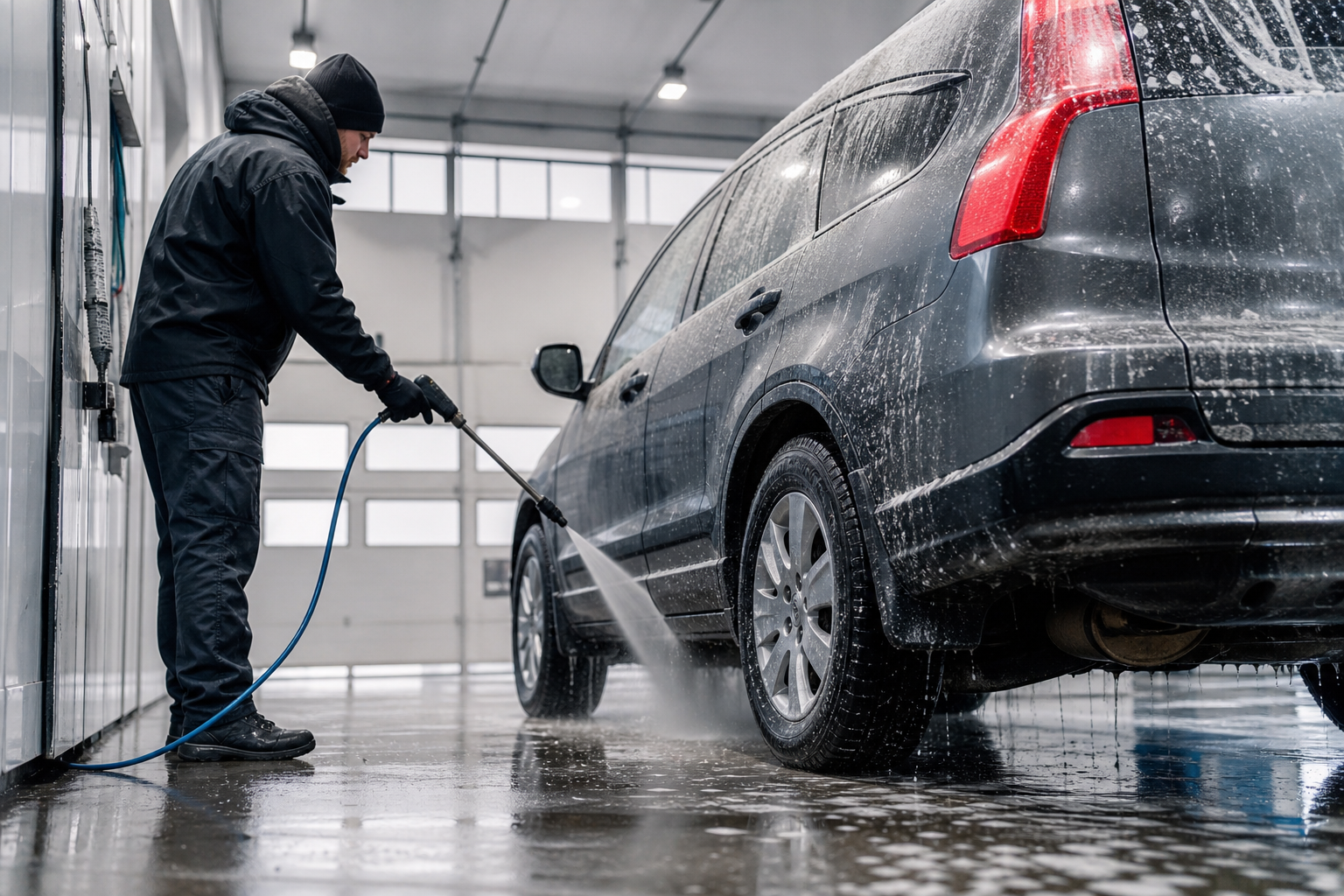
A professional winter salt removal appointment typically includes a pressure rinse, targeted wheel-well and undercarriage flush where the facility allows, decontamination washes, trim and rubber treatment, and a final inspection. Prime Auto Wash lists certified insured technicians, a full service menu, and transparent add-on pricing in its service materials; business documents reference itemized add-ons and a mobile convenience charge for on-site appointments Prime Auto Wash. Ask the provider what is included, whether undercarriage flushing is permitted at your residential location, and whether there are any add-on fees for mobile visits.
Quick winter-to-spring maintenance schedule for GTA drivers
- Pre-winter: Apply a protective wax or ensure your ceramic coating/PPF is in good condition before heavy salt use begins.
- During winter: Rinse exposed areas after salty drives and perform a full wash at least monthly according to Consumer Reports, more often after heavy salt exposure Consumer Reports.
- Emergency rinse: If you hit a heavily salted stretch, rinse wheel wells and lower panels as soon as practical to prevent crusting.
- Spring deep clean: Book a professional inspection and undercarriage flush in spring to catch early corrosion and address any etching or salt damage.
Local context and an environmental note for Ontario drivers
Ontarios guidelines accept the use of de-icing chemicals as essential for road safety while advising best practices for distribution and disposal, which explains why salt exposure is common in the GTA during winter Ontario guidelines. When washing your car, use commercial car wash bays where possible because they are designed to capture and treat runoff. Many professional detailers also follow eco-friendly product choices and capture policies to reduce environmental impact.
Book help: Prime Auto Wash mobile and in-shop winter salt removal
Prime Auto Wash serves Mississauga, Brampton, Toronto and the GTA with both a fully equipped Mississauga shop and a self-contained mobile unit that brings power and water to your location. The team offers targeted winter salt removal, certified technicians, insured service and clear add-on pricing noted in business materials Prime Auto Wash. To book, visit the website or call for availability and to confirm whether an undercarriage flush is recommended for your vehicle and location.
Frequently asked questions
How often should I wash road salt off my car during the GTA winter?
Plan at least one full wash per month during snow season and add rinses after heavy salt exposure. Consumer Reports advises monthly washes as a minimum and recommends more frequent cleaning when a vehicle is heavily coated in salt Consumer Reports.
Will winter salt damage my car’s ceramic coating or paint protection film?
Salt itself does not instantly destroy coatings, but left in place it can embed contaminants and cause etching that reduces performance. Avoid aggressive DIY abrasion on coated surfaces and use maintenance products that are compatible with your coating. Certified detailers like those at Prime Auto Wash use compatible, high-grade products to protect coatings during salt removal Prime Auto Wash.
Can a mobile detailer remove salt from the undercarriage and brakes?
Mobile detailers can rinse wheel wells and accessible lower panels, and some mobile units perform limited underbody flushing. However, a full undercarriage flush and inspection often requires a lift and a shop environment for safe, complete access. Ask the provider whether their mobile equipment supports the level of undercarriage work you need; Prime Auto Wash operates a self-contained mobile unit and also has a Mississauga facility for shop-level services Prime Auto Wash.
Is it safe to use a pressure washer on salted areas, or could that cause damage?
Pressure washing is acceptable when you keep the nozzle moving and use a moderate pressure setting. Avoid holding a high-pressure jet close to seams, rubber trim or paint for extended periods. If you are unsure about settings for painted or coated surfaces, perform a gentle rinse first and consult a professional.
When should I schedule a professional salt removal and inspection in spring?
Schedule a spring professional inspection if you notice crusted salt, visible rust, brake noise, or any coating deterioration after winter. A spring undercarriage flush and a detailed inspection will identify early corrosion and allow corrective action before the next winter season.
Ready to book professional winter salt removal? Prime Auto Wash offers both mobile service across the GTA and a Mississauga facility with certified, insured technicians. Book online or visit the Prime Auto Wash website to request service.