How can you tell if headlight restoration for cloudy lenses will work?
How to tell if your cloudy lenses can be restored or must be replaced
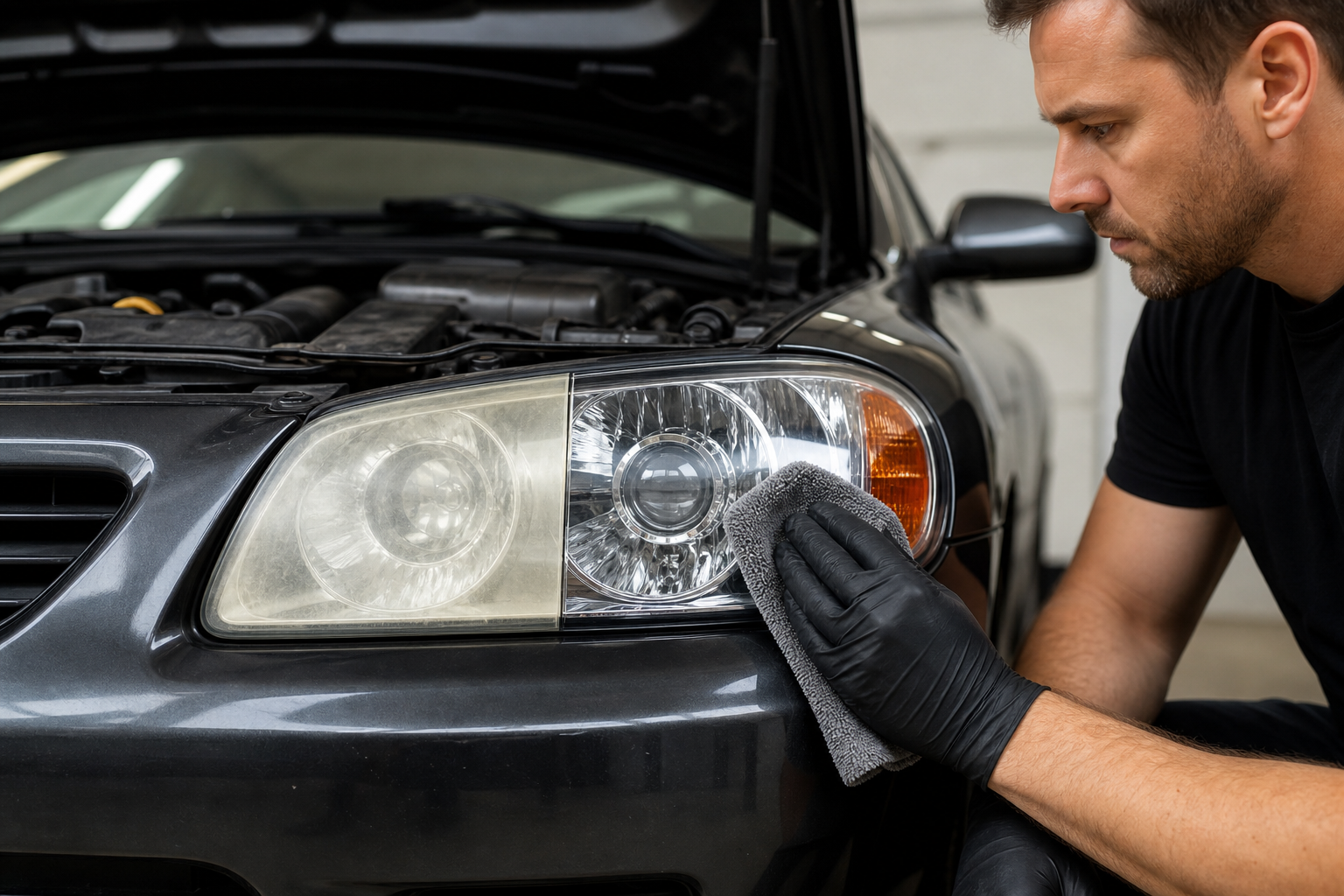
Not every cloudy or yellowed headlight requires replacement. Start by locating the problem. Surface oxidation from UV exposure appears as fairly uniform clouding on the outside of the lens and is usually fixable. Clouding caused by internal moisture, corroded reflectors, cracked housings, or failed seals points to an internal fault and often requires replacement or a sealed-assembly repair.
Before you call for a quote, send these photos and notes so a shop can give an accurate remote assessment:
- A close-up photo taken straight on and a second from an angle so polishing scratches, micro-crazing, or swirl marks show up.
- A full-assembly shot showing how the lens sits relative to bumper, fender, or trim.
- Interior photos taken through the lens that show condensation, water droplets, or loose reflectors if visible.
- A short note about whether the clouding is uniform or patchy and whether there are visible cracks or deep scratches.
Industry FAQs and local detailers note a minority of fogging problems originate inside the sealed assembly and cannot be corrected by external polishing alone, so an in-person inspection may be required (Eugene Headlight Restoration FAQ). For the technical difference between scratches and oxidation, see a comparative discussion that explains why they need different remedies (Scratched vs Cloudy Headlights).
What exact steps should the shop describe for a safe, lasting restoration
Workflow you should expect
A reputable technician will describe a multi-stage workflow and why each stage matters to optical clarity and longevity. Ask them to explain each of these steps:
- Initial inspection and thorough cleaning to remove grit and contaminants so sanding does not embed abrasive particles.
- Multi-stage wet sanding with progressively finer grits to remove oxidized material while keeping lens geometry intact.
- Machine polishing to remove sanding haze and restore optical clarity.
- Application of a clear coat or automotive UV protectant to slow re-oxidation and extend results.
- Final inspection and a beam or pattern check to confirm an even light output.
Vendors commonly combine mechanical polishing with a dedicated UV protective layer as the final step. If a shop omits a protective seal, ask why they do not use one and how they expect the result to last (Eugene Headlight Restoration FAQ, 3M Headlight Restoration).
How long will the job take and what results are realistic to expect
Most professional restorations take about 30 to 60 minutes per headlight, depending on size and severity. Ask the provider for a per-lens time estimate so you can plan logistics (Eugene Headlight Restoration FAQ).
Realistic outcomes include visibly clearer lenses, improved beam focus, and a brighter road illumination. Published guides warn restored lenses may not remain factory-new indefinitely and some vehicles will need repeat work as UV and environmental wear return (FindDetailing headlight restoration guide, Consumer Reports).
If you want quantified safety claims, ask whether the shop will demonstrate beam pattern and light output before and after the job. Exact percentage improvements vary by assembly and cannot be guaranteed without specific testing (FindDetailing).
What proof and credentials should you request before you book
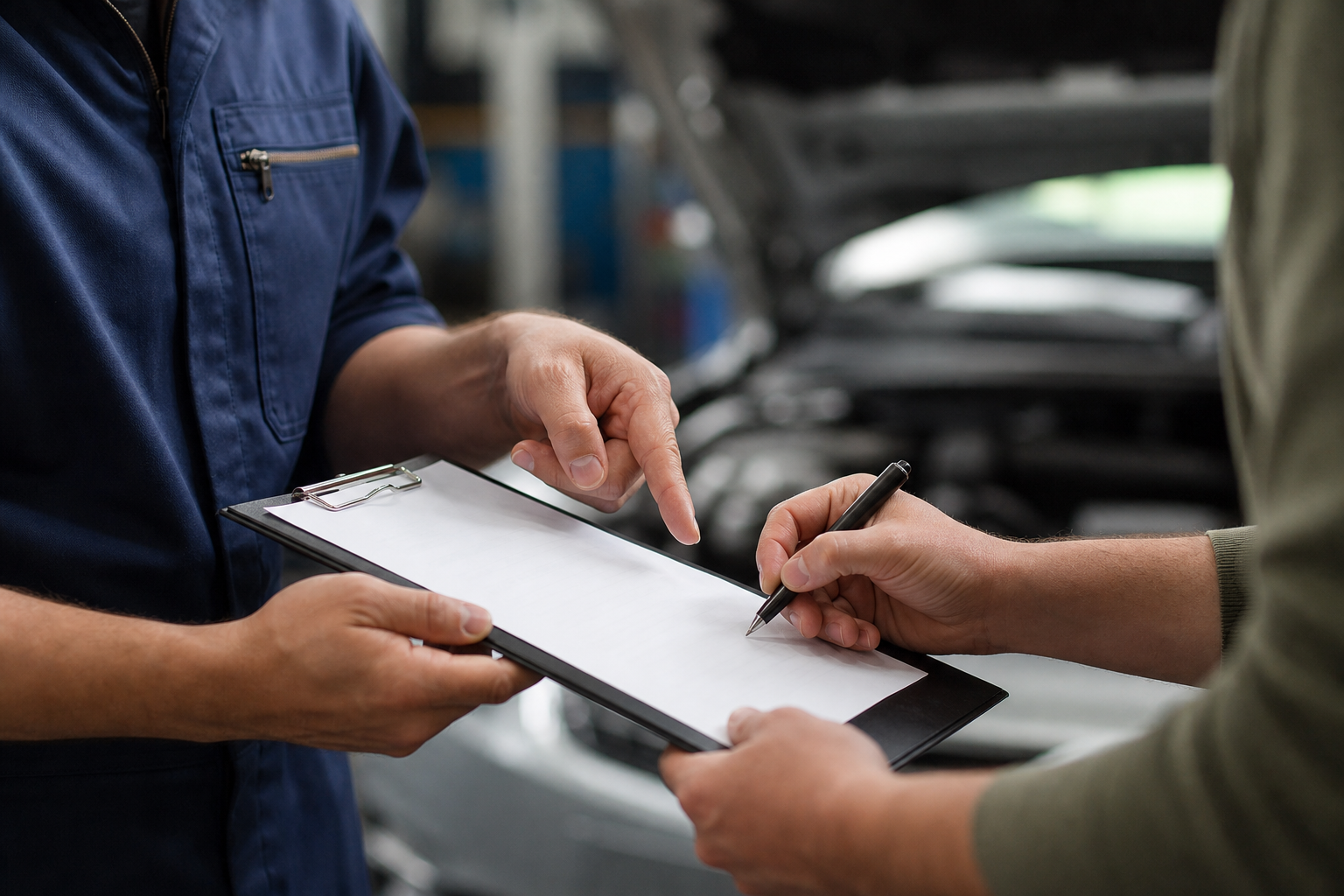
Trustworthy providers will share clear proof and give direct answers. Request these items in writing or message before you book:
- Recent before and after photos of the same lens type or the same vehicle model, not stock pictures.
- Exact product names for polishes and the final sealant or UV protectant so you can verify claims about durability.
- Estimated time per lens and a written warranty or rework policy that explains what happens if clarity returns prematurely.
- Evidence of business insurance and any technician training or relevant certifications.
- Local reviews or references from nearby customers who had similar work done.
Consumer guidance highlights that longevity depends on materials and the final seal, so insist on product names and a clear warranty if longevity matters to you (Consumer Reports, 3M).
If you prefer a local provider that offers both mobile and in-shop work, confirm mobile capability and check the vendor site for examples of completed plastic restoration work. Prime Auto Wash lists exterior plastic restoration among its services, which helps when you want the same shop to manage paint and trim protection as well as headlights (Prime Auto Wash, What plastic restoration can fix).
Compatibility checks: will restoration play nicely with PPF or ceramic coatings
If your vehicle already has paint protection film or a ceramic coating near the headlight, ask how the technician will mask and protect adjacent surfaces during sanding and polishing. Abrasive sanding and heat from polishing can damage thin PPF edges or alter coating top layers if not correctly masked and cooled.
Product vendors recommend protective masking and compatible sealants when working near PPF or ceramic layers. Ask whether the shop will remove and reinstall trim, what masking materials they use, and which sealant they will apply to ensure compatibility with your existing protection (3M, Eugene Headlight Restoration FAQ). For plastic restoration scope and bundling options, a local vendor page can help you decide whether to combine services (What plastic restoration can fix).
Common red flags and mistakes that reduce safety or durability
- The provider refuses pre-job photos or will not show recent before/after examples of actual completed work.
- The technician describes a single-step abrasive approach but does not apply a UV clear coat or cannot explain protective sealing.
- No written warranty or only vague verbal promises about how long the clarity will last.
- The shop cannot name the polish and sealant products used, or suggests household compounds instead of automotive-grade materials.
- Rushed estimates that ignore masking or protecting adjacent coatings such as PPF and ceramic layers.
- Blanket claims that restoration will permanently return lenses to factory-new without inspecting for internal faults.
A credible shop will explain how each step reduces re-oxidation and will document products and offer a short guarantee if the final seal fails early (Clear Headlight Restorations FAQ, Consumer Reports).
Local logistics for Mississauga, Brampton and the GTA: mobile versus in-shop service
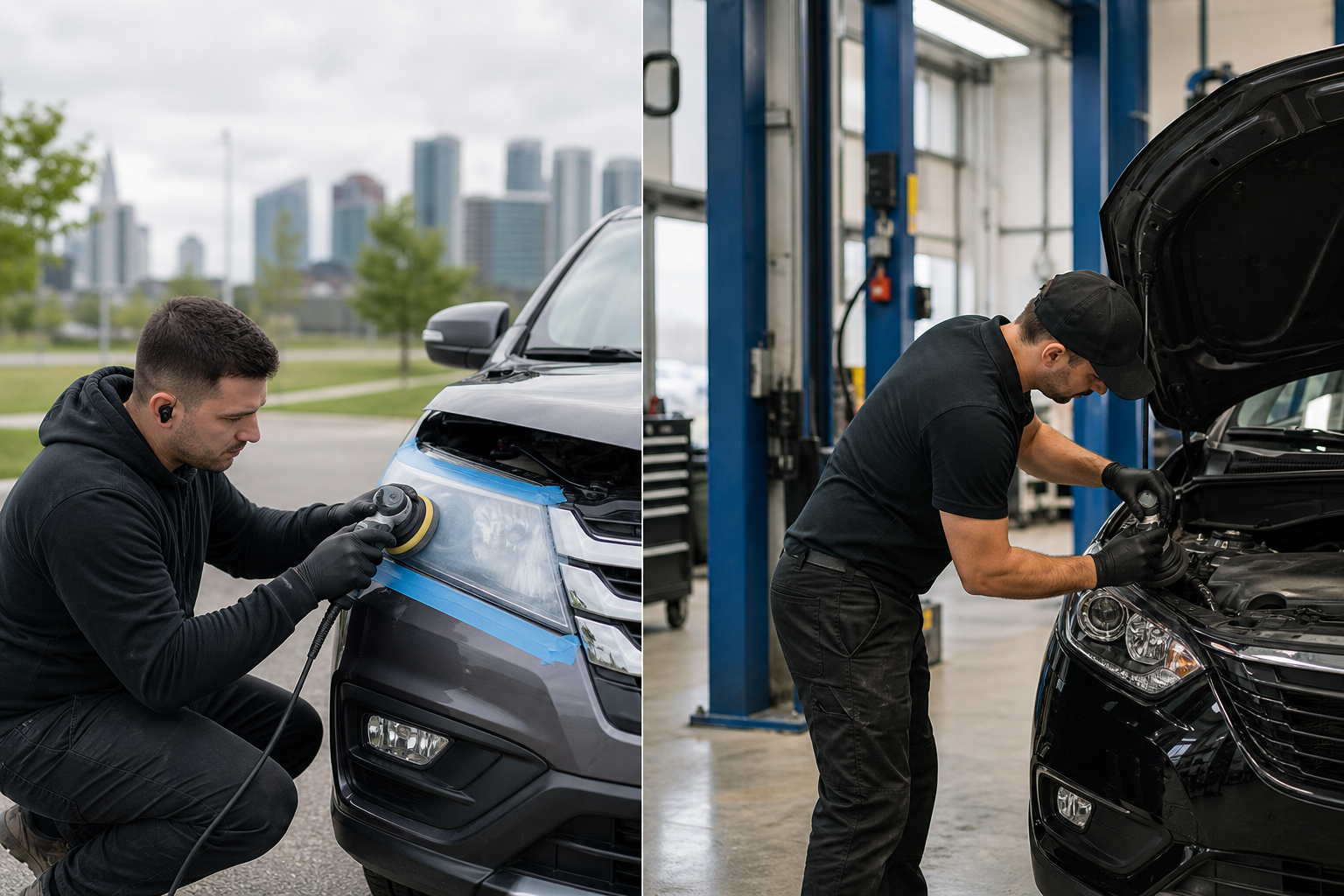
When you contact a local provider, confirm these practical details for mobile appointments versus in-shop work:
- Mobile setup: does the detailer bring a self-contained power and water system and all tools, or do they need electrical access? Providers that bring their own power and water can work at home, at the office, or in a parking lot with fewer constraints (Prime Auto Wash).
- Same-day availability and an estimated job window so you can plan around commutes or work hours.
- Travel and call-out fees for mobile service and whether those fees are waived when combined with other services.
- Insurance and liability: confirm the provider carries business insurance that covers accidental damage during restoration while on your property.
Prime Auto Wash advertises mobile detailing across the GTA and a Mississauga shop, which can be useful if you prefer a controlled environment for restoration or the convenience of an on-site visit (Prime Auto Wash).
Quick decision checklist and what to send for an accurate quote
Use this short checklist when you message a shop for a quote. Including these details up front avoids surprises and speeds accurate pricing.
- Photos: close-up and full-assembly pictures of each cloudy lens and any visible interior condensation.
- Vehicle details: make, model, year, and whether the car has PPF or ceramic coating near the headlights.
- Desired outcome: cosmetic refresh, improved nighttime visibility, or both.
- Ask the shop to confirm: estimated time per lens, product names for polish and sealant, sample before/after photos, and warranty or rework policy.
- For mobile jobs: ask whether they bring power and water and whether they offer a same-day slot.
Frequently asked questions
How long does a professional headlight restoration for cloudy lenses last?
Longevity depends on the depth of oxidation, the quality of the final UV sealant, and local conditions such as sun exposure and road salt. Restoration often delivers months to several years of improved clarity, but some vehicles will need repeat work. Consumer testing and reviews note that restoration is not always permanent (Consumer Reports).
Can cloudy or foggy lenses caused by internal moisture be fixed with external restoration?
No. When clouding comes from internal condensation, degraded seals, or damaged internal components, external sanding and polishing will not fix the underlying issue. A professional inspection is required and the recommended remedy may be replacement or resealing (Eugene Headlight Restoration FAQ).
Is it safe to restore headlights when my car already has ceramic coating or paint protection film?
Yes, provided the technician masks and protects adjacent coatings and uses compatible products. Ask how they will prevent heat and abrasive damage to PPF edges and top coating layers and which sealant they will apply to ensure compatibility (3M).
How much faster will I see improved nighttime visibility after restoration and can shops quantify that?
Most customers notice visibly brighter and clearer beams immediately after a proper restoration. Shops can sometimes demonstrate beam pattern improvements on-site, but precise percent gains vary by headlight assembly and are best confirmed with before/after testing rather than a universal numeric claim (FindDetailing).
Final question to ask yourself before you book
Do you want a quick cosmetic refresh or a documented, warranty-backed restoration that includes a final UV seal and protection for nearby coatings? If you prefer the latter, insist on written product names, before/after photos of comparable work, and a short guarantee before you hand over the keys.
When you are ready to get an estimate or compare mobile and in-shop options in the GTA, contact Prime Auto Wash for details on their plastic restoration and mobile detailing capabilities and to review examples of recent work.