Is ozone odor treatment for cars the right choice for your vehicle?
Quick decision checklist: should you try ozone now
Use these three fast checks to decide whether ozone odor treatment for cars is worth booking. If you answer yes to two or more items, an ozone session with a professional detailer is likely worth considering. If not, start with targeted cleaning first.
- Type of smell: Is the odor organic (smoke, mildew, urine, pets) rather than chemical or fuel? Ozone works best on organic odors that come from molecules ozone can oxidize.
- Visible contamination: Are there visible spills, saturated carpets, or damaged upholstery? If yes, those sources usually require cleaning or repairs before ozone will be effective.
- Recent exposure: Did the problem start after a single event (for example, cigarette smoke in one trip) or is it long-term and deep-seated? Short-term issues respond better to ozone alone.
If you want a deeper primer on removing persistent smells and complementary cleaning options, see our related guidance on car odour removal how to get rid of smells permanently.
How ozone treatment for cars works
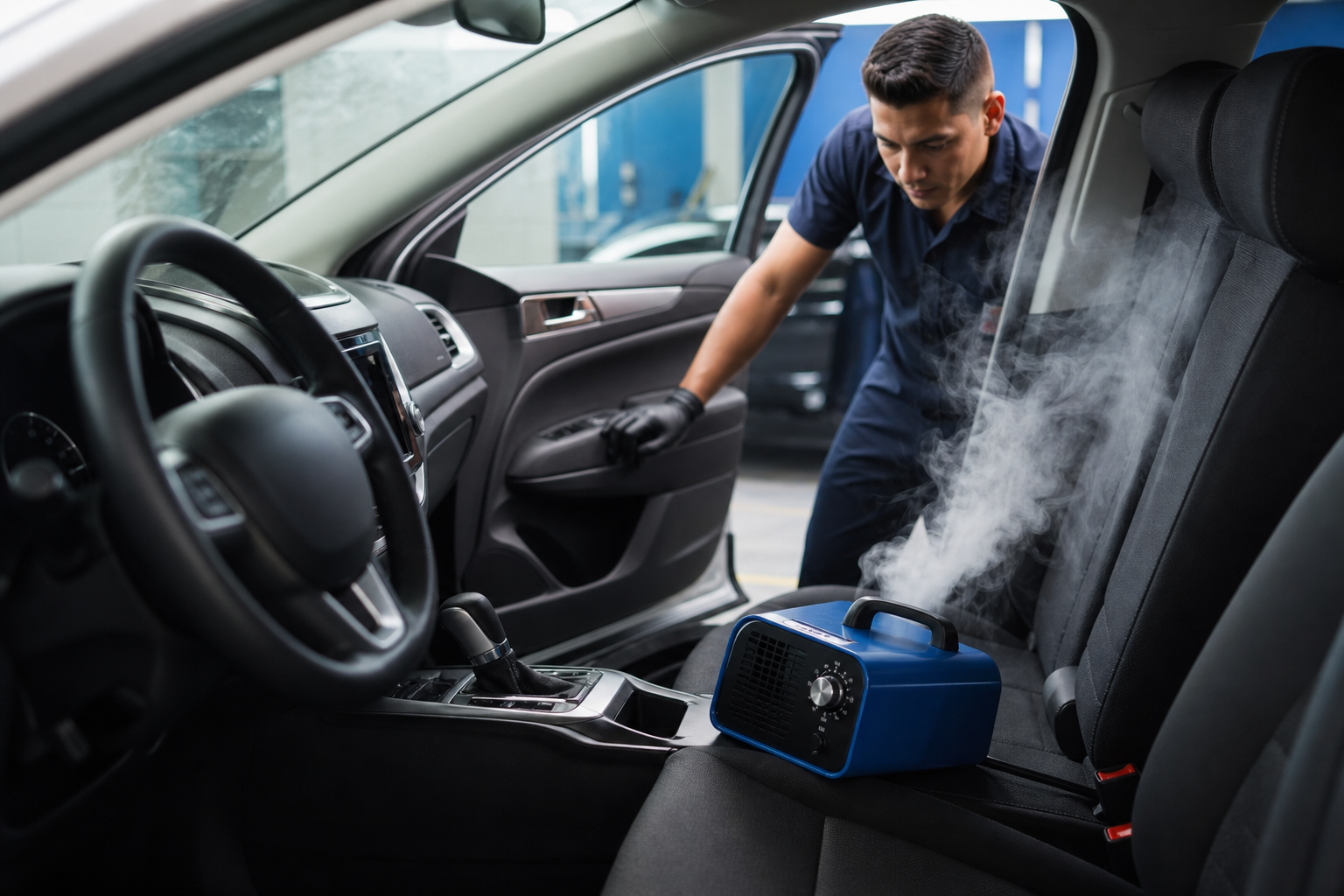
Ozone treatment uses a machine that generates ozone gas (O3) inside a sealed, unoccupied cabin. Ozone is a highly reactive form of oxygen that oxidizes organic molecules, damaging the chemical bonds that produce odor. That chemical reaction can neutralize odor-causing compounds, some mould spores, and certain bacteria at the source rather than merely masking the smell. For a clear non-technical explanation of the process and limitations, see a practical overview at Panda Hub which explains how ozone oxidizes and when the source must be removed to prevent return of the smell.
What ozone reliably removes and what it cannot fix
Ozone is effective against many organic odors because it reacts with volatile organic compounds. Typical targets it can neutralize include smoke residues, pet urine vapours, and mildew-related compounds. However, ozone cannot repair or fully reach odor trapped inside certain materials.
Common successes
- Smoke, food, and pet odors embedded in air and surface residues.
- Mildew or musty smells from light microbial growth on surfaces.
- Odors originating from cabin air or superficial fabric contamination where the source has not deeply saturated padding or structure.
Limitations and failures
- Saturated seat foam, headliners soaked with odorous liquids, or deep padding contamination typically require replacement or deep extraction and will often return after ozone alone.
- Contaminated cabin filters or HVAC components must be inspected and replaced; otherwise odor will persist or reappear.
- Certain chemical smells and fuel vapours may not respond to ozone and can indicate mechanical issues needing repair.
Safety limits, common risks, and professional protocols
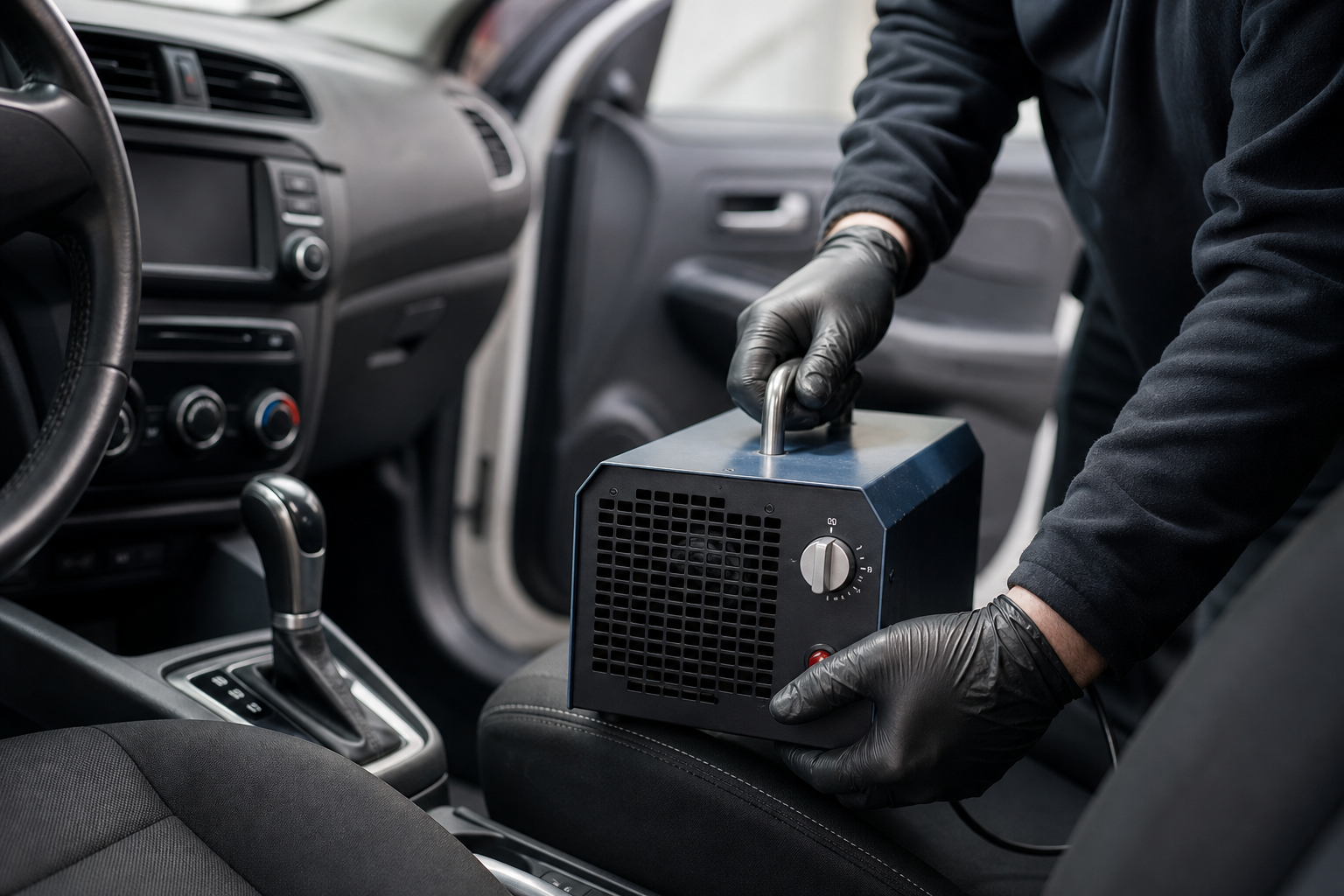
Ozone is an effective oxidizer but it is hazardous to people, pets, and some materials at high concentrations or long exposure. Professional protocols set limits to prevent material damage and avoid health risks. DetailerBase warns that running an ozone machine too long or at excessive concentration can damage plastics and other trim, producing permanent “ozone burn” or a metallic smell that can be as objectionable as the original odor. Follow these do-not-do rules:
- Do not run ozone in an occupied vehicle or with occupants nearby.
- Do not use excessive run times or multiple machines at high concentration without professional controls.
- Do not expect ozone to replace physical cleaning when fabrics or foams are saturated.
- Avoid DIY ozone sessions in shared indoor spaces where residual ozone can accumulate.
Because incorrect use can cause permanent changes to interior plastics and finishes, hire a provider who follows safe exposure and concentration practices rather than attempting a home experiment. For a full professional safety discussion, see the DetailerBase ozone safety guidance.
Professional exposure controls and what a pro will do differently
- Seal the cabin and set machine output based on vehicle size and contamination level rather than a fixed long runtime.
- Inspect interior materials first and avoid ozone if sensitive plastics or finishes show previous degradation.
- Run measured treatment cycles and allow a controlled airing period before re-entry.
- Combine ozone with inspection and replacement of cabin filters and recommended cleaning steps when necessary.
How to prepare your vehicle and what to expect during treatment
Preparing the vehicle well increases the chance of a successful outcome and reduces the need for repeat sessions. Prime Auto Wash offers ozone generator treatment as part of its service menu and can perform this work either in-shop or via its fully self-contained mobile unit across the GTA, which brings its own power and water to your location.
Vehicle prep checklist
- Remove all personal items, air fresheners, and loose trash to allow a sealed environment.
- Point out visible spills, burned areas, pet stains, or damp spots to the technician.
- Note any medical sensitivities in household members so the detailer can plan airing and re-entry timing.
- Ask the technician to inspect and, if needed, replace the cabin filter or check HVAC ducts before ozone is applied.
During treatment, a certified technician will seal the vehicle, set the ozone generator, and run a monitored cycle. After treatment they will ventilate the cabin and perform a follow-up inspection. Expect immediate neutralization of airborne odor in many cases; a faint return of smell within days can indicate an untreated source such as seat foam or filters that need replacement, at which point repeat treatment combined with targeted cleaning is recommended.
When ozone treatment will not be enough and the next steps
If odor returns or a technician finds saturated materials, the next steps are targeted cleaning or repairs. Common failure cases include deep urine penetration, water-damaged upholstery, or heavily smoke-stained headliners. In those cases, ozone can be a useful follow-up after physical cleaning, but not a substitute.
Repair and cleaning options to combine with ozone
- Professional steam extraction or shampooing of carpets and upholstery to remove trapped residues.
- Replacement of cabin filters and inspection of HVAC components to remove ongoing odor sources.
- Seat foam repair or headliner replacement for permanently saturated materials.
- Repeat controlled ozone session after cleaning to neutralize residual airborne compounds.
Common objections and how to evaluate them
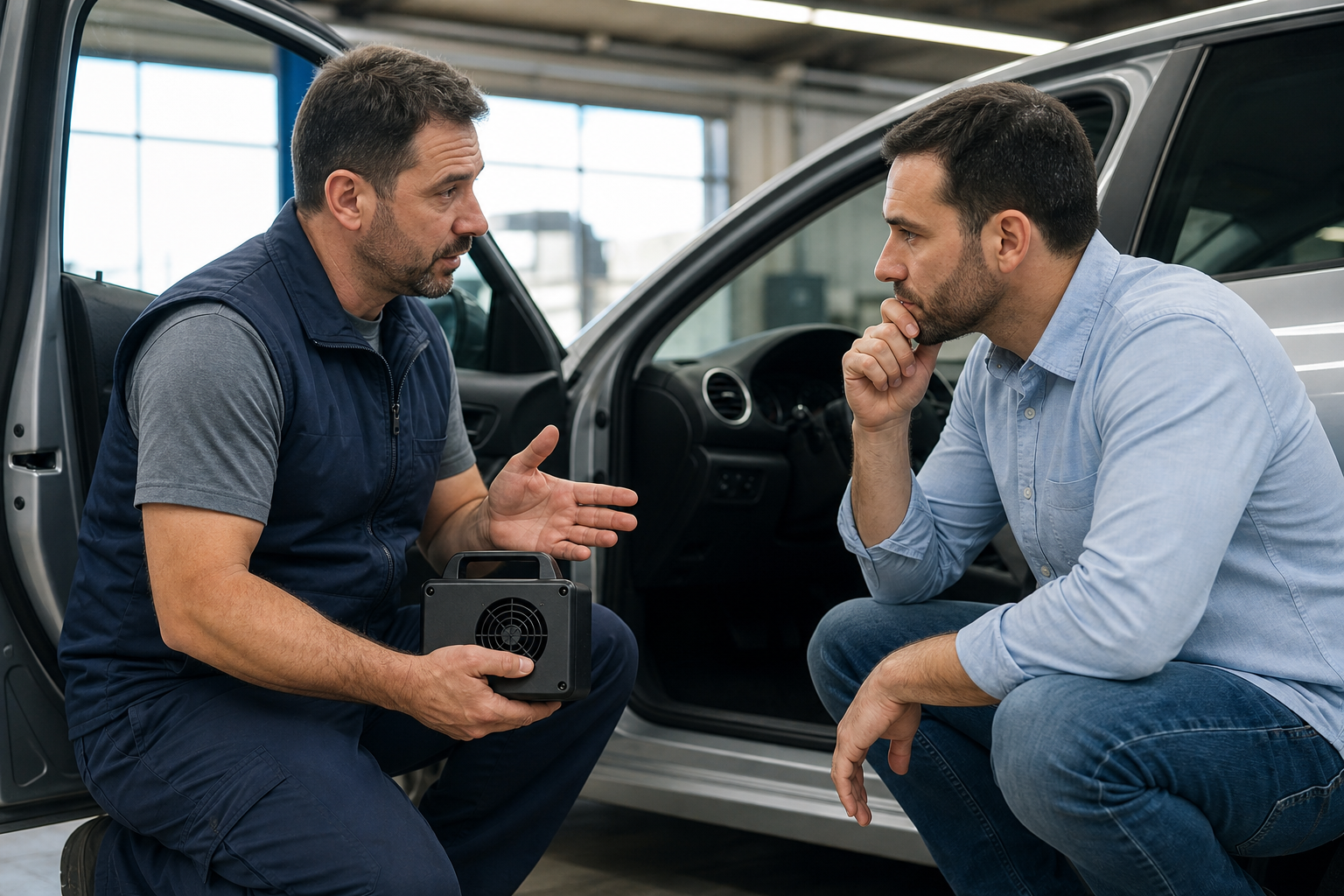
Here are concise answers to frequent consumer concerns.
- Will ozone damage my dashboard plastics or trim? Overexposure can cause surface damage; a professional will set appropriate concentrations and inspect materials first. See the DetailerBase safety notes for examples of ozone burn risks.
- Is it safe for vehicles used to transport children or pets? The treatment is safe when performed by trained technicians and when the vehicle is ventilated fully before use. Do not re-enter immediately after a session; follow the provider’s airing instructions.
- What if the smell comes back? A returning smell usually means the source was not fully removed, such as a contaminated filter or saturated foam. Replace or deep-clean the source, then consider a follow-up ozone session.
How to choose a provider in the GTA and the right service format
Decide between mobile and in-shop service based on the extent of cleaning required. Mobile ozone treatment is convenient for surface-level or cabin-only odors; in-shop service is better when access to extraction equipment or component replacement is likely needed. Prime Auto Wash provides both mobile and in-shop options and operates a self-contained mobile unit across Mississauga, Brampton, Toronto and the GTA, which is useful when you cannot visit the shop.
Questions to ask before you book
- Have you treated smoke, pet, or mildew odors like mine before, and what was the outcome?
- Will you inspect and replace the cabin filter if it is contaminated?
- What ozone concentration and run-time will you use, and how will you ventilate the vehicle afterwards?
- Do you carry power and water for mobile sessions, and do you offer follow-up if the smell returns?
- What is your damage and insurance policy in the unlikely event of material degradation?
Final decision checklist and next steps to book
Before you call, confirm these five points: the smell is organic; there are no obviously saturated foams or headliner stains; you can leave the vehicle unoccupied for the service window; the provider will inspect filters and materials; and the provider follows professional ozone exposure and ventilation protocols. If the answers are yes, book a professional ozone odor treatment for cars with a trusted detailer and plan to combine it with targeted cleaning if needed.
Frequently asked questions
Will ozone damage my dashboard plastics, trim, or electronics?
Improper use can cause damage. A professional will check materials first, use measured ozone levels, and avoid extended overexposure to prevent “ozone burn”. See professional safety guidance at DetailerBase for details.
How long should I wait to sit in my car after an ozone treatment?
Wait until the technician confirms the vehicle has been fully ventilated and the ozone concentration has dropped to safe levels. A reputable provider will ventilate the cabin and advise when it is safe to re-enter.
What if the smell returns after ozone treatment, what are the next steps?
If the odour returns, the likely causes are contaminated cabin filters, saturated upholstery, or structural absorption. Replace or deep-clean those sources, then use a follow-up ozone session if needed, as explained in the Panda Hub overview.
Is ozone treatment safe for cars used to transport children or pets?
Yes, when performed and ventilated by professionals. Keep children and pets away until the vehicle is cleared for re-entry and ask the provider about their airing procedures.
Do I need to bring my car to the shop or can the technician perform ozone treatment at my home or workplace in the GTA?
Both are possible. Prime Auto Wash offers a fully self-contained mobile unit that brings power and water on-site for many treatments, while in-shop sessions are useful for deeper cleaning or component replacement. Ask your provider which format they recommend based on the inspection.
Ready to decide? If your answers line up for ozone, contact Prime Auto Wash to schedule an inspection and ozone odor treatment for cars. For more on integrating ozone with cleaning and repairs, read car odour removal how to get rid of smells permanently and then book through Prime Auto Wash.