Clay bar treatment benefits vs paint correction
If your car’s paint looks dull or feels rough after a wash, a clay bar treatment can deliver surprisingly visible results. This article explains clay bar treatment benefits, what it removes and what it cannot fix, and how to decide between clay decontamination and paint correction. It also covers DIY risks, why detailers use clay before protective services, and whether to book a mobile or in-shop service in the Greater Toronto Area.
What a clay bar treatment does and the direct benefits
How clay removes bonded contamination
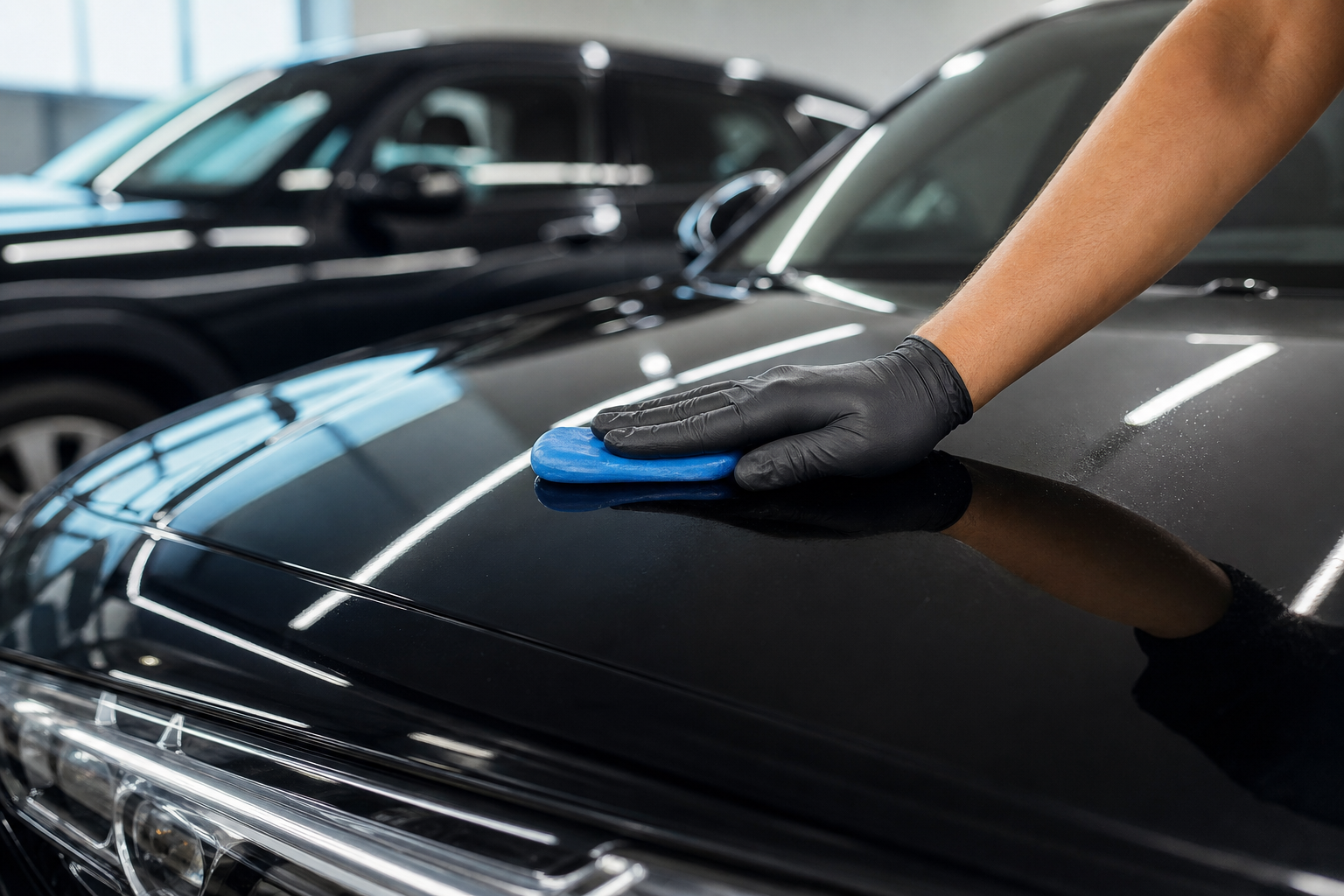
A clay bar is a soft, malleable compound that is worked across a lubricated panel to physically lift contaminants bonded to the paint surface. These include industrial fallout, brake dust, tar, and tree sap that ordinary washing cannot remove. For a clear explanation of the mechanics and common contaminants, see the FindDetailing clay bar guide and Brilliatech’s overview, which describe clay decontamination as a distinct step after washing and before polishing or protection (FindDetailing guide, Brilliatech explanation).
Immediate visual and tactile benefits
After a proper clay treatment the paint will feel noticeably smooth and often looks glossier because light reflects more evenly from a decontaminated surface. AutoLaundry explains that removing bonded impurities improves perceived gloss and makes subsequent polishing or sealing more effective (AutoLaundry on benefits).
Why clay matters before protection
Protective products such as waxes, paint sealants, ceramic coatings, and paint protection film (PPF) require a clean surface to bond correctly. Bonded contaminants beneath a coating can reduce adhesion and shorten the service life of the protection. Detailers therefore commonly include clay decontamination in prep work before applying long-term protection (AutoLaundry on prep).
What a clay bar does not do and common misconceptions
Oxidation and deep scratches need polishing or correction
A clay bar does not remove oxidation, paint fading, or scratches that have penetrated the clear coat. If your paint shows chalky oxidation or clear depth loss, those issues require polishing or paint correction steps, not clay. MobileDetailingExpert clarifies that clay removes bonded contaminants but does not correct oxidation or ingrained scratches (MobileDetailingExpert article).
When clay is unnecessary
If a car is recently painted, kept under cover, or only has loose surface dirt removed by a routine wash, a clay bar may not be needed. Clay is targeted at bonded contaminants that make paint feel rough after washing. If the surface feels smooth and looks glossy after a standard wash, you can often skip clay until contaminants reappear.
Clay bar vs washing, waxing, polishing, and paint correction
When washing or waxing is enough
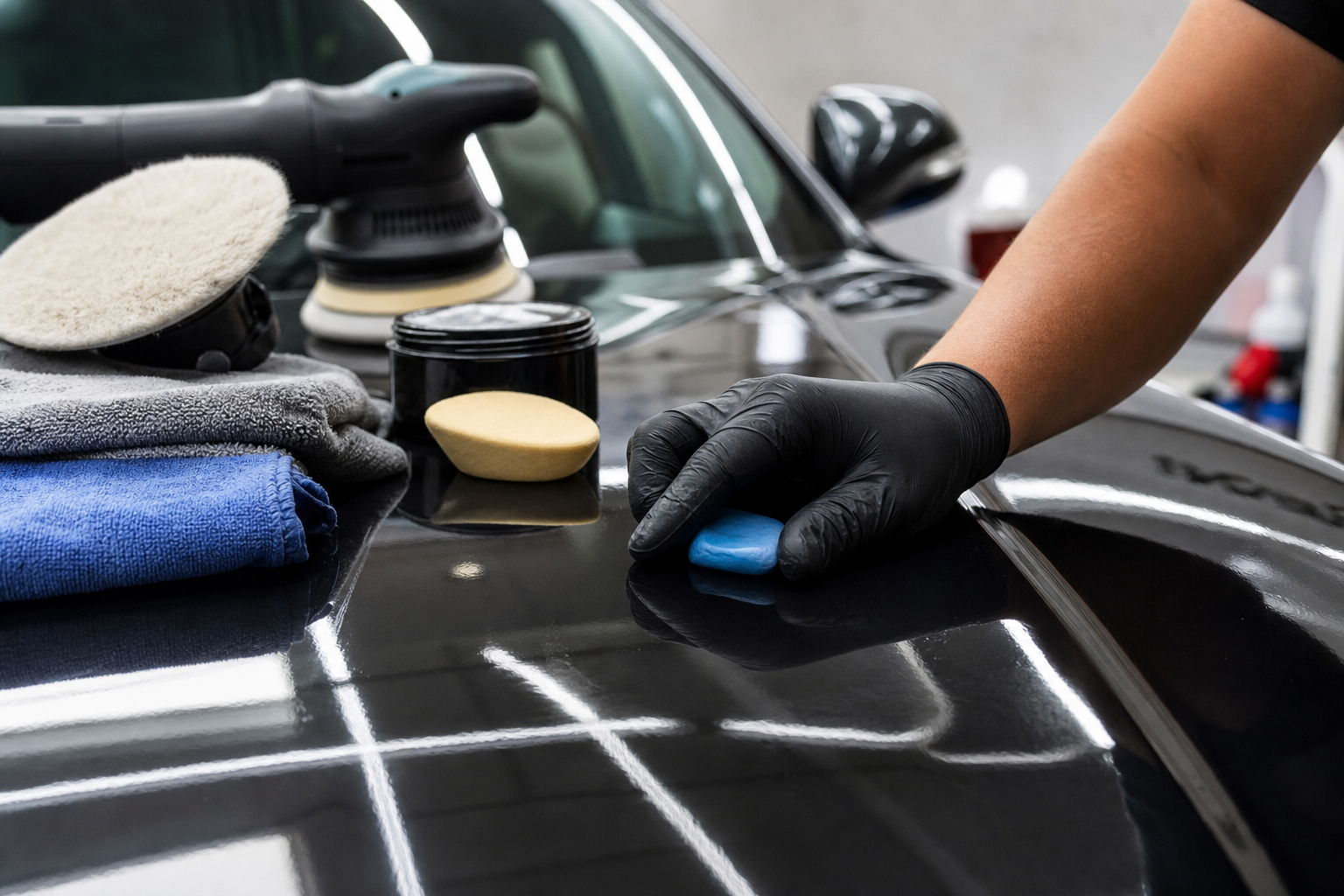
Regular washing removes loose dirt and grime. Waxing or a paint sealant adds temporary water beading and shine. Use washing and waxing for routine maintenance between more thorough treatments. If the paint feels smooth and contaminants are not present, these steps are typically sufficient.
When to choose clay decontamination
Choose a clay bar when the paint feels rough after washing, when you see embedded specks that do not rinse away, or before applying a long-lasting protection product. A simple tactile test is to run a clean finger lightly across a washed panel. If it feels gritty, clay decontamination will remove the bonded particles that cause that texture (FindDetailing guide).
When to book paint correction
Book paint correction when you want to remove swirl marks, deeper scratches, or oxidation. Paint correction uses abrasive polishing to alter the clear coat and restore clarity. If defects are visible and light does not reflect cleanly, polishing or multi-stage correction is the right choice, not clay alone (MobileDetailingExpert).
Is clay bar necessary before ceramic coating or PPF
How clay extends coating and PPF performance
Detailers commonly use clay as a decontamination step before ceramic coating or paint protection film because coatings bond to the surface they are applied to. Any remaining bonded contamination can prevent full adhesion and reduce gloss. For readers considering protection, Prime Auto Wash notes prep and coating as sequential services and recommends decontamination before applying coatings to improve longevity and finish (Prime Auto Wash services, AutoLaundry on prep).
If you plan to move from clay decontamination to ceramic coating, see the ceramic coating guide for more detail and next steps, including what coatings deliver and why prep matters. Visit our ceramic coating guide to learn more.
DIY clay kits versus professional clay services: risks and decision criteria
Common DIY mistakes
DIY clay kits are affordable, but they carry technique risks. Using a dirty or contaminated clay bar, insufficient lubrication, or applying too much pressure can cause marring and micro scratches. AutoZone explains the need for abundant lubricant and frequent clay kneading to keep the bar clean while working (AutoZone how-to).
When to hire a pro
Hire a professional when you are preparing for a ceramic coating or PPF, when contamination is heavy and widespread, or when the finish requires a follow-up polish. Professionals use proper tools, clean clay alternatives such as clay towels or mitts when appropriate, and a controlled technique to reduce the risk of marring (FindDetailing guide).
Warning signs to avoid
- Technicians who rush panels or skip lubrication are more likely to cause marring. Proper clay work takes time and frequent cleaning of the clay surface.
- If a provider cannot explain why clay is recommended or how it fits into a coating prep process, seek a second opinion.
- Refusal to show before and after photos of similar jobs is a warning sign.
Mobile versus in-shop clay service in the GTA: what to choose
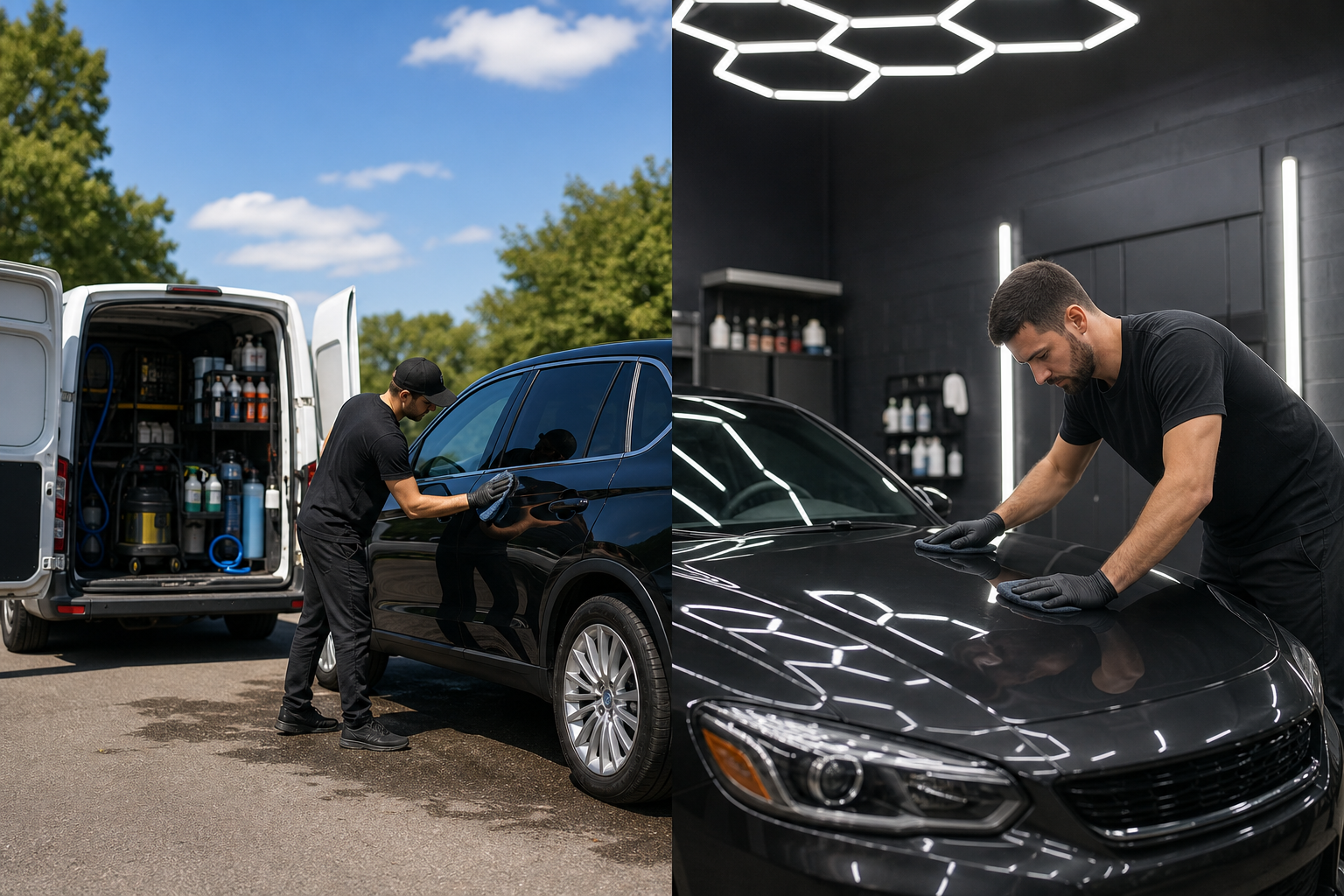
Drivers in Mississauga, Brampton, Toronto, and the GTA can choose mobile convenience or the controlled environment of a shop. Prime Auto Wash operates a fully self-contained mobile unit that brings its own power and water for on-site detailing, and it also offers in-shop service at a Mississauga facility. The business highlights same-day mobile availability across the GTA and insured technicians, which suits busy customers who prefer on-site service (Prime Auto Wash).
Choose mobile when you want convenience and the job is primarily decontamination or light exterior work. Choose in-shop when the car needs multi-stage paint correction, long curing steps for coatings, or when temperature and lighting control are important. Discuss the scope with the detailer so they can recommend the right location for the work.
When to get a clay bar, how often, and how to prepare your car
Quick pre-service checklist
- Wash the car first so clay works on a clean surface.
- Remove loose items from the interior and secure accessories outside so the tech can access all panels easily.
- Park in a shaded spot if mobile service is scheduled. Controlled lighting helps the detailer inspect the finish.
How often and maintenance after clay
Frequency depends on exposure. For many drivers a clay treatment once or twice a year is sufficient, while vehicles parked under trees or used in heavy urban environments may need it more often. AutoLaundry and FindDetailing both present clay as a periodic maintenance step that complements regular washing, not a daily task (AutoLaundry, FindDetailing).
After clay, technicians typically follow with polish, sealant, or a protective coating. Regular washing and periodic reapplication of wax or sealant will preserve the finish between professional treatments.
How to choose a provider and warning signs of poor technique
Ask prospective providers these practical questions before booking: Do you include clay as part of coating prep and can you show before and after photos? Do you use a self-contained mobile unit when working on site and are you insured? Can you explain the lubrication and clay change process to prevent marring? Prime Auto Wash lists a self-contained mobile option, certified technicians, and transparent add-on pricing in its service model, which are useful selection criteria (Prime Auto Wash).
Avoid technicians who rush, use minimal lubricant, or cannot explain the steps they will take to protect the paint. Those are common causes of avoidable surface damage.
Frequently asked questions
Is clay bar treatment necessary before ceramic coating in Mississauga
Yes, clay decontamination is a common and recommended prep step before ceramic coating because bonded contaminants can reduce coating adhesion and finish. Professional detailers typically include or recommend it prior to coating application (AutoLaundry).
How often should I get a clay bar treatment on my car
Frequency varies by exposure and parking conditions. A general rule is once or twice a year for most vehicles, more often for cars parked under trees or driven in industrial areas. A tactile check after washing will tell you when it is needed (FindDetailing).
Can a mobile detailer perform a clay bar treatment safely at my home or workplace
Yes, mobile detailers with a fully self-contained unit that brings power and water can perform clay work on site safely. Confirm the provider uses sufficient lubrication and clean clay or mitts, and that they are insured. Prime Auto Wash operates a self-contained mobile unit and offers mobile service across the GTA (Prime Auto Wash).
Will clay bar remove scratches or oxidation
No. Clay removes bonded surface contaminants but does not remove oxidation or deep scratches. Those defects require polishing or paint correction, which are separate services (MobileDetailingExpert).
What are the common risks of DIY clay bar kits and how can I avoid them
Common risks include marring from dirty clay, insufficient lubrication, or pressing too hard. Avoid those problems by using plenty of lubricant, kneading the clay frequently to expose a clean surface, working in small sections, and stopping if you see marring. For many customers preparing for coatings or facing heavy contamination, a professional service reduces these risks (AutoZone how-to).
Ready to book professional clay decontamination or prepare your car for protective coating? Prime Auto Wash offers both mobile clay decontamination using a fully self-contained unit and in-shop prep at its Mississauga facility, performed by insured technicians with clear add-on pricing. Visit Prime Auto Wash to check services and book an appointment: Prime Auto Wash.